Processing example of D5400 glass cloth single-flange round tube gasket.

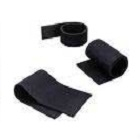
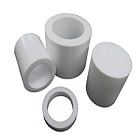
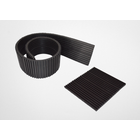


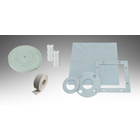












Compatible with duct gaskets with one-sided flanges using cross rubber molding.
■Overview of Processing Example Product Name: Single Flange Round Tube Packing Dimensions: 180φ × 115φ This processing example involves the combination of cross rubber coating and adhesive processing to create a duct packing with a single flange added to a round tube shape. The integrated structure of the cylindrical and flange parts meets the requirements for both sealing and positioning in duct connection applications. It is primarily used in plant equipment and exhaust/heat air lines, where preventing misalignment during installation and ensuring stable adhesion are critical conditions. By integrating the tube and flange parts through adhesive processing, the assembly during construction is improved, contributing to enhanced work efficiency. The use of cross rubber coating allows for uniform shape formation even with thick materials, ensuring stable quality and reproducibility. ■Product Features | D5400 This is a gasket formed by applying natural rubber to glass cloth and shaping it into a specified form. It has excellent thermal insulation properties and is environmentally friendly as it is non-asbestos. There are processing methods such as sewing, and large diameter processing is possible. It is used for high-temperature duct seals.
basic information
■Processing Method | Rubber Coating Rubber coating is a technology that creates high-performance composite materials by adding the diverse functions of rubber to the excellent heat resistance of the base material. The rubber coating makes it easier to process glass cloth through cutting, punching, and sewing, facilitating the production of complex shapes such as gaskets and ducts. The material can be laminated and shaped to the desired thickness. We can recommend the optimal material according to the usage temperature.
Price range
Delivery Time
Applications/Examples of results
■Q&A Q. How is a cylindrical gasket manufactured? A. It is produced by shaping it into a cylindrical form after cross-processing and integrating the flange part through adhesive processing. Q. What are the advantages of a single-flange structure? A. It makes positioning easier and contributes to preventing misalignment during installation and stabilizing sealing performance. Q. Can thick gaskets be molded uniformly? A. Yes, through cross rubber coating processing, we can ensure a uniform finish and stable quality even with thickness. Q. Is it possible to accommodate prototypes? A. We can flexibly respond from small lots and prototypes to mass production. ■Daiko's Capability We can provide consistent support for complex shapes such as cylindrical forms and those with single flanges, including material selection, processing method proposals, and shape considerations. We also flexibly accommodate prototypes, small lots, and custom specifications while ensuring stable quality.
catalog(2)
Download All Catalogs

Recommended products
Distributors

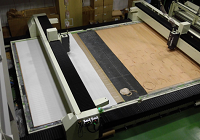
Daiko is a manufacturer specialized in processing various industrial products, including gaskets and packing. With industry-leading processing equipment, including one of Japan's largest water jet cutting machines, and a wide range of materials such as joint sheets, rubber, resin, and metal, we meet our customers' diverse needs. Leveraging the technology and experience we have cultivated over 50 years, we provide high-quality, short-lead-time, and low-cost products to contribute to solving our customers' challenges. To respond to our customers' varied needs, Daiko's production bases are equipped with various processing facilities. Among them, the water jet cutting machines, with a total of four installed at our Osaka headquarters and Tokyo branch, boast one of the largest scales in the country. The maximum processing range is W4,000 × L5,500 mm, allowing for the high-precision manufacturing of large-diameter gaskets and packing. By maximizing material efficiency, we achieve the provision of 'high quality at low cost.'