
UHF Band RFID Shelf Antenna for Agriculture and Livestock


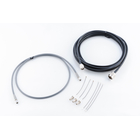
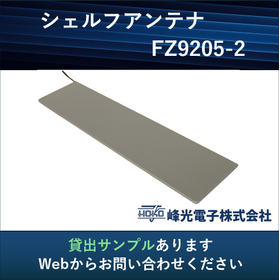

Streamlining material and sample management through real-time visualization at the shelf unit level.
In the fields of agriculture and livestock, it is important to properly store and manage seeds, feed additives, chemicals, inspection samples, and various materials, and to be able to quickly retrieve what is needed. Particularly in environments where diverse materials and samples are mixed on storage shelves, visual confirmation and manual management can be burdensome, making inventory checks and location confirmations time-consuming. Additionally, if mix-ups or inventory discrepancies occur, it can impact production management and quality control. Our UHF band RFID shelf antenna contributes to the efficiency of material and sample management and improves management accuracy through real-time visualization at the shelf level. 【Usage Scenarios】 - Management of storage shelves for seeds, feed, and chemicals - Inventory management of inspection samples and testing materials - Streamlining inventory checks for work supplies and consumables - Tracking the location of quality control materials 【Benefits of Implementation】 - Reduction in labor for inventory and confirmation tasks - Improved accuracy in inventory and material management - Prevention of mix-ups and stockouts - Labor-saving and efficiency improvements in on-site operations
basic information
**Features** - Slim design suitable for smart shelf applications - Dimensions that match standard 900mm wide shelves - Directionality that suppresses radiation outside the antenna - High gain allows for reading even with rough tag placement - Usable for applications beyond shelf management **Our Strengths** Since its founding 40 years ago, Mineko Electronics Co., Ltd. has developed its business based on antenna and connector technology. In addition to our standard antennas, which boast stable performance backed by years of expertise, we deliver top-class antenna solutions with high technology and trust as the best partner in the world of custom antennas for various communication devices. We engage in the development, manufacturing, and sales of standard antennas, contract design, manufacturing, and sales of antennas for communication devices, and contract design, manufacturing, and sales of cable assembly products with coaxial connectors.
Price information
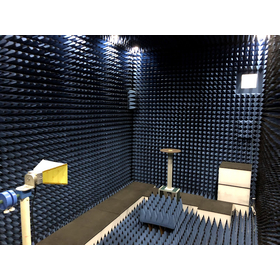
You can purchase from one unit. In addition to standard products, we offer custom solutions tailored to your requests and conduct performance measurements in our own anechoic chamber. Please contact us for more details.
Delivery Time
Model number/Brand name
FZ9205-2
Applications/Examples of results
For more details, please refer to the PDF document or feel free to contact us.
catalog(1)
Download All Catalogs
News about this product(3)
-
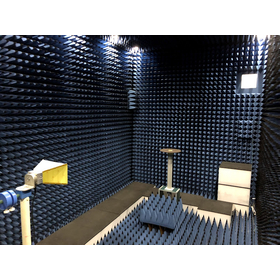
What is an anechoic chamber? Is it really necessary?
An anechoic chamber is a "special room" used to test the performance and safety of wireless devices. In a regular room, invisible waves from smartphones, Wi-Fi, and televisions are present, making it impossible to conduct accurate tests on devices. Therefore, an anechoic chamber is a special space that "completely shuts out external waves" and also ensures that "waves inside do not leak outside." When is it used? - Testing and inspection of wireless devices - Testing for obtaining technical standard conformity certification (Giteki) - Confirming that there is no interference from waves to other devices In other words, it is "an essential place for creating accurate and reliable wireless devices." What is the inside of the room like? - The walls, ceiling, and floor are covered with "sponge-like materials that absorb waves (wave-absorbing panels)." - The entire room is covered with a metal shield to prevent external waves from entering. Why is it so important? Wireless devices can significantly impact medical equipment, airplanes, and fire department radios, depending on where they are used. That is why it is crucial to thoroughly verify that they emit waves correctly and safely in a place free from external influences, which is the anechoic chamber.
-

What is Technical Standards Compliance Certification (Giteki)?
"Technical Standards Conformity Certification," commonly known as "Giteki," refers to the "government approval" necessary for safely using wireless devices (such as smartphones, Wi-Fi routers, transceivers, etc.) in Japan without affecting other communications. To put it simply... For example, products that use wireless technology emit "radio waves." If these radio waves are too strong or the frequency is incorrect, there is a risk of adversely affecting devices like televisions or emergency radios. Therefore, in Japan, only products that have been certified to comply with regulations regarding radio wave emissions can be used, and this certification is indicated by the Giteki mark. ■ Where can you find the Giteki mark? The Giteki mark can be displayed on the product itself or in the settings screen, and products with this mark are legally usable wireless devices in Japan. ■ What happens if you use a product without Giteki? Using devices that have not received Giteki certification in Japan may result in a violation of the Radio Law. For instance, smartphones or transceivers purchased overseas often lack the Giteki mark, and using them in Japan can be illegal, so caution is advised.
-

[Model Number Change] The model number of the UHF band RFID shelf antenna has been changed.
"FZ9205/FZ9206" has been discontinued and unified into "FZ9205-2." The specifications will be the same as "FZ9205." For details, please download the catalog and check.
Distributors

Since its establishment 40 years ago, Peak Light Electronics Co., Ltd. has developed its business based on antenna and connector technology. Moving forward, we will continue to deliver top-class antenna solutions as a reliable partner, boasting high technology and trust, with standard antennas that feature stable performance backed by years of expertise, as well as custom antennas for various communication devices (such as radios, measuring instruments, railways, satellite launch rockets, and automotive applications).