
Data Feature Extraction for Data Science: 'Mathematica'









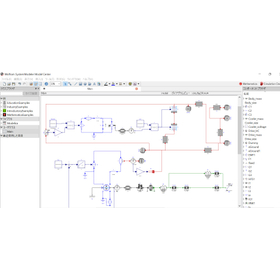
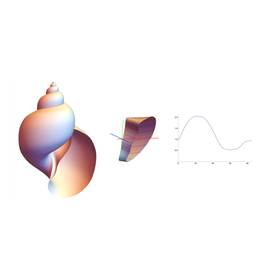
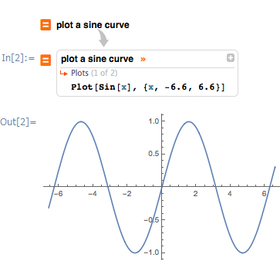

Seamlessly from idea to result in data science pattern recognition.
In the field of data science, it is essential to extract meaningful patterns from complex data and utilize them for predictions and decision-making. Particularly in pattern recognition, high-precision analysis and rapid presentation of results significantly influence the speed of research and development. Inadequate analysis tools can lead to oversights and incorrect conclusions. 'Mathematica' is equipped with outstanding capabilities in all areas of technical computation in data science, including neural networks and machine learning, and strongly supports advanced analysis in pattern recognition. 【Usage Scenarios】 - Feature extraction from large datasets - Development of anomaly detection algorithms - Pattern identification in image recognition - Trend analysis of time series data 【Benefits of Implementation】 - Improved pattern recognition accuracy - Reduced analysis time - Promotion of new insights discovery - Enhanced efficiency in research and development
basic information
**Features** - Equipped with outstanding capabilities in the field of technical computing, including neural networks, machine learning, image processing, data science, and visualization. - Creates an easy-to-use system with predictive suggestions and natural language input using the Wolfram Language. - Allows for organization of work with rich documentation that includes text, executable code, dynamic graphics, and more. - A fully integrated system that offers powerful yet user-friendly operability. - Capable of instantly acquiring real-world data for analysis. **Function List** Please refer to the catalog.
Price information
(Hulinks page)
Price range
P3
Delivery Time
P3
Model number/Brand name
Mathematica
Applications/Examples of results
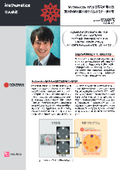
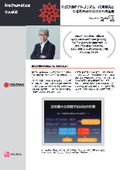
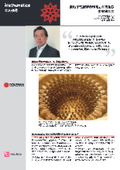
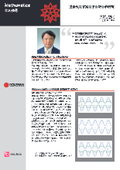
□User Cases□ Please take a look at each catalog - Widely used in universities to support intellectual activities related to mathematics - Assisting in unraveling phase transitions in the universe - Application to quantitative analysis of biological "forms" - Introduction in reliability engineering: Failure prediction using Mathematica - Expanding research possibilities with Mathematica – Data analysis in the field of medical radiation technology - Application of algorithm and applied research in symbolic computation to computer exercises in mathematics - Research and education in particle physics and writing reference books - Many things that can be done with Mathematica, from creating teaching materials to analysis and research - Research on electron-positron colliders (symbolic manipulation, numerical computation, 3D visualization, etc.) - Construction of reaction-diffusion system patterns □Calculations like this with Mathematica□ (Visit the Hulinks blog page) https://www.hulinks.co.jp/category/blog/ □Trial□ Demo version application form (Visit the Hulinks page) https://www.hulinks.co.jp/software/mathematica/#trial
catalog(11)
Download All Catalogs


Recommended products














Distributors

Even in a rapidly changing world, the philosophy of HuLinks has not changed since its founding. The greatness of humanity lies in our ability to think, create, and carve out a new tomorrow. We aim to contribute to society by providing carefully selected solutions that support this remarkable human ability—intellectual creation—while also offering a more comfortable environment and enhancing productivity.