
Steam and Hot Water Boilers from Icross for the Food Manufacturing Industry


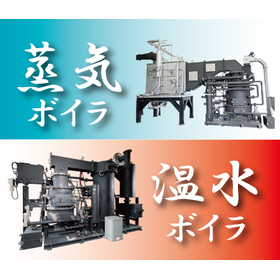
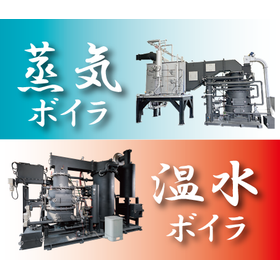
Solving fuel costs and environmental impact in the food manufacturing industry! Boilers compatible with various fuels.
In the food manufacturing industry, the use of steam and hot water in the manufacturing process is essential. However, traditional boilers face challenges such as high fuel costs and significant environmental impact. In particular, a stable supply of steam and hot water is crucial for maintaining food quality and hygiene management, while energy conservation is also required. Icross's steam and hot water boilers have been developed to address these challenges. [Usage Scenarios] - Food processing, cooking, sterilization, cleaning processes - Heating and air conditioning within factories - Energy-saving measures, cost reduction [Effects of Implementation] - Reduction in fuel costs - Reduction in waste disposal costs - Contribution to carbon neutrality - Compatibility with various fuels
basic information
【Features】 - Compatible with various fuels (RPF, wood chips, etc.) - Stable supply of high-quality steam - Support for long-term stable operation 【Our Strengths】 Product development with consideration for the environment Ability to accommodate diverse fuels Consistent support system from installation to maintenance
Price range
Delivery Time
Applications/Examples of results
Drying equipment, textiles and dyeing, food processing, etc. Bathing and pool facilities, etc.
catalog(3)
Download All Catalogs

Recommended products


Distributors

The Environmental Division manufactures and sells boilers that are environmentally friendly and significantly effective in reducing fuel costs while lowering burdens such as air pollution and global warming. These boilers utilize new combustion technology that can reduce various issues, including the increase in waste, emissions of CO2 and dioxins—causing global warming and air pollution, the depletion of fossil fuels, and the rising costs of fuels like heavy oil. They effectively recycle wood waste and plastic waste, which are currently only disposed of as garbage, into usable fuel, and by completely combusting these materials, they create new energy resources that can be utilized in various applications across different fields.