10BASE-T1S Training


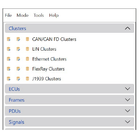
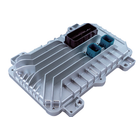
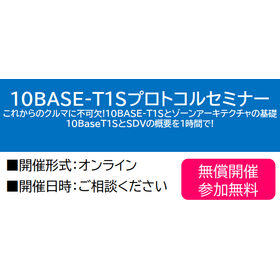
Learn about the overview of 10BASE-T1S and zone architecture in 1.5 hours. From the physical layer to PLCA, including key points of zoned testing.
[Target Audience] - Individuals responsible for design, evaluation, and testing related to in-vehicle networks (CAN/LIN/FlexRay/automotive Ethernet) - Development and verification personnel considering the transition to SDV/zone architecture - Those who have "heard of 10BASE-T1S but want to organize the mechanisms and testing perspectives" [Overview] In this seminar, we will cover the basics of automotive Ethernet and organize the aims and features of 10BASE-T1S (multi-drop, background of cost reduction), explaining the operating principles centered around the physical layer (DME), PLCA (collision avoidance), and transmission cycle. Furthermore, we will understand what changes with the transition from domain to zone and how testing and data observation become more challenging, along with specific examples.
basic information
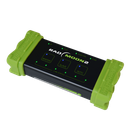
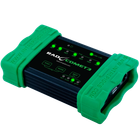
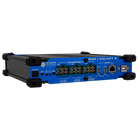
[Agenda of the Seminar Content] 1. Basics of Ethernet - Notation and transmission modes - Physical media and encoding formats - OSI reference model and protocol groups 2. Background and Motivation of 10BASE-T1S - Advantages and disadvantages of in-vehicle Ethernet - Comparison with CAN-FD/FlexRay - Benefits of multi-drop (bus topology) 3. Basics of 10BASE-T1S - Mechanism and specifications of the physical layer - PHY-level collision avoidance (PLCA) - Line encoding - Transmission cycle and burst mode 4. Zone Architecture - Transition from domain to zone and its benefits - Relationship with SDV (Software Defined Vehicle) - Challenges of testing in zone architecture 5. Introduction to In-Vehicle Ethernet Tools - Hardware for monitoring and logging (such as RAD-Gigastar, RAD-Comet series) - Utilization of analysis software Vehicle Spy
Price range
Delivery Time
Applications/Examples of results
[Application Examples of Seminar Content] - Monitoring/Logging of Zone Architecture Vehicles - Data observation and recording in a mixed environment of 1000BASE-T1 backbone + in-zone CAN/LIN + 10BASE-T1S - Low-Level Analysis of 10BASE-T1S Network (PLCA Visualization) - Confirming sequences such as Beacon, Transmit Opportunity (TO), Commit/SSD/ESD, and evaluating delay and bandwidth behavior - Verification using Ethernet↔CAN-FD Gateway/ECU Simulation - Message transmission and reception, traffic generation, and operation confirmation in a bench environment (for evaluation and verification purposes) - Evaluation of Bandwidth Assurance and Delay Reduction Using Burst Mode - Confirming behavior that increases transmission opportunities for specific nodes in cases with strict delay requirements, such as audio - Differentiation of "Where and What is Happening" Made Difficult by Zoning - Examples of test design considering differences from traditional domain configurations (changes in implicit data availability, redesign of observation points)
Recommended products
Distributors
In 1994, Intrepid Control Systems was established in the suburbs of Detroit, Michigan, and since then, we have been delivering the latest development tools that support various in-vehicle communication standards to customers around the world. We provide development tools for CAN/CANFD, LIN, Automotive Ethernet, BroadR-Reach, FlexRay, MOST, Keyword2000, ISO14229, ISO9141, UART, J1939, J1850, GMLAN, I2C, SPI, and more. Our customers range from large corporations included in the Fortune 100, major OEMs, to individuals. In addition to a global network of distributors, we have branches in the USA, Japan, China, India, Germany, the UK, and South Korea, where we offer direct sales and technical support. We also actively host seminars in the automotive industry, participate in exhibitions, and contribute in areas such as technical papers.