
Keller Company Digital Pressure Gauge LEO2 / LEO2 Ei


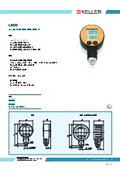
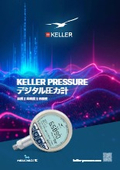
Digital pressure gauge with ±0.1% accuracy, explosion-proof type available, featuring Max/Min value display function.
The compact digital pressure gauge LEO2 offers high precision measurements at a reasonable price. The minimum/maximum values can be displayed simultaneously with the current pressure value, and multiple pressure units can be selected. It can be mounted in your desired position using a swivel adapter. The power supply uses a standard CR2430 battery (included). An intrinsically safe explosion-proof type is also available. 【Features】 〇 High precision: ±0.1%FS 〇 Various pressure units available (bar, mbar, hPa, kPa, MPa, PSI, kg/cm2) 〇 Zero point calibration via button 〇 Automatic shutdown 〇 Minimum/maximum value display 〇 Compact design 〇 Battery life up to 1000 hours 〇 Intrinsically safe explosion-proof type available (LEO2-Ei)
basic information
Pressure range: 0 to 400 kPa to 0 to 70 MPa Accuracy: ± 0.1 %FS Overall accuracy: ± 0.2 %FS @ 0 to 50 °C Display: LCD 4-digit display
Price range
Delivery Time
Applications/Examples of results
Calibration/Test Industrial Applications Services
catalog(5)
Download All Catalogs

News about this product(3)
-

Examples of applications for explosion-proof pressure sensors - automotive, petroleum, aerospace, chemical industries, etc.
Products suitable for environments with a risk of explosion are used in a wide range of applications. Since 1988, KELLER has been developing and manufacturing explosion-proof pressure measurement technology. Based on years of experience and achievements, KELLER's explosion-proof pressure sensors have received high praise in many industries. Examples of applications (one example each): - Automotive sector: Painting robots When atomized by a spray nozzle, the mist can generate a flammable mixture. - Oil sector: Monitoring fuel levels at gas stations At gas stations, there is a risk of gas atmospheres exploding due to electrical sparks. - Aviation industry: De-icing machine liquids De-icing fluids contain more than 50% highly flammable glycols and are used in a mixture with water. - Chemical industry: Monitoring the storage conditions of chemicals Warehouses owned by chemical manufacturers and distributors store numerous containers of various chemicals, which may contain all kinds of explosive and hazardous substances.
-
Understanding Explosion-Proof Zones and Equipment Categories Correctly - What is an ATEX Zone? A Clear Explanation Using Real Examples
There is always a risk of explosion in areas where flammable gases, vapors, mists, or dust may be present. Examples include the chemical industry, energy supply, biogas plants, solvent processing facilities, hydrogen infrastructure, and gas distribution systems. An important point to understand about explosion protection is the location of the measurement point within the zones. A common misconception is that if flammable gas is used, the highest hazard classification automatically applies; however, the frequency of explosive atmospheres can vary significantly from one industrial plant to another. For instance, explosive mixtures may always be present inside a tank, while they rarely occur in well-ventilated piping areas, typically only during abnormal situations. This is precisely why ATEX systems classify zones as 0, 1, and 2. The related links below provide detailed explanations of the basic principles of ATEX zones, real-life examples from hydrogen filling stations, comparisons of protection concepts (why safety barriers or isolation amplifiers are necessary), and what types of pressure sensors we at KELLER can offer for each zone.
-
Sudden and Instantaneous Pressure Rise in a Closed System: Underestimated Risks and Their Mitigation Methods
Pressure peaks in closed systems can cause significant damage and are complex phenomena. But what exactly is a pressure peak? How does it occur, and how can we protect the system from pressure peaks? We will explain the role of precise measurements in ensuring the safety and efficiency of pressure systems. 1. What is a pressure peak? Why does it occur? The physical principles behind the phenomenon are Newton's three laws of motion and Bernoulli's principle. What causes water hammer and cavitation, and what are their effects? 2. Preventive measures Using simulations, protective components such as pressure dampers, pressure reducers, and check valves, as well as pressure sensors. 3. Why are pressure sensors necessary to protect the system from pressure peaks? Continuous monitoring with sensors allows for real-time recording of pressure peaks and can trigger automatic responses such as valve opening and closing. In the event of a failure of system components or protective devices, it can not only be directly detected but also prevented. Alarms can be automatically sent to responsible personnel via email, IoT, cloud, etc., in case of anomalies. For more details, please refer to the related links below!
Recommended products


Distributors

Our company is the Japanese branch of KELLER Pressure (Switzerland). Since its establishment, KELLER Pressure has developed and produced all its products at its factory in Winterthur, Switzerland, and is a leading manufacturer of pressure transducers and pressure transmitters, certified with ISO 9001. As a core business, we manufacture and sell over 1.3 million pressure measurement cells annually, offering products with pressure ranges from 5 mbar (500 Pa) to 2000 bar (200 MPa). With the extensive experience gained from all our products, our solutions can cater to a variety of applications. We are highly regarded as a manufacturer of high-precision pressure sensors and also accommodate OEM and custom products. We have received positive feedback from many customers. Contact: sales.jp@keller-pressure.com