
Fouling Prevention Tray Technology for Crude Oil Distillation Towers (Case Studies)
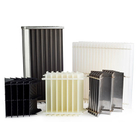
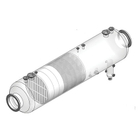

Significant reduction of phosphorus-derived fouling. The latest tray solution maintains processing capacity and operational stability.
This case study presents an example of resolving tray blockage caused by phosphates in a crude oil distillation unit (CDU) using fouling-resistant tray technology. Phosphate esters contained in high TAN crude oil and corrosion inhibitors decompose inside the tower and adhere to the openings as phosphates. This leads to the obstruction of vapor flow and results in the following issues: - Abnormal increase in differential pressure (DP) due to blockage of openings - Liquid accumulation in the LK-HK section - Deterioration of product quality such as color and flash point - Increase in tower pressure → decrease in evaporation rate → deterioration in yield - Resulting in a reduction in processing capacity To continue operations, a portion of the internal reflux was first bypassed (LKPA → HKPA) to adjust the section load. DP improved, and quality was restored. Furthermore, as a long-term measure, Koch-Glitsch's Superflux fouling-resistant trays were adopted. Key features: - Self-cleaning effect due to fixed valves - Suppression of solid retention and stable froth flow - Directional valves that reduce peripheral retention - Long-term stable operation even under severe fouling conditions Inspection after implementation showed that the phosphorus content, which was previously over 21%, was reduced to below 2%, and DP stabilized at 0.4 kg/cm². The fouling suppression effect was confirmed.
basic information
■Ideal for the following customers - Refineries processing high TAN crude oil - Facilities concerned about phosphate issues due to corrosion inhibitors - Those troubled by rising DP in distillation columns, liquid accumulation, and product quality fluctuations - Users looking to extend shutdown intervals and enhance operational stability ■Benefits of Implementation - Significant reduction in trait troubles caused by fouling - Stabilization of product quality (color, FP, FPt) - Normalization of pressure loss - Extension of equipment downtime cycles - Contribution to maintaining overall CDU processing capacity ■Summary This case is a good example of achieving stable operation of crude oil distillation columns through root cause analysis of fouling (phosphorus compounds) and the adoption of appropriate internal structures (Superflux(R) trays). Even in harsh environments where fouling is unavoidable, advanced tray technology can ensure both operational reliability and processing capacity. *For more details, please download the PDF or contact us directly.
Price range
Delivery Time
Applications/Examples of results
It is widely adopted in fields such as petroleum refining, petrochemicals, and chemical manufacturing, where optimization of separation processes is required.
catalog(1)
Download All Catalogs
Recommended products
Distributors

- Refining - Petrochemical Processing - Chemical Processing - Specialty Chemical - Gas Processing - Pharmaceutical - Alcohol/Beverage (Dealcoholization)