
Explanation video on concentricity and coaxiality for optical instruments.


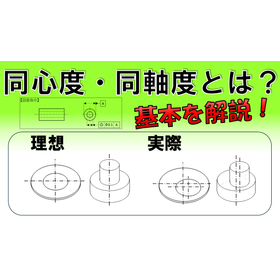
Explaining the fundamentals of geometric tolerances essential for improving the performance of optical instruments!
In the optical equipment industry, high precision is required in the assembly of precision components such as lenses and barrels. In particular, misalignment of the optical axis can lead to a decrease in optical performance and distortion of images. Understanding concentricity and coaxiality is essential for solving these issues and maximizing product performance. This video explains the definitions of concentricity and coaxiality, examples of their use, how they are represented in drawings, and points to consider, supporting problem-solving in the design and manufacturing of optical equipment. 【Usage Scenarios】 - Design and manufacturing of precision components such as lenses and barrels - Quality control of optical equipment - Performance evaluation of products 【Benefits of Implementation】 - Improvement of optical equipment performance - Enhancement of product quality - Streamlining of design and manufacturing processes
basic information
【Features】 - Explanation of the definitions of concentricity and coaxiality - Illustrated examples of usage - Explanation of notation methods in drawings - Introduction of measurement methods 【Our Strengths】 Matsui Manufacturing Co., Ltd. responds to customer needs with a consistent production system ranging from hot forging to machining, pipe bending, brazing, and unit assembly, primarily focusing on non-ferrous metals such as copper, brass, and aluminum. With years of experience and technology, we contribute to the performance improvement of optical devices.
Price range
Delivery Time
Applications/Examples of results
Gas appliances, air conditioning equipment, medical devices, semiconductor-related items, etc.
Related Videos
catalog(2)
Download All Catalogs

Recommended products

[Video Material] Management Decision: Sell as Intermediate Goods or Sell as Finished Products.
松井製作所


[Video Material] Quality Control "According to the Procedure Manual"? Look for Hidden Changes!
松井製作所


Distributors

Matsui Manufacturing Co., Ltd. focuses on non-ferrous metals such as copper, brass, and aluminum, offering a consistent production system from hot forging to machining, pipe bending, brazing, and unit assembly. We propose suitable QCD (Quality, Cost, Delivery) to our customers from our four production bases located in Japan and abroad (Osaka, Tottori, Himeji, and China). Since our establishment in 1948 as a manufacturer of gas appliance parts, we have developed and manufactured various control devices related to gas appliances, petroleum, water, and air conditioning, marking half a century of history with the motto of "Customer First." We will continue to acquire advanced technologies, promote flexible thinking that breaks away from conventional concepts, and not only respond to user needs but also proactively propose solutions that anticipate the needs of end users. We look forward to your continued guidance and support.