
news list
latest news

Notice of the "Japan RXE Forum 2026" to be held on July 17, 2026 (Friday)
Mettler Toledo, Inc. will hold the "Japan RXE Forum 2026" at the TKP Akasaka Conference Center. We will invite experts from various fields who are using our automated synthesis devices and PAT tools …
91~107 item / All 107 items
-

Gas analysis in thermal analysis
Thermogravimetric analysis (TGA) provides quantitative information about the change in mass of a sample as a function of time or temperature. However, TGA cannot identify or characterize gaseous products that occur during the measurement. By combining mass spectrometry (MS) or Fourier-transform infrared spectroscopy (FTIR) with TGA, it is possible to evaluate the properties of gaseous reaction products formed during TGA online. In this webinar, we will discuss the advantages of TGA-MS and TGA-FTIR systems and present several interesting applications.
-

Glass transition measurement
Glass transition occurs in all amorphous or semi-crystalline materials and results in significant changes in material properties such as thermal expansion, specific heat capacity, and elasticity. Since glass transition heavily depends on the chemical and physical structure, it is used for evaluating material properties and is important in almost every industry. Thermal analysis provides various methods for measuring the glass transition point and glass transition temperature. This webinar will explain the basic principles of glass transition and the various thermal analysis techniques and methods used to measure the glass transition point and its temperature.
-

Integration of the measurement process into QbD.
In the pharmaceutical industry, an increasing number of manufacturers are utilizing the concept of Quality by Design (QbD) to enhance quality in various processes and maintain consistent quality in the final products. In drug manufacturing, weighing is a significant factor that greatly influences product quality, and it should be considered as one of the QbD processes. By watching this 20-minute short webinar, you can gain a deeper understanding of the factors that affect the accuracy of weighing. Be sure to learn why the weighing process should be treated as part of the overall QbD concept and how to effectively implement those processes.
-

Dynamic Mechanical Analysis (DMA)
Dynamic mechanical analysis (DMA) can measure a wide range of viscoelastic properties of materials as a function of temperature and frequency. DMA is one of the most important thermal analysis techniques, alongside DSC, TGA, and TMA. DMA allows for the measurement of modulus values and can evaluate relaxation properties that are often undetectable by DSC. DMA provides quantitative and qualitative information on the following: - Young's modulus and storage modulus - Damping characteristics and viscoelastic behavior - Polymer structure and morphology - Flowability and relaxation properties Such information is extremely important for process and application engineers, materials researchers, and physical chemists. This web-based seminar (webinar) will present the basic principles of DMA and introduce several typical applications.
-
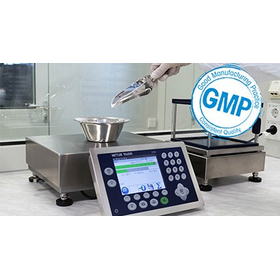
Regulatory Compliance - Measurement in Pharmaceutical Manufacturing
In the manufacturing of pharmaceuticals, weighing significantly impacts the quality and efficacy of the final product. However, regulations related to weighing are often not clearly defined. In this 30-minute on-demand webinar, we will cover the following topics: - Implementation of regulations regarding weighing - Selection of weighing equipment in compliance with legal regulations - Scheduling of routine inspections and calibration intervals
-
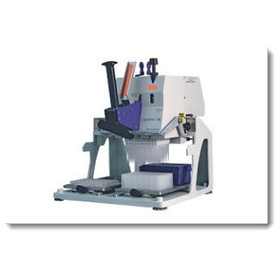
Introduction to Liquidator 96
The manual tabletop pipetting system Liquidator96 is ready for immediate use. The incredibly speedy Liquidator accommodates many applications (plate replication, reformatting between 96-well/384-well, washing, dilution, etc.) and demonstrates excellent performance in high-throughput pipetting.
-

Thermal analysis calibration
It is important to be accurate, close to the true value, and have high precision. There should be reproducibility of data within the measurement range. I believe that such expectations are always placed on your thermal analysis equipment. Calibration allows us to determine whether the module is providing correct measurements or if adjustments are needed. In thermal analysis, it is necessary to calibrate different parameters (for example, temperature, heat flow, mass, length, elastic modulus). In this webinar, we will explain the basics of calibration and adjustment, and provide useful tips and tricks.
-

Measurement and Application of Ozone
Ozone is an effective disinfectant for water used in pharmaceuticals and personal care products. Ozone rapidly destroys any microorganisms while preventing the generation of associated particles, thus disinfecting water. Ozone disinfection is an attractive alternative to energy-intensive thermal sterilization, as it essentially leaves no other decomposition products. To ensure reliable disinfection in pharmaceutical water systems, inline measurement and control of ozone are typically conducted at critical points. MetraTred Thornton provides reliable solutions in the field of ozone measurement, offering a wide range of highly convenient products tailored to the specific requirements of each customer. This webinar will cover the following topics: - Ozone measurement applications in water - Methods of ozone generation - Ozone control and monitoring - Probe technology - Calibration - Converters and sensors
-
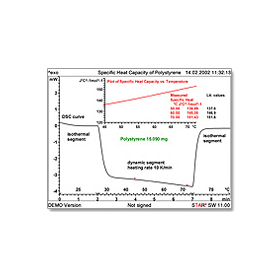
Specific heat measurement using DSC.
Specific heat capacity (cP) is an important temperature-dependent physical property that is often cited in material specifications, data sheets, and so on. Specific heat capacity can be measured conveniently and reliably using DSC. It is crucial for improving technical processes such as injection molding, spray drying, and crystallization, and it serves as an important characteristic value for analyzing process safety in chemical reactions and the design of reaction vessels. In this webinar, we will explain six measurement methods for determining specific heat capacity and present several practical examples.
-

Creation of microcrystals
If the crystal size distribution is too large to meet the specifications of the subsequent process, it becomes necessary to crush the crystals. By designing small crystals in the crystallization process, it is possible to avoid the crushing treatment in the subsequent process, thereby improving yield and reducing energy consumption and safety issues caused by crushing. This webinar will explain how to create small crystals while establishing a scalable crystallization process to avoid crushing treatment.
-

Hazardous Locations - Global Standards and Regulations
Measuring instruments and indicators used in environments with explosion hazards must comply with extensive standards, regulations, and directives. A free on-demand webinar on standards and regulations for hazardous locations has been created to promote the safe and compliant operation of equipment.
-

Building safety: Measurement of reaction heat in chemical processes
When scaling up chemical reaction processes from lab scale to manufacturing scale, it is very useful to identify various safety-related issues in the early stages of chemical process development. By measuring reaction heat, important safety-related information can be obtained quickly, allowing for the quantification of safety-related problems and their associated risks in chemical processes. This presentation will explain reaction heat measurement and why it is a beneficial tool in the consideration of chemical processes. The topics are as follows: - Designing robust and safe processes - Scaling up reactions - Improving chemical processes based on safety-related information obtained from heat measurements
-

Thermal analysis in the automotive industry
Thermal analysis methods play an important role in the analysis of materials used in the automotive industry. They are also used in quality control, defect analysis, and the development of advanced high-performance materials. In the automotive industry, it is crucial to understand the properties of materials in relation to temperature. The four main methods—DSC, TGA, TMA, and DMA—are well-suited to the analytical needs of the automotive sector. In this webinar, we will explain how thermal analysis methods are applied in the automotive industry and present representative examples of sample measurements using DSC, TGA, TMA, and DMA. Webinar topics: - Introduction - Typical questions - What is thermal analysis? - Equipment and applications - DSC - TGA - TMA - DMA - Conclusion
-

Ultra-fast DSC measurement device (FlashDSC1)
Flash DSC is an innovative technology of DSC that opens up unknown territories. Flash DSC 1 will revolutionize the thermal analysis industry with its ultra-fast heating and cooling capabilities. This cutting-edge thermal analysis device can analyze processes of reorganization and crystallization that were traditionally difficult or impossible. Flash DSC 1 ideally complements conventional DSC when evaluating the properties of modern materials and optimizing production processes. In this webinar, we will introduce the basic principles of Flash DSC 1 and some interesting applications. Content of this webinar: - Technical introduction to Flash DSC 1 - Metastable structures - Reorganization processes - Application fields of Flash DSC - Examples of applications
-

Proper pipetting technique
Pipetting in micro-liter and milliliter measurements (that is, the task of measuring and transferring) is the most frequently performed task in laboratories conducting scientific experiments. To ensure the success of laboratory operations, it is absolutely essential to perform this pipetting quickly and accurately. This on-demand webinar provides detailed knowledge about pipetting. After explaining the appropriate pipetting techniques, we will introduce methods to prevent common mistakes and enhance the accuracy of results. Please use this webinar as an opportunity to refresh your understanding of the basics of pipetting. It can help reduce common errors during pipetting and improve reproducibility by up to 5%. This webinar will provide an overview and advice on the following topics: - Basic techniques to minimize errors - Specifications of pipettes - Pipetting cycles - Effects of aspiration speed & dispensing techniques - Air displacement vs. positive displacement - Pipetting guidelines for aqueous and non-aqueous samples - Reverse pipetting
-

Thermal analysis in pharmaceuticals
Thermal analysis is widely used for the investigation of pharmaceuticals. Measurements of polymorphism, pseudopolymorphism, phase diagrams, stability, and purity can all be assessed through thermal analysis. The four main techniques of thermal analysis—DSC, TGA, TMA, and DMA—are ideal for evaluating the properties of such substances. A significant advantage is the ability to measure the properties of materials as a function of temperature or time over a wide temperature range of -150 to 1600 °C. Webinar topics: - Introduction - Relevant phenomena and properties - Instruments and applications – Differential Scanning Calorimetry (DSC) – Thermogravimetric Analysis (TGA) – Thermomechanical Analysis (TMA) – Dynamic Mechanical Analysis (DMA) - Conclusion
-
The quality standards for balances, USP Chapters 41 and 1251, have been revised.
We will introduce how to prepare for regulatory compliance, proper equipment management based on scientific evidence such as minimum weighing values, measurement uncertainty, and risk assessment. You will be able to confirm methods that can significantly reduce costs. 【Course Content】 - Details of the new requirements outlined in USP General Chapter 41 regarding "balances" - Regular inspection of balances used in quantitative analysis, future pass criteria, and two other methods for evaluating and calculating the minimum weighing value of balances - Daily inspections of balances conducted using a risk-based approach as recommended in USP General Chapter 1251 regarding "weighing of analytical balances" - Proper selection of weights used in daily inspections of balances - Confirmation that the revised General Information 1251 does not mention inspections using external weights conducted daily.