Guide for Replacing Lead Batteries with Lithium Batteries for Manufacturing Sites
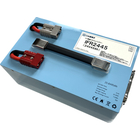
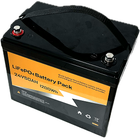

Reasons why lithium-ion batteries enhance productivity on-site.
【A Must-See for Those Who Want to Maximize the Operational Efficiency of Industrial Vehicles Such as AGVs and AMRs】 Are you struggling with issues like "power shortages at the end of operations," "frequent battery replacements or purchases," and "maintenance workload" in your existing lead battery operations? This document clearly explains, with illustrations, why switching from lead batteries to lithium-ion batteries can dramatically improve productivity on-site. ■ Issues This Document Can Address: Extending Operating Time: Prevent "power down" due to voltage drop, allowing full-speed operation until the end. Optimizing Investment Efficiency: Eliminate the limitation of 70% Depth of Discharge (DOD) and utilize nearly 100% effective capacity. Reducing Total Cost of Ownership (TCO): Significantly lower replacement costs due to a lifespan over four times that of lead batteries. ■ Topics Covered (Partial List): The decisive difference in "actual operating time" shown by discharge curves The relationship between "effective capacity" and DOD Cost simulations over 5 and 10-year spans Before-and-after implementation in AGVs and transport equipment Please use this as a proposal for on-site improvements or as foundational material for internal approvals.
basic information
Data: Lead Battery vs Lithium-ion Battery Comprehensive Comparison Guide PDF format / Total of 2 pages (front and back) Target devices: AGV, AMR, industrial robots, etc. Comparison items: Discharge characteristics (voltage drop), depth of discharge (DOD), cycle life, total cost
Price information
Please contact us.
Delivery Time
Model number/Brand name
LI-BATY
Applications/Examples of results
Industrial vehicles (AGV, AMR), industrial robots