

Product Categories



Featured products


Products/Services(73items)
-
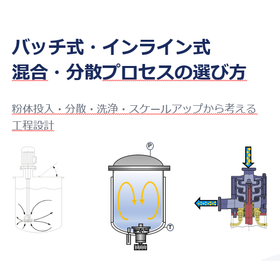
Technical Documentation: How to Choose Between Batch and Inline Mixing and Dispersion Processes
-
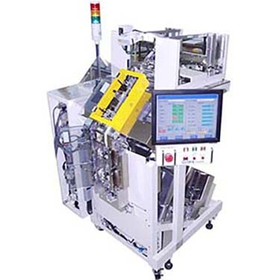
Test handler, self-weight drop type
-
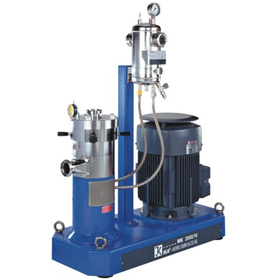
Pre-mixing dispersion of MLCC materials with the corn mill "MKO".
-
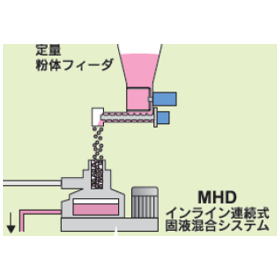
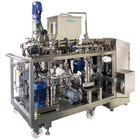
Dispersion machine line: Powder supply - Continuous dispersion support
-
CNT disperser for continuous dispersion of nanomaterials.
-
Disperser for battery materials compatible with high-viscosity slurries.
news list
-
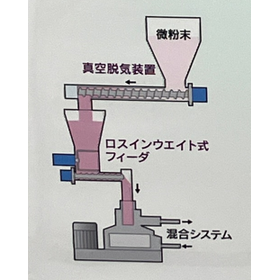
Why can't powders be supplied stably? - What causes supply irregularities in low bulk density powders?
In low bulk density powders and fine powders, issues such as "unstable supply," "pulsation," and "bridging without falling" frequently occur. Particularly with CNTs, carbon black, and flake powders, the particles tend to entangle easily and have low flowability, making stable quantitative supply difficult with conventional powder feeding methods. When powder supply becomes unstable, instantaneous concentration fluctuations occur, significantly affecting the dispersion quality, viscosity, and conductivity in subsequent processes. In practice, even problems that appear to be "poor dispersion" often have their causes on the powder supply side. Moreover, in low bulk density powders, bridging, rat-holing, and supply pulsations due to air entrapment are likely to occur within the hopper, and simply relying on feeder capacity may not resolve these issues. To achieve stable supply, it is crucial to design the entire process, including hopper design, supply methods, transport conditions, and feeding methods, according to the characteristics of the powder. Our company offers a solid-liquid mixing process that includes quantitative supply using loss-in-weight feeders and integration with inline dispersion devices. By designing the entire process from powder supply to dispersion as a cohesive unit, we support the establishment of stable manufacturing conditions even for high-performance materials.
-
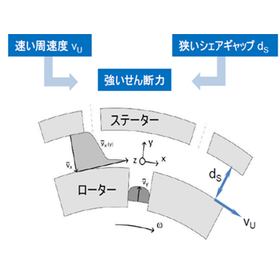
What is distributed energy? A clear explanation of the important indicators that influence distributed quality.
In the dispersion process, it is not "how much to mix" but "how much energy to provide" that determines the quality of dispersion. The key factor here is dispersion energy. Dispersion energy refers to the amount of energy applied to break down the agglomeration of particles and achieve a uniform state. When dispersion is insufficient, it is often due to a lack of energy. Even if it appears to be mixed, the agglomeration between particles may not be resolved, leading to variations in quality and performance degradation. Dispersion energy is determined not only by the strength of the shear force but also by the duration of its application. In other words, it is important to consider it as "strength × time." In batch processing, this energy can vary for each particle, making it easier for differences in dispersion states to occur. On the other hand, in inline continuous processing, particles are subjected to the same shear conditions within a consistent flow, allowing for uniform application of dispersion energy. This results in a consistent dispersion state for each particle, achieving stable quality. In the dispersion process, it is crucial to provide the necessary dispersion energy to all particles without excess or deficiency. Therefore, process design that includes flow, shear, and processing time is essential.
-
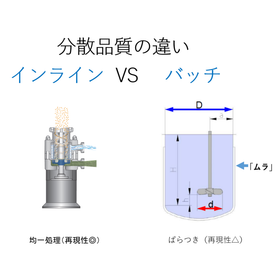
Why is continuous processing highly reproducible? An explanation of the mechanism that stabilizes distributed quality.
In dispersion processes, the variation in quality is one of the significant challenges. Even when processing under the same equipment and conditions, it is not uncommon for the dispersion state to differ from batch to batch. The main factor behind this is the variability in the dispersion history experienced by the particles. In batch processing, the shear and residence time experienced by each particle differ depending on their position and flow state within the tank. As a result, there is a mixture of sufficiently dispersed particles and undispersed particles, leading to variations in quality. This tendency becomes particularly pronounced under high viscosity or high solid content conditions. On the other hand, in continuous processing, particles pass through a consistent processing area, receiving nearly the same dispersion conditions. Because shear energy and residence time can be controlled consistently, the variability in dispersion history is minimized, resulting in a uniform and highly reproducible dispersion state. Moreover, continuous processing is advantageous during scale-up. By adjusting the flow rate, it becomes easier to replicate similar dispersion quality from the lab to mass production. This helps reduce the risk of quality fluctuations during the transition from development to mass production. What is crucial in dispersion processes is to provide the same processing history to all particles. Continuous processing easily meets this condition and is an effective method for stabilizing quality and ensuring reproducibility.
-
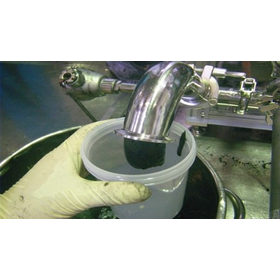
What are the dispersion challenges of battery material slurries? Design points for uniform dispersion and quality stabilization.
In the manufacturing process of battery material slurry, it is important to uniformly disperse multiple materials such as conductive materials, active substances, and binders. However, on-site challenges arise, including the residual aggregation of conductive materials, variations in particle size distribution, and instability in coating properties. These issues stem from differences in dispersion behavior due to material characteristics. In particular, carbon-based conductive materials are prone to aggregation and can form a network structure if insufficient shear is applied, leading to poor dispersion. Additionally, battery material slurries often have high solid content and high viscosity, which can lead to reduced fluidity and make it difficult for dispersion energy to be transmitted uniformly. Furthermore, poor wetting during powder addition and differences in mixing order can also affect the dispersion state and final quality. Even if dispersion can be achieved without issues in the lab, variations in flow conditions and shear history during mass production may prevent the reproduction of similar quality. To resolve these challenges, it is crucial to design dispersion conditions tailored to the characteristics of the materials and to optimize the entire process, including flow, shear, and residence time. In inline continuous processing, particles are treated under consistent conditions, which helps to minimize variations in dispersion history and achieve uniform and reproducible quality. The design of the dispersion process plays a vital role in stabilizing battery performance.
-
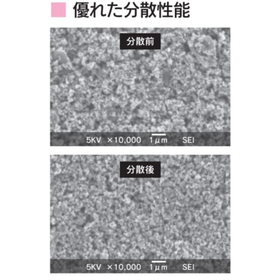
Case Studies of Distributed Engineering Failures | Why Can't We Resolve Issues with Dama and Quality Variability? Common Causes and Countermeasures.
In dispersion engineering, challenges such as "clumps persist regardless of how many times conditions are changed" and "variability in particle size distribution does not improve" occur in many settings. In one case, the cause of poor dispersion was attributed to equipment performance, leading to responses such as increasing rotation speed and extending processing time. However, the persistence of clumps and variability in quality were not resolved, and rather, new problems arose, such as particle fragmentation due to excessive shear. Behind such failures lies the misconception that "dispersion = just apply strong shear." In reality, if clumps are formed in the initial stage due to poor wetting or uneven flow when the powder is introduced, it is difficult to completely resolve them by applying strong shear in subsequent processes. Additionally, in batch processing, variations in flow and residence time lead to different dispersion histories for each particle, making it impossible to ensure reproducibility of quality. To address this issue, it is crucial to review the entire process, including not just changes in equipment conditions but also the steps from powder introduction to dispersion. By adopting configurations that apply shear simultaneously with powder introduction and implementing inline continuous processing that maintains consistent flow and dispersion conditions, it is possible to suppress initial clumps and achieve stable dispersion quality. Improving poor dispersion requires optimization of the entire process, not just the equipment alone.

About澁谷工業
We will propose semiconductor assembly equipment, laser processing machines, and solid-liquid mixing and dispersion systems, among others.
Our company is headquartered in Kanazawa City, Ishikawa Prefecture, and has sales offices and factories both within and outside the prefecture. We focus on the bottling business, which involves filling beverages and other products, and we are expanding into various fields such as solid-liquid mixing and dispersion systems, laser processing machines (including fiber lasers and CO2 lasers), and semiconductor assembly equipment (such as taping machines, multifunctional test handlers, ball mount machines, and bonders). Please feel free to contact us if you have any inquiries.