
Balance Adjustment Basic Course 1: How to Choose the Number of Adjustment Faces


Balance Adjustment Basic Course 1: How to Choose Adjustment Faces
We often receive questions about whether to perform balance correction using one-sided correction (static balance) or two-sided correction (dynamic balance), and what the differences are. In this document, we will briefly explain the differences between one-sided and two-sided correction, as well as the reasons why two-sided correction is necessary.
basic information
【Publication Content】 - What is 1st surface correction? (Static balance) - What is 2nd surface correction? (Dynamic balance) - What is a couple force? - The necessity of 2nd surface correction
Price range
Delivery Time
Applications/Examples of results
For more details, please refer to the PDF document or feel free to contact us.
catalog(1)
Download All Catalogs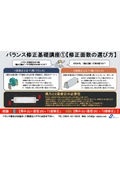
Recommended products


Distributors

Sigma's balance measurement method features the adoption of multivariate analysis techniques for detecting imbalances, allowing for high-precision measurements across a range from low to ultra-high rotational speeds. The field balancer that incorporates this measurement method has been in use since 1985, with cumulative production exceeding 8,000 units. Furthermore, after that, we began selling more precise balancing machines and condition monitoring devices that continuously monitor rotating machinery and detect signs of abnormalities, which also utilize the aforementioned measurement method. Over 30 years since the start of balancer production, Sigma's balancers are actively used across various industries.