

Product Categories

Featured products


Products/Services(30items)
-
![[Information] Trends in Cybersecurity Legislation in the EU](https://image.mono.ipros.com/public/product/image/2100693/IPROS8523652273103950725.png?w=280&h=280)
[Information] Trends in Cybersecurity Legislation in the EU
-

Technical Document "Introduction to CE Marking" - From Machinery Directive to Machinery Regulations
-
Support for beverage reuse businesses in accordance with PPWR
-
Support for PPWR Compliance in the Toy Industry
-
Support for PPWR for Electronic Devices
-
Packaging Material Regulations for the Cosmetics Industry in Compliance with PPWR
news list
-
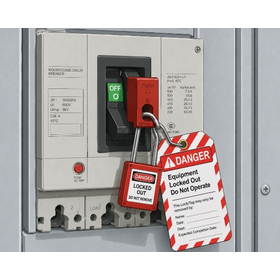
Vol. 6 How to Create User Manuals for North America For those responsible for exporting machinery and equipment to the United States and Canada, or those considering expanding into the North American market.
"There is already a manual compliant with CE standards. For the North American market, it should be fine to use the English version as it is." This way of thinking has a significant pitfall. In the North American market, the safety information in manuals is governed by ANSI Z535.6, and electrical safety is covered by NFPA 79, which are different regulatory frameworks from those in the EU. Additionally, a unique aspect of the United States is that deficiencies in manuals manifest not as administrative guidance but as product liability (PL) lawsuits. "Failure to Warn" is a typical point of contention in U.S. PL lawsuits. In this issue, we will explain why simply translating the EU manual into English does not comply with North American standards from three perspectives: the safety message format of ANSI Z535.6, the electrical safety requirements of NFPA 79, and the alignment with OSHA's lockout/tagout (LOTO) regulations.
-

Vol.5 What the EU Cyber Resilience Act (CRA) Requires in the Instruction Manual
To those responsible for exporting machines equipped with PLCs, touch panels, and network connections to the EU, which may also include CE-marked products: "We are already compliant with CE marking and are progressing towards compliance with the Machinery Directive." — However, after December 2027, there may be another regulatory compliance requirement. The EU Cyber Resilience Act (CRA: Regulation (EU) 2024/2847) is the EU's first horizontal cybersecurity regulation that applies to all products capable of processing and exchanging digital data. The CRA is a regulation that applies separately from the Machinery Directive and Machinery Regulations. In this issue, we will organize the requirements for documentation that the CRA mandates, based on the text of the regulation, and inform you of the differences from existing documentation and the preparations that should be undertaken now.
-

I want to expand overseas, but who should I consult first? ~Consultation sources for subsidies, support systems, and certifications~
When companies start considering overseas expansion, many feel, "I don't know where to begin." Not only do they need to develop sales channels and conduct market research, but they also have to obtain certifications and comply with regulations, which can be a significant burden if they try to proceed on their own. However, by utilizing the programs offered by public institutions and local governments that support overseas expansion, they may be able to reduce the burden of information gathering and costs.
-

The EU packaging regulation PPWR has officially come into effect. Are you checking the impact on your own products?
On August 12, 2026, the full application of the EU's new packaging regulation, the PPWR (Packaging and Packaging Waste Regulation), began. As a result, inquiries regarding PPWR and EPR have increased at overseas certification PROs. "Are our products subject to this?" "Is EPR registration necessary?" "What should we confirm with our packaging material suppliers?" "We are CE compliant, but are there additional requirements?" Many companies seeking advice on these matters are unsure about the extent of the impact on their business and the necessary actions, causing them to hesitate in the information-gathering stage. The PPWR is not just an environmental regulation; it is a system that also relates to the packaging design and document management of companies supplying products to the EU market. This article will outline the overview of the system and the points that companies should verify.
-

Vol.4 Adapting to Mechanical Regulations: "What Changes and What Remains the Same" | Key Points for Instruction Manual Compliance
In the previous issue (Vol. 3), we organized the impact of the transition to machine regulations on the practical aspects of instruction manual creation. This time, we will take a further step and focus on the practical aspects of the design process regarding "when, who, and how should instruction manuals be created." In response to the question of "when should we start writing the instruction manual," the standard provides a clear answer. ISO 12100 requires that the results of risk assessment be reflected in three stages: design, protective measures, and information provision, positioning the instruction manual as the final output of the design process under "information provision." Practically speaking, it is ideal to start creating the instruction manual simultaneously from the stage of defining requirements and initiating the initial risk assessment. In this issue, we will clarify the relationship between the ISO 12100 three-step method and instruction manuals, outline specific instruction manual tasks and internal role distribution for each design phase, and present four checkpoints that should be incorporated into the design review.

Aboutテンダーラビングケアサービス
海外認証PRO グローバルアクセス部(東京本社)
Overseas Certification PRO assists with obtaining product safety declarations and certifications for various countries, including Europe (CE mark), North America, Canada, and South Korea.
We want to make overseas certification and CE marking more accessible. This is a sentiment we always hold dear in our support for compliance. "Overseas Certification PRO" collaborates with experts and certification bodies in various fields to coordinate all tasks from certification to declaration according to the laws of each country. We provide a one-stop solution for affixing international certification marks, assisting your company in entering overseas markets. Our company has over 20 years of experience and achievements, primarily focusing on human resource services. Throughout our efforts, we have worked to secure personnel who can meet specialized needs. Since the start of our services in 2010, we have supported exports to over 30 countries and regions, with a track record of more than 400 compliance support and consulting services, mainly in industrial machinery and electronic devices. "We conducted tests at a certification body but couldn't pass." "We were stopped at customs." "The person in charge of CE marking in the past has left the company." "I don't know where to start." We provide supportive assistance tailored to the concerns of manufacturers like you. We offer free individual consultations, so please feel free to contact us.