
[Case Study] Thomson Blade


Significantly contributes to improving productivity, quality, and yield! Introducing a case study that adopted ToshiCal coating on Thomson blades.
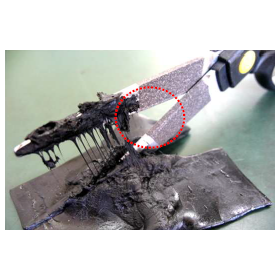
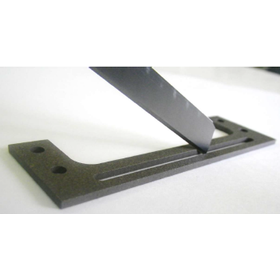
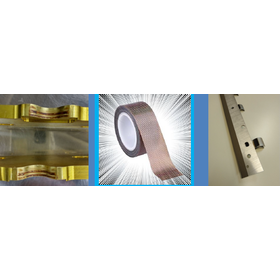
At this semiconductor substrate manufacturer, a film substrate with a sandwich structure made of PET film coated with acrylic adhesive is produced, and then the film is cut with a Thomson blade. In the untreated case, the adhesive would adhere to the blade, causing cutting defects. Therefore, they consulted with us and adopted "Toshical S TS-1310." After coating, the adhesion issues were eliminated, significantly contributing to improvements in productivity, quality, and yield. 【Overview】 ■ Customer: Semiconductor substrate manufacturer ■ Target: Film substrate manufacturing process ■ Implementation: Toshical S TS-1310 *For more details, please refer to the PDF document or feel free to contact us.
basic information
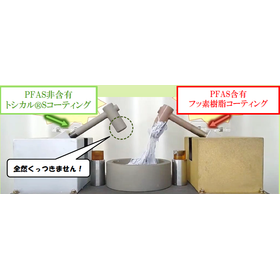
【Reference】 <Peeling force measurement data with acrylic adhesive tape> ■ ToshiCal S TS-1310: 0g ■ Teflon PTFE coating: 250-300g ■ SUS304 untreated: 800-900g *For more details, please refer to the PDF document or feel free to contact us.
Price range
Delivery Time
Applications/Examples of results
For more details, please refer to the PDF document or feel free to contact us.
catalog(7)
Download All Catalogs


Recommended products


Distributors

Our company offers contract processing for surface functional modification of various substrates. Primarily, we create a dramatically non-adhesive surface by adding unevenness to surfaces that dislike adhesion, embedding special resin in the recesses while leaving it in an uneven shape. We provide non-adhesive coating "Toshical(R)S Coating Processing" and "Fine Blast Processing," which overcomes the weaknesses of sandblasting and shot blasting, allowing for uniform control of surface unevenness. Please feel free to contact us if you have any requests.