
Vericut Icam Post-Processor for 3D Printing


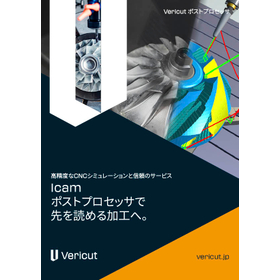
Streamline the post-processing steps after 3D printing to improve quality.
In the 3D printing industry, there is a demand for increased efficiency and quality improvement in the post-processing stage after printing. In particular, accurate code conversion and smooth data integration are crucial for the finishing of printed objects and collaboration with CNC machining. Inadequate data conversion can compromise product accuracy and lead to rework. The Vericut Icam post-processor optimizes the post-processing stage after 3D printing, maximizing the efficiency and precision of the manufacturing process. This reduces cumbersome tasks and enhances productivity. 【Usage Scenarios】 - Post-processing of products created with a 3D printer - Finishing processes through CNC machining - Integration between CAM systems and CNC machines 【Benefits of Implementation】 - Improved product accuracy through precise code conversion - Reduced process time through smooth data integration - Optimal machining tailored to the characteristics of CNC machines - Machining simulation using digital twins
basic information
**Features** - Unmatched Compatibility and Integration Icam Post seamlessly integrates with various CAM systems and CNC machines. This enables accurate code conversion and smooth data transfer, regardless of the machining equipment. - Customization to Fit CNC Machine Characteristics Each CNC machine has its own unique characteristics and quirks. Icam Post can be customized to the specific settings of the CNC machine, achieving optimal compatibility. - Create Digital Twins in Combination with VMC By combining the post-processor with Vericut Machine Configuration (VMC), you can create an accurate digital twin of the CNC machine. This allows for the setting, testing, and simulation of outputs after the post-process. **Our Strengths** CGTech is a global leader in CNC machine simulation software. Our simulation software, "Vericut," is used in various production environments, including aerospace, automotive, railways, molds, home appliances, power generation, and heavy industry, and is highly regarded worldwide.
Price range
Delivery Time
Model number/Brand name
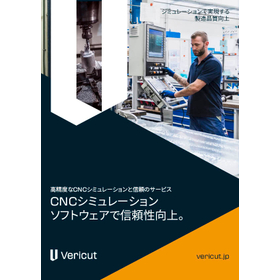
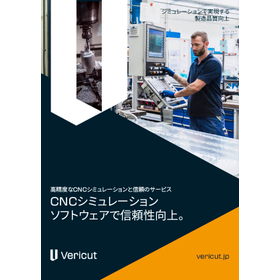
Vericut High-Precision CNC Simulation and Trusted Service
Applications/Examples of results
*For more details, please refer to the materials. Feel free to contact us as well.*
catalog(10)
Download All Catalogs



Recommended products













Distributors

CGTech is a global leading company in CNC machine simulation software. Its simulation software, "Vericut," is used in various production environments, including the aerospace industry, automotive, railways, molds, home appliances, power generation, and heavy industry, and is highly regarded worldwide. ■ What is Vericut... Vericut simulates using G-code NC programs for machine tools, unlike CAD/CAM system simulations. Vericut supports a wide range of machine tools, including multi-axis machining such as high-efficiency and high-precision 5-axis processing, lathes, multi-tasking machines, and multi-surface machining machines. ■ Pursuing the perfection of G-code NC programs Vericut provides a "virtual machine" that faithfully reproduces in-machine operations such as macro programs, macro variables, ATC operations, and pallet changes in detail. Vericut offers a variety of features, including not only crash detection but also pre-inspection of over-cutting/under-cutting by comparing the machined cutting model with the design model, as well as optimization of NC programs considering tool load.