
[Column] Uniformity of Powder Mixing through Simulation!


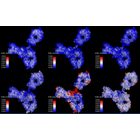


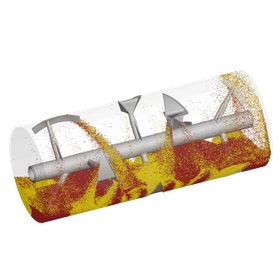

Visualizing the internal behavior is crucial for the uniformity of powder mixing!
In the powder mixing process, various mixers are used, and due to differences in particle size, density, shape, friction, adhesion, and flowability, powders exhibit complex behavior within the equipment. In dry mixing, areas where particles do not sufficiently interchange can lead to component segregation, while in wet mixing, the distribution of liquid, in addition to the movement of the powder, affects quality; for example, excessive moisture can cause clumping, agglomeration, and wall adhesion. To address these challenges, it is important to understand not only macro results such as mixing degree but also how particles and liquids are distributed within the mixer. Our software, 'ThreeParticle/CAE,' allows for comprehensive analysis centered on DEM and DEM-CFD coupled simulations, enabling the analysis of complex particle shapes, interactions with fluids, coupling with structural analysis, and coordination with mechanisms. By conducting coupled analysis considering the interactions between powder, fluid, structure, and mechanism in a single environment, it is possible to efficiently progress from setting analysis conditions to executing calculations and evaluating results. *For more details, please refer to the column on our company's website linked below!*
basic information
For more details, please see the product article from ThreeParticle.
Price range
Delivery Time
Applications/Examples of results
■Utilization of DEM in Dry Mixing In dry mixing, DEM can be used to analyze the behavior of individual particles. It is possible to understand the pathways through which particles circulate within the mixer and the areas where they are likely to remain. - Particle trajectory: Whether the powder circulates sufficiently throughout the entire device - Velocity distribution: Understanding fast and slow moving areas - Dead zones: Identification of areas that are difficult to mix - Mixing degree: Evaluation of the degree of uniformity - Segregation: Confirmation of uneven tendencies due to particle size and density differences - Particle flow during discharge: Checking for any bias during discharge - Blade torque: Evaluation of device load and power consumption ■Utilization of DEM-CFD Coupling in Wet Mixing In DEM-CFD coupling, the behaviors of powders and fluids are analyzed together. It is possible to evaluate how liquids spread, areas that are overly wet, and regions where adhesion to walls is likely to occur. - Initial adhesion position of the liquid: Examination of nozzle position and angle - Liquid spreading: Evaluation of the time required for uniformity - Overly wet areas: Consideration of methods to reduce clumps and aggregates - Areas prone to adhesion on walls: Reduction of residues during discharge - Timing of liquid addition: Examination of efficient dispersion conditions - Torque changes: Motor load evaluation
Recommended products
Distributors

Our company develops and sells a "Maintenance Management System" for managing and operating various plants, factories, and other facilities and assets. Currently, this system is undergoing significant evolution into one that incorporates IoT technologies, such as sensor information and input from tablet devices, as well as AI technologies like machine learning, featuring functions for failure prediction and automatic scheduling. Additionally, as part of the recent trend towards digital transformation (DX), there is a growing movement to digitize and automate manufacturing processes and research and development sites in factories to enhance operational efficiency. In line with this trend, our company provides a solution aimed at improving efficiency in research and development environments, known as the Laboratory Information Management System (LIMS), which includes features such as workflow management, data tracking, data management, data analysis, and integration of electronic lab notebooks.