
"High-Speed Friction Testing Machine" Servo Motor High-Speed Reciprocal 500mm/s


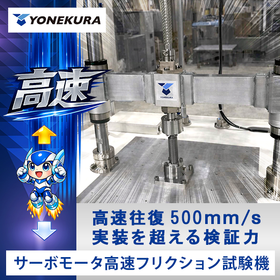
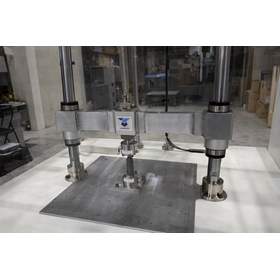
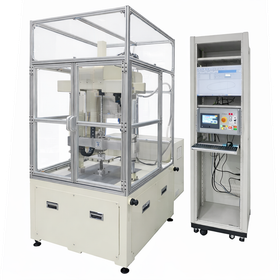
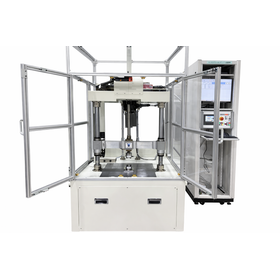
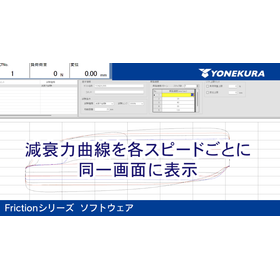
A testing device that visualizes the performance of dampers in high-speed domains. It accurately captures extreme vibrations and impacts, clearly demonstrating performance differences.
A testing device that visualizes the true value of dampers, suspensions, and shop absorbers in high-speed domains. It accurately captures extreme vibrations and impacts, clearly highlighting performance differences. - Verification capability exceeding high-speed reciprocation of 500mm/s - High-speed friction made visible using servo motors - Smart power with driving speeds that do not succumb to hydraulic limitations - Stroke can be freely set - Challenging the limits of motor drive with combinations of stroke and speed
basic information
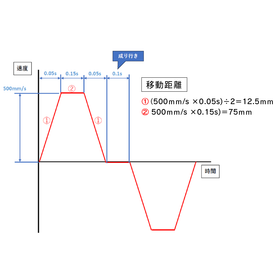
【Main Specifications】 <Load Mechanism> Load Mechanism: Load control by a 5.5kW servo motor Load detection and control using a ±10kN load cell Lifting drive via ball screw Load Capacity: -5000 to 5000N (accuracy within 1% of full scale for each range) Lifting Stroke: 350mm Lifting Speed: 1 to 500mm/sec Displacement Detection: Motor shaft rotary encoder (resolution 0.01mm) Speed Diagram: Image of reciprocating motion at maximum speed
Price information
Please contact us.
Delivery Time
Applications/Examples of results
It is a device that measures damping force by reciprocating a testing machine. It evaluates how much dampers, suspensions, and shock absorbers can reduce impact.
Related Videos
Recommended products



Distributors

Mikyo Manufacturing provides a consistent production system that develops, designs, manufactures, and supports testing machines and measurement devices tailored to the objectives and applications of customers in fields such as material research and development, as well as in accordance with material testing standards and methods. The testing machines that respond to requests from various major manufacturers and research institutions are mostly customized products. When measuring the durability of new materials, they are completely made-to-order. We also pay attention to the "usability," which varies depending on the installation location and users, and we adjust the testing machines to ensure they are optimal for each customer.