Antibiotic-resistant bacteria detection reagent "Boric acid solution"
Compare the inhibition zones! Determine the production of beta-lactamases and carbapenemases.
We would like to introduce our resistant bacteria detection reagent, "Boron Acid Solution." Using disks for susceptibility testing, we compare the inhibition zones obtained from disks with and without the addition of this product to determine the production of beta-lactamase and carbapenemase. After culturing at 35°C overnight (16 to 18 hours), if an expansion of the inhibition zone diameter (generally 5mm or more) is observed due to the addition of boron acid, it is judged as positive. 【Product Lineup】 ■ SG-BA50-5 (50μL: 5 pieces) ■ SG-BA50-10 (50μL: 10 pieces) ■ SG-BA50-20PB (50μL: 20 pieces) ■ SG-BA50-50PB (50μL: 50 pieces) *For more details, please download the PDF or feel free to contact us.
basic information
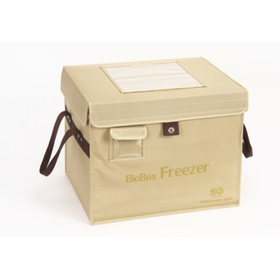
**Testing Method for KPC-type Carbapenemase Using Boronic Acid** 1. Remove boronic acid from the freezer and thaw it at room temperature. 2. Suspend pure cultured colonies in sterile water or sterile saline to prepare a McFarland 0.5 bacterial suspension. 3. Uniformly inoculate the prepared bacterial suspension onto Mueller-Hinton (MH) agar plates using a swab, changing the angle by 120 degrees and repeating this process 3 to 4 times. 4. Place two disks of the same drug 3 cm apart on the medium, adding 10 μL of the test substance (boronic acid) to one of the disks. 5. After incubating at 35°C overnight (16 to 18 hours), if an expansion of the inhibition zone diameter due to the addition of boronic acid is observed (principally more than 5 mm), it is judged positive. *For more details, please download the PDF or feel free to contact us.*
Price range
Delivery Time
Applications/Examples of results
For more details, please download the PDF or feel free to contact us.
Detailed information
-
[Experiment] Carbon Fiber Recycling Cut golf shafts were subjected to 1000°C superheated steam for about one minute, causing the resin to sublimate and returning the material to a fiber state. This recycling method has garnered attention for keeping the damage to the carbon fibers extremely low.
-
[Experiment] Filter Cleaning Using superheated steam at 500°C, we clean strainers with resin buildup, completely sublimating the resin in about one minute. Superheated steam reaches every corner of the object, making it effective for cleaning parts with very fine nozzles or complex shapes.
-
[Experiment] Carbonization of Food Fresh mandarins were carbonized using superheated steam at 300°C. Since superheated steam is in a low-oxygen state, it re-resources waste into high-quality charcoal.
catalog(2)
Download All CatalogsRecommended products
Distributors
As we enter the 21st century, the development of science and technology, including information technology (IT) and biotechnology, is accelerating, presenting new possibilities for people's lives. On the other hand, issues such as environmental pollution caused by chemical substances and the emergence and resurgence of infectious diseases due to microorganisms have not been overcome even with the latest scientific technologies, and are instead becoming more serious and complex. In this situation, the importance of the work of researchers, engineers, and healthcare professionals tackling these problems that threaten people's health will continue to grow. We aim to contribute to these individuals through the provision of instruments and consumables in the fields of environmental analysis, measurement, and microbiological research. We will reflect on what we can do and what we can uniquely offer, striving to provide unique value.