
Display Spatial Resolution Measurement System for VR/AR



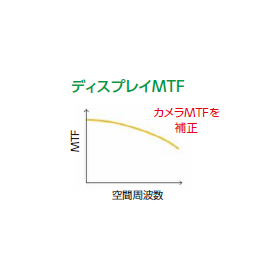
Quantifying the "visibility" of displays that influences the immersion of VR/AR.
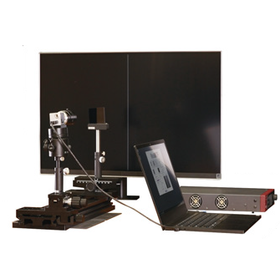
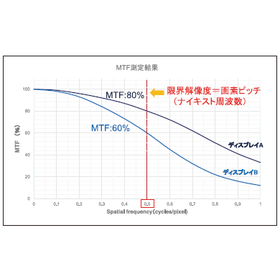
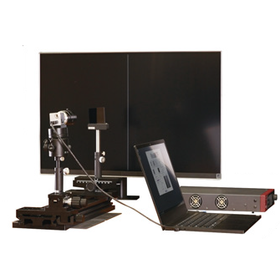
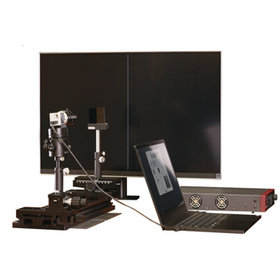
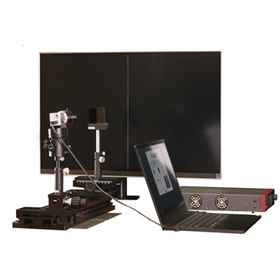
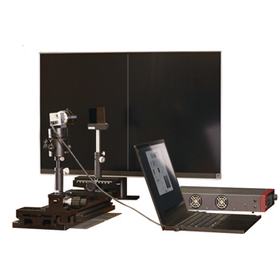
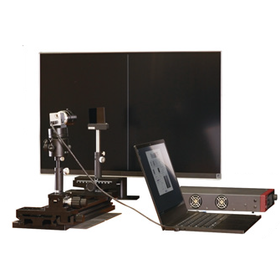
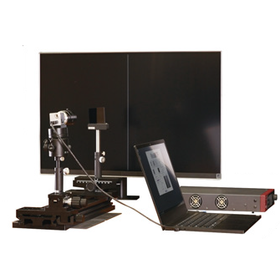
In the VR/AR industry, the display quality is crucial for enhancing immersion. Specifically, to achieve a visual representation close to the real world, it is essential to accurately evaluate and optimize the spatial resolution of the display. If the spatial resolution is low, the images may become blurry, compromising the sense of reality. The MTF-33S provides an objective evaluation of the display performance of VR/AR devices and offers metrics to achieve a higher level of immersion. 【Usage Scenarios】 - Development of VR/AR headsets - Production of VR/AR content - Display evaluation 【Benefits of Implementation】 - Improvement in display quality of VR/AR devices - Enhanced immersion - Reduction in development time
basic information
【Features】 - Quantifying "visibility" clarity - Measurement evaluation that aligns with human vision - Support for not only displays but also materials and components - Early adoption of the internationally standardized IEC-compliant method (Line-based) - Simple operation and high-precision measurement at an affordable price 【Our Strengths】 Since our establishment in 2013, we have been providing sales and technical services for optical measuring instruments for displays. Under the leadership of our CEO, who has been involved in display development for many years, we contribute to the advancement of VR/AR displays through technology and service.
Price range
Delivery Time
Model number/Brand name
MTF-33S
Applications/Examples of results
Display Development: Evaluation of visual resolution for new panels such as OLED, μLED, and LCD, and confirmation of interactions with new materials. Device Evaluation: Analysis of resolution contributing factors for TFT substrates, CF, polarizers, and diffusion films. Quality Assurance and Mass Production Inspection: Verification of spatial resolution variation in module processes and quantification of defect judgment criteria. Visual UX Improvement: Scientific verification of "how it looks to the human eye" for AR, HUD, and in-vehicle displays. Material and Component Manufacturers: Quantification of contributions to visual quality from in-house products (optical films, color filters, etc.). ■ Implementation Examples and Evaluation Targets (Partial Excerpt) Major Display Panel Manufacturers (Domestic and Overseas): - Spatial resolution evaluation in μLED development lines. - Correlation verification between OLED emission variation and display detail perception. TFT Substrate and Component Manufacturers: - Quantification of visual performance before and after the adoption of optical films. - Evaluation of the impact of fine wiring technology on visual resolution. Automobile Manufacturers / In-Vehicle Display Suppliers: - Evaluation of visibility from a UX perspective for HUD and center displays. Universities and Research Institutions: - Verification of measurement methods for spatial resolution. *For more details, please feel free to contact us.
Related Videos
catalog(5)
Download All Catalogs


Recommended products


Distributors

In 2013, we established the company and started the business of selling optical measurement instruments for displays and providing technical services. The CEO, Hidetaka Shima, who is also the founder of the company, has been engaged in display development and business for 25 years at Sony Corporation. Displays will continue to evolve. In 50 years, 100 years from now, we will pursue beauty and convenience in line with the flow of the times. Information devices driven by human sensibility will become increasingly important. Our company will continue to make significant contributions to the development of displays. *Origin of the company name "Aphrodite Corporation" It is derived from "Aphrodite" (in Greek), the goddess of beauty and love, who is one of the twelve gods in Greek mythology. The philosophy of Aphrodite Corporation is "the creation of beauty."