
What is sludge? Types and treatment as industrial waste [Basic Knowledge]
Sludge generated from wastewater treatment in business is considered industrial waste, regardless of the industry. This explains how to determine hazardous substances and how to verify subcontractors.
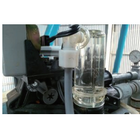
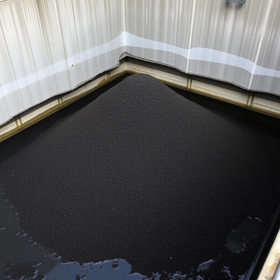
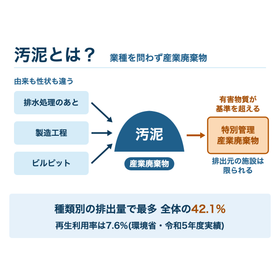
Sludge refers to the muddy substances that come from wastewater treatment and manufacturing processes. Specifically, it includes the muddy substances after wastewater treatment, those generated during manufacturing processes, as well as excess sludge, coagulated sediment sludge, and building pit sludge, among others. Different origins and characteristics fall under the single category of "sludge." The quantity and moisture content of sludge can also vary depending on the condition of the coagulants and dewatering machines. ■ Industrial Waste Regardless of Industry?! According to Article 2, Paragraph 4 of the Waste Management and Public Cleansing Law, sludge generated from business activities is classified as industrial waste. While paper scraps and wood chips are limited to specific industries by government ordinance, there are no such limitations for sludge. Whether from a factory or an office building, sludge produced from business activities is treated as industrial waste. ■ The Largest Quantity by Type! In the fiscal year 2023, sludge accounted for the largest quantity of industrial waste by type, making up 42.1% of the total. On the other hand, the recycling rate is only 7.6%. Sludge is particularly low in recycling rates among industrial waste types. Given its large quantity, it is significant to understand how to handle it. Please feel free to consult with us first.
basic information
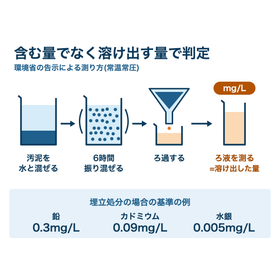
■Does the handling change if it contains harmful substances? If sludge leaches heavy metals or PCBs beyond certain standards, it becomes specially controlled industrial waste. However, the sludge in question is limited to specific facilities that generate it. At the applicable business sites, a management officer for specially controlled industrial waste is appointed for each facility. The relevant facilities are specified by the Waste Management Law's ordinance. ■Determination is based on the amount leached, not the amount contained! The unit of the determination criteria is mg/L. It is assessed based on the amount leached into water, not the amount contained in the sludge. According to the method specified in the notification, the sludge is mixed with water, stirred for 6 hours at room temperature and pressure, and then the filtered liquid is measured. ■Examples of landfill disposal standards Examples of standards for landfill disposal are as follows: 1. Lead: 0.3 mg/L 2. Cadmium: 0.09 mg/L 3. Mercury: 0.005 mg/L ■Is one contractor sufficient? Article 12 of the Waste Management Law stipulates that transportation must be entrusted to a collection and transportation contractor, and disposal must be entrusted to a disposal contractor. When handing over, a management ticket (manifest) must be issued, and a copy must be kept for five years. Even if transportation and disposal are entrusted to the same company, each respective permit must be verified.
Price range
Delivery Time
Applications/Examples of results
■There are standards for storage until transportation According to the Waste Management Law, industrial waste must be stored in accordance with the storage standards to ensure that it does not hinder the preservation of the living environment until it is transported. Article 8 of the enforcement regulations of the law stipulates that a fence must be established around the storage location and a signboard of at least 60 cm in both width and height must be placed. If there is a risk of wastewater, a drainage system must be installed, and the bottom surface must be covered with materials that do not allow water to seep through. This is particularly important to confirm in the case of sludge with high moisture content. ■Things the person in charge should first confirm 1. Source: From which facility or process the sludge originated 2. Leaching test: Whether it meets the criteria for specially controlled industrial waste 3. Permit: Whether the contractor has the permit for the collection, transportation, and disposal of sludge 4. Management ticket: Whether the issuance and copies are stored for five years ■What to do if you are concerned about disposal costs? The amount of sludge and its moisture content can vary depending on the type and amount of coagulant used, as well as the condition of the dewatering machine. There are methods to review not only the disposal stage but also the operating conditions of wastewater treatment. Torii accepts consultations regarding chemicals for wastewater treatment and inspections of wastewater treatment facilities. Please feel free to consult with us first.
catalog(3)
Download All Catalogs

Recommended products
Distributors

Since our founding, we have continued to provide flexible services with the motto of accurately supplying a diverse range of products that respond to changes in the times and the diversification of consumer needs, tailored to various applications and requirements. With the corporate slogan "Chemical Engineering Partner," we, as a group of experts in chemical technology, actively discover ideas to solve our customers' problems from advanced technologies both domestically and internationally, and propose them.