
What is Membrane Bioreactor (MBR)? Mechanism and Operational Precautions [Basic Knowledge]
MBR, which separates sludge and water using a membrane instead of a settling tank. This explains the role of the membrane and the perspective on membrane fouling that cannot be avoided during operation, as well as the considerations for cleaning.
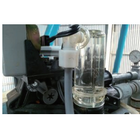
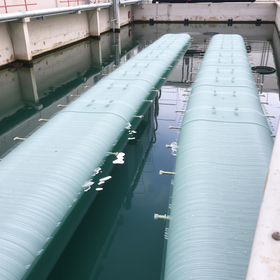
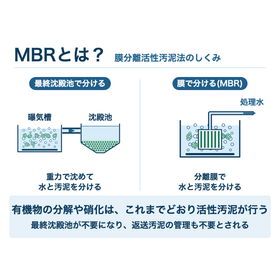
Membrane Bioreactor (MBR) is a method that performs solid-liquid separation, which has traditionally been carried out by gravity sedimentation in the activated sludge process, using a separation membrane. The decomposition of organic matter and nitrification are still carried out by activated sludge as before. ■ Is the membrane only responsible for separation? While the separation membrane can almost completely separate bacteria, it allows dissolved low-molecular substances to pass through. This means that low-molecular substances that remain dissolved and cannot be fully decomposed during biological treatment will pass through the membrane. The water quality of the permeated water is influenced by the activity of the microorganisms in the reaction tank. ■ Can even difficult-to-settle sludge be separated? Since there is no need for gravity sedimentation, even difficult-to-settle sludge can be separated, increasing the sludge concentration in the reaction tank and allowing for treatment in a shorter time. The final sedimentation tank becomes unnecessary, and there is no need for the management of returned sludge. ■ What kind of membrane is used? In the treatment of food wastewater, for example, precision filtration membranes (MF membranes) with a pore size of 0.4 μm are used, with methods that either immerse the membrane in an aeration tank or place it outside the tank and pump the water to it. The applicable BOD concentration of the wastewater is approximately 3,000 mg/L or lower. Please feel free to consult us first.
basic information
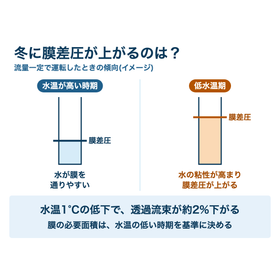
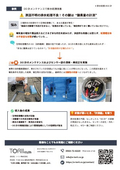
■Why does clogging occur? The phenomenon where substances adhere to the surface of a membrane or in the flow path, accumulating and making it difficult for water to pass through, is called fouling. The main substances causing this are inorganic salts, colloids, soluble organic materials, and adhering microorganisms, which occur in a complex manner during wastewater treatment. There are also substances that cannot be measured as solids in regular water quality analysis that can form gel-like layers, making this a difficult phenomenon to predict. ■There are two purposes for cleaning 1. Routine cleaning: Air cleaning that shakes the membrane with coarse bubbles or a brief pause in filtration to suppress adhesion. 2. Recovery cleaning: When the membrane differential pressure rises, wash with a chemical solution. ■How to choose a chemical solution Oxidizing agents like sodium hypochlorite are used for the adhesion of organic materials. For substances that cannot be removed by this, acids or alkalis may be effective. ■Is the rise in differential pressure in winter due to clogging?! When the water temperature drops, the viscosity of the water increases and permeability decreases, with a decrease of about 2% in permeate flux for every 1°C drop in temperature. When operated at a constant flow rate, the membrane differential pressure tends to rise during low water temperature periods. Therefore, the required membrane area is determined based on the periods of low water temperature.
Price range
Delivery Time
Applications/Examples of results
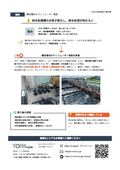
■What to look for in daily inspections? In membrane treatment of sewage, there are examples of daily monitoring items as follows: 1. Aeration tank: DO, MLSS, filter paper filtration amount 2. Effluent: water temperature, pH, turbidity, simple water quality analysis 3. Instruments: membrane differential pressure, permeate flow rate It is desirable to continuously monitor the membrane differential pressure and utilize it for planning chemical cleaning. ■Is it harder for oxygen to dissolve when sludge is thick? As the sludge concentration increases, the oxygen transfer efficiency of the aeration device decreases. It is important to check DO and maintain appropriate MLSS levels. ■Pre-treatment to protect the membrane To prevent membrane damage and clogging, the water entering the reaction tank needs to be pre-treated with a fine mesh screen of about 1mm. ■Be careful about the types of defoamers! Alcohol-based defoamers are used for foaming in the reaction tank. Silicone-based defoamers are not used as they can cause membrane clogging. When selecting a defoamer, make sure to check the composition. At Torii, we offer consultations on inspections of wastewater treatment plants, maintenance of DO meters, updates of aeration devices, and selection of water treatment chemicals. Please feel free to contact us first.
catalog(3)
Download All Catalogs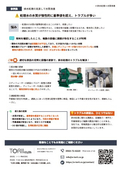
Recommended products


Distributors

Since our founding, we have continued to provide flexible services with the motto of accurately supplying a diverse range of products that respond to changes in the times and the diversification of consumer needs, tailored to various applications and requirements. With the corporate slogan "Chemical Engineering Partner," we, as a group of experts in chemical technology, actively discover ideas to solve our customers' problems from advanced technologies both domestically and internationally, and propose them.