
What is a grease trap? Reasons for sludge accumulation and cleaning guidelines [Basic Knowledge]
Is it safe to wash away oil stains with hot water? In fact, it's counterproductive. This explains the mechanism of how oil and sludge accumulate in grease traps, the frequency of cleaning, and how to dispose of the waste generated.
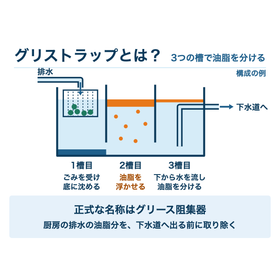
A grease trap is a device that separates and removes grease from wastewater generated by restaurants and commercial kitchens before it enters the sewer system. The official name is a grease interceptor, and it is sometimes referred to as a grease trap. The installation of grease traps is mandated by laws and regulations in areas where grease is discharged. ■ What is inside? A typical grease trap is divided into three sections: 1. First chamber: A metal mesh basket collects food waste and allows smaller debris to settle. 2. Second chamber: Lighter debris and grease float to the top and accumulate. 3. Third chamber: A pipe-shaped trap flows water from the bottom to further separate grease. The main components are the receiving basket, partition plates, and drainage trap. ■ Why does sludge accumulate? When wastewater remains in the trap, the flow slows down, causing grease to rise. Animal fats, in particular, solidify when cooled. Meanwhile, fine debris settles at the bottom as sediment. Neglecting cleaning can prevent the grease trap from functioning properly and lead to blockages in the sewer pipes. Please feel free to consult us first.
basic information
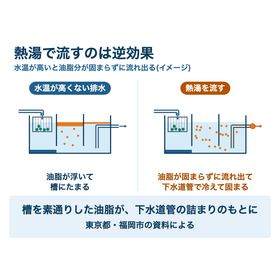
■How often should cleaning be done? The general guidelines are as follows: 1. Trash in the basket: Daily 2. Floating grease: About once a week; for establishments that use a lot of oil, daily 3. Sediment at the bottom: About once a month 4. Inside the trap: Once every 2 to 3 months These are common guidelines among many municipalities, and the specific frequency may vary by municipality, so it's important to check the guidelines for the area where your store is located. Some municipalities require the removal of floating grease daily and the removal of bottom residue at least once a week. ■Is flushing with hot water counterproductive? Flushing with hot water can hinder the removal of grease. When the water temperature is high, the grease does not solidify and flows away. Grease that bypasses the tank cools and solidifies in the downstream sewer pipes, leading to blockages. ■Is it sufficient to break it down with air or bacteria? Devices that blow air or the introduction of bio-bacteria are also not recommended. Some municipalities have prohibited retrofitted aeration devices due to instances where aeration mixed the contents of the tank and allowed grease to flow into the sewer. There are also municipalities that request not to use devices that mix grease with wastewater without separating it.
Price range
Delivery Time
Applications/Examples of results
■How to dispose of the waste you collected? The handling of items coming from the grease trap varies by location. 1. Food waste from the basket: General waste 2. Floating oils and bottom sediments: Industrial waste Oils and sludge generated from business activities cannot be disposed of as general waste or household waste. They must be processed by a licensed industrial waste disposal contractor. Choose a contractor that has the necessary processing permits. ■Issuance of a manifest is also required When outsourcing, it is also necessary to issue an industrial waste management slip (manifest) based on the Waste Management Law. ■Costs incurred from blockages If grease causes blockages in sewer pipes, the responsible party may be required to bear the cleaning costs. Additionally, leaving accumulated waste and grease unattended can lead to rotting, bad odors, and pests, making regular cleaning essential. ■Our proposal We assist food factories in selecting chemicals tailored to the components of sludge and odors in their drainage systems. We also offer inspections of factory drainage areas. Please feel free to consult with us.
catalog(2)
Download All Catalogs

Recommended products

Distributors

Since our founding, we have continued to provide flexible services with the motto of accurately supplying a diverse range of products that respond to changes in the times and the diversification of consumer needs, tailored to various applications and requirements. With the corporate slogan "Chemical Engineering Partner," we, as a group of experts in chemical technology, actively discover ideas to solve our customers' problems from advanced technologies both domestically and internationally, and propose them.