
What is the method for water quality testing? Differences between simple tests and official methods [Basic Knowledge]
A quick method to observe using the color of the reagent and a method to measure according to the procedures set by the government. I will explain the differences between the two uses beyond just convenience.
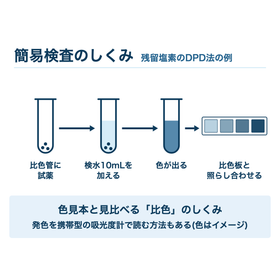
The methods for water quality testing can be broadly divided into "official methods," which are measured according to standards set by the government, and "simple tests," which are quick ways to obtain values on-site. Rather than one being superior to the other, the choice depends on the purpose of the measurement. In this article, we will refer to quick measurement methods other than official methods as simple tests. ■ What are official methods? The values compared to the legal standards are determined by specific measurement methods. In the regulations that establish discharge standards, it is stipulated that the discharge standards are based on detection values obtained using methods specified by the Minister of the Environment. These notifications specify methods according to various standards, such as the Japanese Industrial Standard K0102. For drinking water, the regulations that set water quality standards also require that tests be conducted using methods established by the Minister of the Environment to ensure compliance with the standards. ■ What is the mechanism of simple tests? A commonly used method involves adding reagents to produce a color and comparing it with a color chart, known as colorimetry. For example, in the DPD method for residual chlorine, 10 mL of water sample is added to a colorimetric tube containing reagents, and the concentration is read by comparing it with a color chart. There is also a method to read the color development using a portable spectrophotometer. Please feel free to consult us for more information.
basic information
■Is an easy method not a standard method? In fact, the DPD method from the previous example is one of the standard methods for measuring residual chlorine in drinking water. In addition to the DPD method, other methods such as the current method, spectrophotometry, polarography, and spectrophotometry using continuous automatic measuring devices are listed as testing methods specified by national notifications. Whether a method is considered standard is determined not by the ease of the equipment, but by whether it corresponds to the methods established by the government. ■How long does it take to get results? Depending on the item, some standard methods take a long time. For example, BOD requires incubation at 20°C for five days before the measurement can be taken, so it takes more than five days to get results. In urgent situations, such as water quality accidents, methods that provide quicker results, even if less accurate, may be required. ■Where to measure for self-monitoring of wastewater? Specific business establishments are obligated by the Water Pollution Prevention Act to measure and record the contamination status of their discharged water. The enforcement regulations specify that this measurement should be conducted using the testing methods for discharge standards. Records of measurements for reported items must be conducted at least once a year and cannot be replaced with values from simple tests. There may also be additional measurement requirements specified by local ordinances.
Price range
Delivery Time
Applications/Examples of results
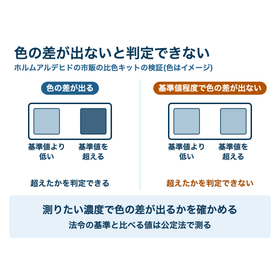
■There are things that cannot be determined by simple tests! There has been a verification comparing the official method and a simple method for formaldehyde in tap water. While commercially available colorimetric kits can provide results in a few minutes, they lack sensitivity to detect color changes at levels close to the standard value, making it difficult to determine if the levels exceed the standard. It is also understood that oxidizing and reducing substances can affect color development, and the importance of adhering to reaction times. ■Considerations for choosing methods 1. Values compared to legal standards: Measured by official methods 2. Understanding daily variations: Observing trends through simple tests or continuous measurements 3. When choosing a simple test: Confirm whether there is a color difference at the concentration you want to measure ■Frequency of continuous measurement and regular inspections The Water Supply Act Enforcement Regulations state that if water supply operators continuously measure and record turbidity and pH values, they can reduce the frequency of regular inspections for those items to generally once every three months or more. ■Assistance with on-site measurements Torii also offers rental of devices for measuring water quality on-site. In addition to regular inspections, we will think together about ways to check daily values on-site. Please feel free to consult with us first.
catalog(2)
Download All Catalogs

Recommended products


Distributors

Since our founding, we have continued to provide flexible services with the motto of accurately supplying a diverse range of products that respond to changes in the times and the diversification of consumer needs, tailored to various applications and requirements. With the corporate slogan "Chemical Engineering Partner," we, as a group of experts in chemical technology, actively discover ideas to solve our customers' problems from advanced technologies both domestically and internationally, and propose them.