
What is well water? Treatment when using well water in factories [Basic Knowledge]
Well water, which is generally considered to have stable water temperature and good water quality. However, depending on the use, treatment is essential. This explains the considerations when using well water in factories.
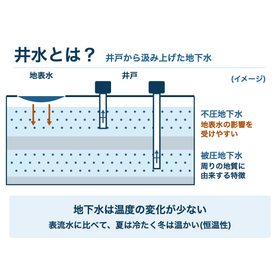
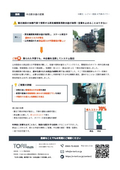
Well water refers to underground water drawn from a well. In factories, it is used for various purposes such as cooling and cleaning, alongside water sources like municipal water and industrial water. It is estimated that industrial water accounts for 27.0% of the total underground water usage in the country (based on usage in 2019). ■ Is there no law defining underground water? In Japan, there is no law that defines underground water, and the Basic Water Cycle Law does not provide a definition either. In a broad sense, it refers to the totality of water found in the gaps between soil and rock below the surface. ■ Cold in summer, warm in winter? Underground water has a "thermostatic" property, being colder in summer and warmer in winter compared to surface water. The temperature of underground water does not change significantly with the seasons, making it feel cold in summer and warm in winter when compared to air temperature and river water. ■ Little temperature variation in underground water Underground water has little temperature variation and generally has good water quality. Due to these properties, underground water is used nationwide for various purposes, such as cooling and cleaning in factories. Please feel free to consult us first.
basic information
■Is water quality different for each well? Groundwater generally has good water quality, while unconfined groundwater is more susceptible to the influence of surface water, and confined groundwater has unique characteristics derived from the geology surrounding the aquifer. The variation in water quality is due to the depth of the well and the aquifer being tapped. The main items to investigate in groundwater are as follows: 1. Properties: Water temperature, pH value, color 2. Dissolved components: Corrosive free carbon dioxide, ammonia nitrogen, nitrate nitrogen, iron, manganese 3. Microorganisms: Iron bacteria, bacteria, etc. ■Be mindful of arsenic and organic solvents In some regions, attention should also be paid to arsenic and fluoride, and there are many cases of contamination from organic solvents such as trichloroethylene. ■What are the treatment methods for each component? Treatment methods include aeration or alkaline treatment for corrosive free carbon dioxide, and crystallization softening or coagulation precipitation for hardness. Hardness components can precipitate on heat transfer tubes when concentrated in a boiler, so special care is needed for process water. Aeration is effective in raising the pH by removing free carbon dioxide from water with a low pH value. The treatment of iron and manganese will be addressed on another page.
Price range
Delivery Time
Applications/Examples of results
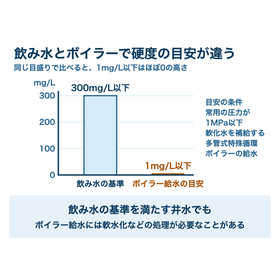
■Can water that is safe to drink also be used in boilers? According to the water quality standards for tap water, the hardness (calcium, magnesium, etc.) should be below 300 mg/L. In contrast, the water quality standards of JIS B 8223 indicate that for multi-tube special circulation boilers that use softened water with a normal operating pressure of 1 MPa or less, the water supply should have a hardness of 1 mg/L or less as a guideline. Even well water that meets drinking water standards may require treatment such as softening for boiler water supply. ■Some areas require permission for water extraction! Under the Industrial Water Law, in designated areas specified by government ordinance, if groundwater is extracted from wells with a discharge cross-sectional area exceeding 6 square cm for industrial use, permission from the governor of the prefecture (or the mayor in designated cities) is required for each well. There are also areas where local ordinances restrict extraction. ■Points to check before installation 1. Purpose: Drinking, boiler, cooling, or cleaning 2. Analysis values of the source water: hardness, iron, manganese, pH, etc. 3. Regulations on extraction in the area Torii offers not only filtration systems and water softeners but also chemicals for boilers. Please feel free to consult with us first.
catalog(3)
Download All Catalogs

Recommended products

Distributors

Since our founding, we have continued to provide flexible services with the motto of accurately supplying a diverse range of products that respond to changes in the times and the diversification of consumer needs, tailored to various applications and requirements. With the corporate slogan "Chemical Engineering Partner," we, as a group of experts in chemical technology, actively discover ideas to solve our customers' problems from advanced technologies both domestically and internationally, and propose them.