news list
1~5 item / All 5 items
-
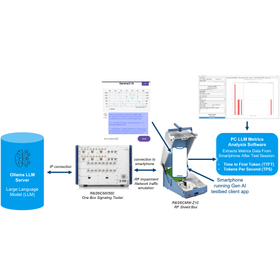
Rohde & Schwarz and China Mobile Research Institute jointly validate user experience tests for generative AI.
At MWC Shanghai 2026, Rohde & Schwarz and the China Mobile Research Institute jointly demonstrated an innovative testing solution for generative AI applications. Based on the CMX500 5G all-in-one signaling tester, this solution quantitatively evaluates the end-user experience of generative AI applications for the first time in diverse network environments, bringing a new approach to user experience testing for generative AI.
-
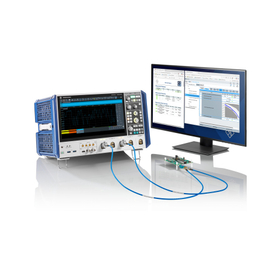
Rohde & Schwarz Japan showcases a test solution using ASA-ML compatible camera modules at "Automotive Ethernet 2026".
Rohde & Schwarz Japan Co., Ltd. will exhibit at "Automotive Ethernet 2026," which will be held at the Grand Front Osaka Congrès Convention Center on July 28 and 29, 2026, showcasing automotive testing solutions compatible with ASA-ML (Automotive SerDes Alliance Motion Link). In this exhibition, in collaboration with Nippon Chemi-Con Corporation (Shinagawa, Tokyo, President: Kenichi Konno, hereinafter referred to as Nippon Chemi-Con) and Microchip Technology Japan, Inc. (Minato, Tokyo, Representative: Haruhiko Kuraki, hereinafter referred to as Microchip), we will demonstrate signal evaluation, debugging, and compliance testing using an ASA-ML compatible camera module developed by Nippon Chemi-Con, equipped with Microchip's ASA-ML compatible semiconductors, along with Rohde & Schwarz's measurement solutions.
-
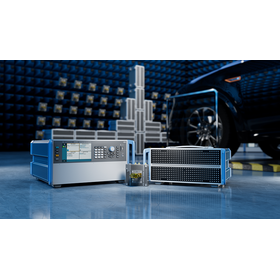
Rohde & Schwarz radar target simulator adopted for JARI's AD/ADAS evaluation test system.
The radar target simulator manufactured by Rode & Schwarz has been adopted for the AD (autonomous driving) / ADAS (advanced driver assistance systems) evaluation testing system for the Japan Automobile Research Institute (JARI) and has been delivered to JARI.
-
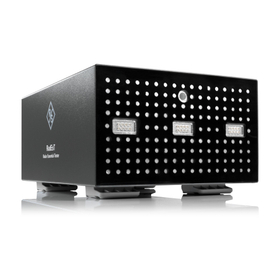
MAHLE and Rohde & Schwarz jointly developed a sensor testing application for advanced driver assistance systems.
Technology companies MAHLE and Rohde & Schwarz have jointly developed a technological application that ensures reliable testing of sensors after repairs of the latest advanced driver assistance systems (ADAS). At the core of the new platform is a solution that combines MAHLE Lifecycle and Mobility's TechPRO Digital ADAS 2.0 Extra calibration system with Rohde & Schwarz's R&S RadEsT radar tester. Until now, there has been no standardized measurement procedure established for testing ADAS sensors after accidents or repairs, particularly after the repair of body parts. MAHLE and Rohde & Schwarz are addressing this challenge. The new solution is suitable for a wide range of users, including automotive repair shops, service centers, automotive manufacturers, insurance companies, government agencies, and inspection organizations. In the future, it can also be used for static inspections of ADAS sensors during regular vehicle inspections. This jointly developed solution was presented at TÜV MobiCon 2026 held in Berlin on June 11, 2026.
-

Rohde & Schwarz Japan Co., Ltd. will hold the "Rohde & Schwarz Technology Symposium 2026" on the latest technology market trends and measurements in May - AI, Quantum, 6G - New business possibilities opened up by next-generation technologies.
Rohde & Schwarz GmbH & Co. KG., a technology-oriented group operating globally, has been supporting the development of cutting-edge technologies and pushing the boundaries of technology for over 90 years. The Japanese subsidiary, Rohde & Schwarz Japan Co., Ltd. (Shinagawa, Tokyo; President: Naoshi Saito), is pleased to announce that it will hold the seminar and exhibition event "Rohde & Schwarz Technology Symposium 2026," where participants can experience measurement technologies in the fields of AI, quantum, and 6G with the latest equipment, on May 22, 2026, at the Akasaka Intercity Conference.