
Column: Why Do Processing Scratches Not Decrease? The True Nature of Fine Sludge Hidden in the Tank?



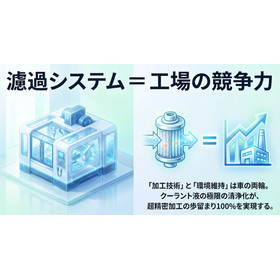
Investment in filtration systems determines the "competitiveness of factories"!
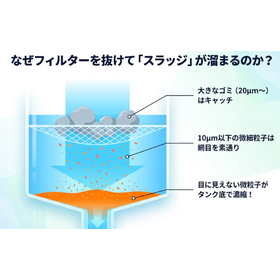
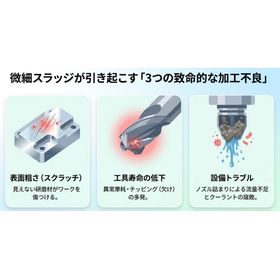
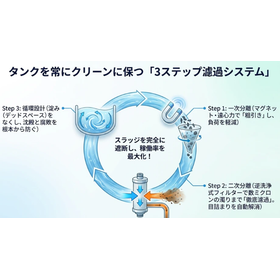
Even though I just cleaned the tank yesterday, there’s already sludge accumulating at the bottom... Have you ever felt that sense of futility? Even though it should be filtered, for some reason, there are fine scratches on the workpiece, and the tools don’t hold up well. The cause might be that microscopic particles smaller than 10μm are passing through the filter and continuously being sent to the processing points. This time, I will explain the 'three actual damages' caused by this troublesome fine sludge and their countermeasures. *You can view the detailed content of the article through the related links. For more information, please feel free to contact us.
basic information
*You can view the detailed content of the article through the related link. For more information, please feel free to contact us.*
Price range
Delivery Time
Applications/Examples of results
*You can view the detailed content of the article through the related links. For more information, please feel free to contact us.*
catalog(1)
Download All Catalogs
Recommended products






Distributors

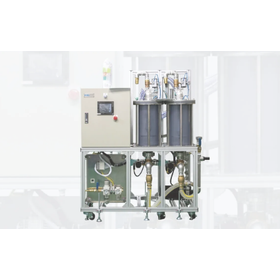
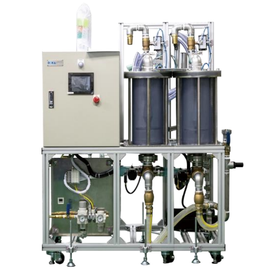
Our company has been dedicated to the development and dissemination of high-performance filtration systems specifically for precision machine coolants among various types of coolants (cutting fluids). In recent years, we have not only focused on precision filtration devices but have also leveraged our accumulated expertise to propose complete coolant systems, including coolant tank manufacturing. We are actively suggesting solutions for the recovery and treatment of sludge (cutting chips) as well. The ROKA Precision Coolant Filtration System has been adopted by various companies across different fields, including major lens manufacturers, leading precision electronics manufacturers, and automotive parts manufacturers. It has significantly contributed to improving machining accuracy and production efficiency, as well as reducing waste disposal costs and minimizing environmental impact.