What are the design points to maintain the uniformity of dispersed quality? Considerations for process design to enhance reproducibility.

澁谷工業 メカトロ統轄本部
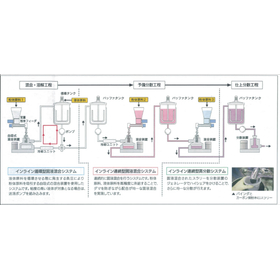
Maintaining uniformity of quality in dispersion engineering has become an important issue in many manufacturing sites. Variations in particle size distribution and differences between batches are caused not only by equipment performance but also by differences in dispersion conditions and process design. In particular, uneven shear energy and variations in flow state can lead to differences in the disintegration state of particles, becoming a factor for quality instability. Additionally, in batch processing, variations in residence time and mixing conditions can easily occur, making it difficult to ensure reproducibility even under the same conditions. To achieve uniform dispersion quality, it is important to design the process as a whole rather than optimizing elements such as shear energy, flow state, and residence time individually. For example, by controlling the flow so that particles pass through the processing area under certain conditions, it becomes possible to suppress variations in dispersion history. Furthermore, adopting process designs that can maintain constant conditions, such as inline continuous processing, can reduce differences between batches and lead to the realization of stable dispersion quality. Uniformity is not just a result but a quality that should be built through process design, and for that, optimization from an engineering perspective is essential.