Small Chlorine Furnace | Design and Operational Points for Safely Handling Corrosive Gases
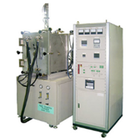
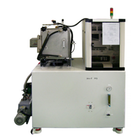
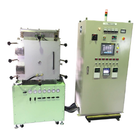
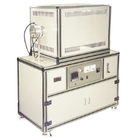
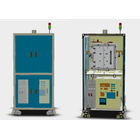

Safety design of a small chlorine furnace to reduce the risks of Cl2 and HCl leaks, corrosion, and contamination.
When handling corrosive and toxic gases such as Cl2 and HCl at high temperatures, the primary concern is whether it can be operated safely. In a small chlorine furnace, it is essential to have a safety design that not only allows chlorine gas to flow but also includes measures for preventing external leaks, corrosion in gas contact areas, discharge of unreacted gases, emergency shutdowns, and integration with scrubbers. Our small chlorine furnace is based on vacuum and reduced pressure operation, maintaining the internal pressure lower than atmospheric pressure to reduce the risk of Cl2/HCl leaks. Additionally, we can consider a configuration that makes it easier to manage operational risks, including corrosion measures for gas contact areas, gas detection, emergency shutdowns, purging procedures, and integration with detoxification equipment. [What you can learn from this document] ■ Safety risks to consider when handling Cl2/HCl ■ Concepts for leak prevention through vacuum and reduced pressure operation ■ Corrosion prevention measures and material selection points for gas contact areas ■ Importance of operational design factors such as purging, flow rate, and residence time ■ Concepts for gas detection, emergency shutdowns, and scrubber integration *For more details, please download the document or contact us.
basic information
【Key Points of Safety Design】 ■ Vacuum and Reduced Pressure Operation - Maintain the internal pressure of the furnace lower than atmospheric pressure to reduce the risk of Cl2/HCl leakage outside the furnace. - Operate under negative pressure as a fundamental safety principle when using corrosive gases. ■ Corrosion Countermeasures for Gas Contact Areas - Consider the corrosion resistance of the furnace body, piping, and sealing areas that come into contact with Cl2/HCl. - Explore configurations that are less prone to corrosion even in high-temperature gas environments. - Design considerations can also accommodate CE, SEMI, and UL standard certifications. ■ Standardization of Operating Procedures - Organize procedures for startup, purging, gas introduction, processing, exhaust, and shutdown. - Manage flow rate, temperature, pressure, and residence time to ensure reproducibility and safety. ■ Safety Measures for Abnormal Conditions - Integration with gas detectors, emergency shut-off valves, and interlocks. - Scrubber integration considering unreacted Cl2/HCl and byproduct gases. - Fail-safe design that facilitates easy transition to a safe state during abnormal conditions. *Specifications will be proposed according to processing temperature, gas type, flow rate, pressure, and decontamination conditions.
Price information
Please feel free to contact us regarding delivery dates and prices.
Delivery Time
Applications/Examples of results
【Recommended for the following individuals】 ■ Considering Cl2/HCl treatment but have safety concerns ■ Looking for a small test furnace that uses corrosive gases ■ Want to explore dry processes for removing metal impurities and selective chlorination ■ Have concerns about handling chlorine gas in existing furnaces ■ Want to consider equipment that includes gas detection, emergency shutdown, and scrubber interlock ■ After confirming conditions in the test furnace, want to think about scaling up to mass production furnaces 【Applicable Fields】 ■ Dry removal of metal impurities using Cl2/HCl ■ Selective chlorination of oxides, metals, and ceramic powders ■ Consideration of cleaning quartz, SiC, AlN, carbon, and ceramic fixtures ■ Material evaluation in a corrosive gas atmosphere ■ Separation and recovery of rare metals and metal components ■ Consideration of replacing wet processing with dry processing Even if the materials, target impurities, processing temperatures, gas concentrations, and removal conditions are not yet determined, you can consult us according to your application.
catalog(3)
Download All Catalogs
Recommended products





Distributors
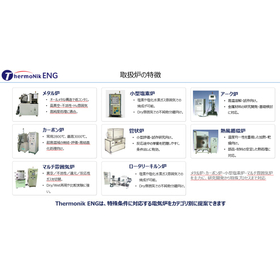
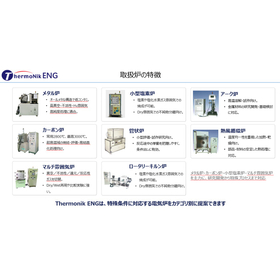
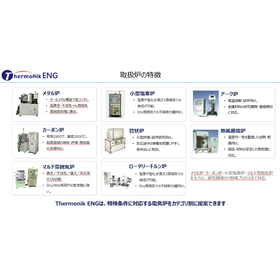
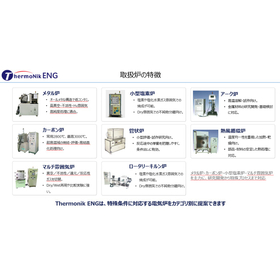
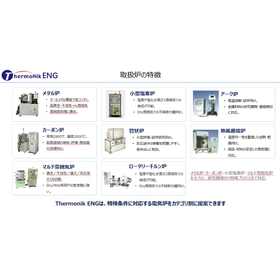
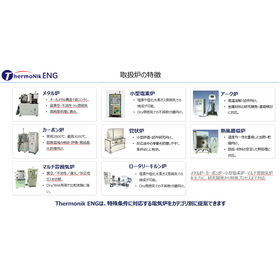
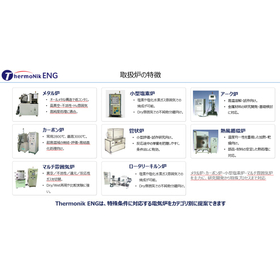
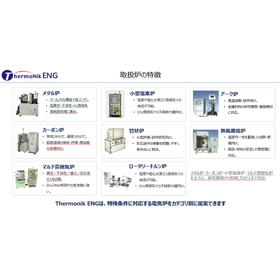
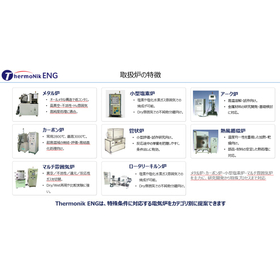
Our company integrates three technologies: "electricity," "equipment," and "chemistry," using our unique know-how to develop innovative heating furnaces and other equipment. We handle various electric furnaces (heating furnaces) such as carbon furnaces, multi-atmosphere furnaces, metal furnaces, and chlorine furnaces, leveraging our proprietary high-temperature electric furnace technology. We are not just an equipment manufacturer; we are a strategic development partner that supports innovative manufacturing with advanced heating, looking ahead to the standards of the next decade alongside our customers.