
How to utilize thermal flow sensors in aggressive thermal design?


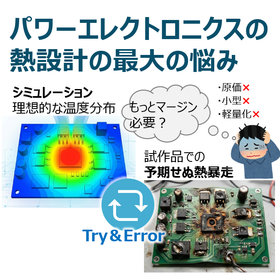
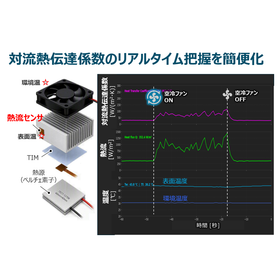
From margin design that protects by looking at temperature to confident design that attacks by looking at heat flow.
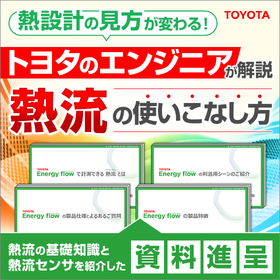
"The results of thermal analysis differ from reality..." Isn't it common to think that way and give up? Aren't you repeatedly evaluating prototypes and tuning the analysis based on the actual measurement results as a matter of course? The safety factor (margin) is said to be a manifestation of the designer's lack of confidence in not accurately understanding the phenomena. If we could measure the flow of thermal energy in real-time and quantitatively, the accuracy of the analysis would significantly improve, reducing unnecessary prototypes and eliminating rework, thereby shortening the development lead time. Toyota's thermal flow sensor "Energy flow" is a high-sensitivity, compact film-type sensor, making it a new standard for thermal design that solves such concerns.
basic information
We offer various types and sizes tailored to your usage environment. <Sensor Types> - "Standard Type" that can measure only thermal flow - "Built-in Type" that incorporates a K-type sheet thermocouple to measure temperature simultaneously - "Aluminum Vapor Deposition Type" that can differentiate and measure convective heat and radiant heat by accounting for the effects of radiant heat <Detection Area Size> - Minimum 5mm x 6mm to maximum 50mm x 60mm - The larger the detection area, the more semiconductors are implemented, resulting in higher sensitivity <Heat Resistance (Continuous Use)> -40 to +150°C (equivalent to the guaranteed temperature for automotive parts) *The heat resistance is determined by the resin at the connection point with the lead wire, and the detection area can be used at approximately 200°C. <Water Resistance and Waterproofing> - Compliant with IPX6 and IPX7, allowing use in liquid immersion environments. - Proven measurement performance in engine oil and transmission oil. *For more details, please refer to the technical documentation and product catalog available for download below.
Price information
It varies depending on the size and specifications. Please contact us.
Delivery Time
Model number/Brand name
TOYOTA Energy fllow
Applications/Examples of results
- Understanding the net heat generation of batteries, motors, and power circuits - Quantitative evaluation of thermal insulation performance and heat shielding performance - Quantitative evaluation of comfort indicators (warmth sensation, coolness sensation) for parts directly touched or felt by people - Predictive control to detect signs of thermal runaway from abnormal heat spikes and reduce output - Real-time monitoring of contact thermal resistance to detect signs of TIM degradation and perform maintenance before failure - Reducing the number of prototypes and shortening development lead time through improved accuracy of thermal fluid analysis, etc.
catalog(3)
Download All Catalogs


Recommended products


Distributors

In the business development area of Toyota Motor Corporation, we are developing technology solution businesses that leverage the technologies and know-how cultivated over many years of car manufacturing. The heat flow sensor "Energy flow," which can measure "heat flux" essential for elucidating the mechanisms of temperature changes with high sensitivity and simplicity, is an in-house sensor utilized in Toyota's vehicle development field. It has become an indispensable item for the development of high-efficiency thermal energy management systems/components aimed at a decarbonized society, and it is being used by customers in various industries, including the automotive sector. Please feel free to contact us when you need assistance.