
Column: Knowledge of Porous Materials - The Difference Between Sponge and Yamaha Porous
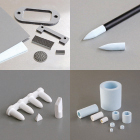




I will explain the differences between sponge and Yamaha Hachi Porous in an easy-to-understand way! Both sponge and Yamaha Hachi Porous are porous materials. What are the differences?
A porous body is a general term for a substance that has many small holes (pores) inside it. While introducing an example of a porous body that exists around us, I will clearly explain the performance and characteristics of both sponge and Yamaha Hachi Porous as porous bodies. Yamaha Hachi Porous has functions such as flexibility, liquid absorption, and the ability to adsorb fine dirt.
basic information
* The detailed content of the column can be viewed via the related link. * Content explained in the column; - Common characteristics of sponge and Yamaha Hachi Porous - ■ Three-dimensional mesh-like continuous pore structure ■ Porous body ■ Coating performance - Differences between sponge and Yamaha Hachi Porous - ■ Pore diameter size ■ Differences in flexibility and hardness ■ Liquid absorption properties (water ⇔ oil/chemical) ■ Differences in cleaning functionality ■ Size and shape ■ Secondary processing (surface treatment)
Price range
Delivery Time
Applications/Examples of results
■ Industry sector: Cleaning components for precision equipment, etc.
catalog(2)
Download All Catalogs
Recommended products


Distributors

Yamahachi Chemical manufactures and sells products based on our core technology "Yamahachi Porous," an open-cell porous plastic, and supports our customers' product development. Starting in the writing-instrument and stamp fields—porous pen nibs, pre-inked stamps, and stamp foam materials—we now focus on industrial porous materials (sheets, rollers and sponge swabs) that leverage 10 basic functions such as application, wiping, and absorption. By combining these 10 basic functions with 7 proprietary processing technologies, we solve customer challenges and deliver optimized porous materials with the required use, shape, and performance—including requirements that standard products cannot meet, through our integrated in-house production.