
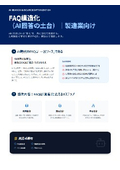
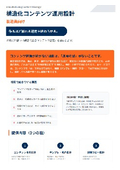
16. Product DB Information Design (AI Reference Optimization) | For Manufacturing Industry
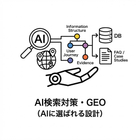
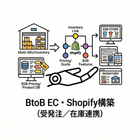
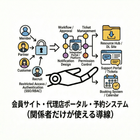

Product information is about "enabling" rather than "arranging." We design product database information that can be accurately referenced by both AI and humans.
The more product items there are, the results on the web are determined by "database design." In the era of generative AI and AI search, AI does not read product pages individually; instead, it references product information as a "data structure" for comparison, summarization, and recommendations. However, many manufacturing websites have inconsistent item names, variations in notation, missing usage or selection criteria, and non-uniform specification granularity, making it difficult for both AI and humans to compare. As a result, strengths are overlooked, and products are eliminated from consideration. This service will redesign product information with the premise of being "searched, compared, and summarized," creating a product database that is strong in AI reference (item design, granularity unification, naming rules, associations). ■ Provided content (3 points) 1. Current database inventory (identifying missing items, notation variations, and granularity inconsistencies) 2. Information design (designing essential items, selection criteria, usage, and comparison axes) 3. Operational rule design (standardizing input conventions, naming, categories, and association rules) Scope/Assumptions: From design to operational rules (implementation/CMS modifications and migration work are separate) / The number of target products will be adjusted according to scale. *Please share the current product list (CSV/Excel acceptable) or URL. We will organize the defects and improvements as a database.
basic information
■Provided Content 1) DB Inventory (Identifying the current "reference deficiency") Missing items (usage/conditions of use/selection criteria/introduction conditions/warranty, etc.) Inconsistent granularity (units of measurement, digits, writing of acceptable ranges) Variations in notation (terminology, units, model number notation, abbreviations) Inconsistencies in category design (classification does not match customer selection) Insufficient associations (usage → products, products → case studies, products → FAQs are not connected) 2) Information Design (Core of AI Reference Optimization) Essential item design: Define the axes for AI comparison in advance - Example: usage, conditions of use, selection criteria, specifications (unified granularity), quality/inspection, delivery time, supply system, warranty, introduction flow Item definition: Meaning, input rules, and exception handling for each item Design of comparison axes: Structuring decision-making materials other than price (quality/supply/compatibility/system) Tag/attribute design: Usage tags, industry tags, issue tags, standard tags, etc. 3) Operational Rule Design (Mechanism for mass production and maintenance) Naming rules (standardization of product names, series names, model numbers) Unit and notation standards (standardization of mm, μm, ℃, kPa, etc.) Input checklist (to prevent omissions) Update flow (responsibility, approval, difference management)
Price information
Light: 400,000 yen (1 product category / item design + input specifications + classification design) Standard: 800,000 yen (multiple categories / related design + migration instructions + operational rules included) Extended: 1,200,000 yen and up (many products / multilingual / includes requirement organization based on CMS modifications) *Can be changed to a quotation basis.
Delivery Time
Applications/Examples of results
■Concerns There are too many products, and the information is not unified. Specifications are provided, but the products are not chosen during comparison. The usage and selection criteria are weak, making it unclear "which one to choose." Inconsistencies in notation and insufficient items have led to management breakdown within the company. Search, filtering, and recommendations are not functioning (no user engagement occurs). ■Deliverables Product database design document (item list, definitions, input rules, exception rules) Classification design (category hierarchy, tag system) Related design (connection diagram of product ↔ usage ↔ case studies ↔ FAQs ↔ materials) Migration/maintenance instruction document (instructions for integrating existing data) Operational checklist (rules for updates) ■Purpose Unification of product information (creating a database that is easy to compare) Preventing misinterpretation through AI summarization and AI search (design based on the assumption of being referenced) Establishing a foundation for filtering, user engagement, and recommendations Standardizing the quality of mass-producing product pages (not limited to input rules) ■Examples of Achievements (Confidentiality Considerations Format) Unified product information through precise processing × 80 employees × notation inconsistencies × item definitions and input rules. Strengthened comparison pathways for industrial equipment × 200 employees × numerous product groups × usage/selection condition tags. Redesigned category and tag systems to enhance user engagement for chemical materials × 500 employees × multiple businesses.
catalog(20)
Download All Catalogs












Recommended products














































Distributors

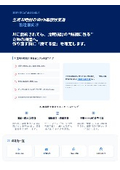
A site that is just cheap ultimately increases costs and risks." We propose web development that maximizes business results while thoroughly addressing essential requirements. Are you creating a website like this? - It seems that the websites of competitors look better, but you don't know why. - Every update incurs additional costs, and before you know it, expenses have ballooned beyond expectations. - While the appearance is nice, it ignores laws and industry-specific rules, leading to complaint risks... - You want to attract customers and inquiries, but the production company only talks about design. - As a result of choosing a production that is simply cheap, you are overwhelmed with trouble handling and can't focus on your core business. Point 1. Avoid troubles with a design that has no "gaps or omissions." 2. Minimize operational costs with a design that assumes in-house updates. 3. Planning power that pursues business results. "Is the initial cost a bit high?" But in the long run, it's safe and cost-effective. We have prepared a plan to truly deliver results "correctly.