
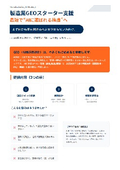
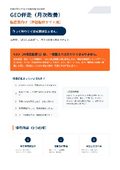
18. Manufacturing Industry GEO Starter Support | Achieving "AI-Selected Structure" in the Shortest Time

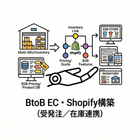


For those who don't know where to start, we will cover the key points of GEO and establish a "winning foundation" in a short period of time.
GEO (Structural Optimization for AI Reference) will fail if started haphazardly. The reason is that initiatives tend to be scattered, and if you miss the "critical points of structure" that are effective in AI summarization and comparison, you won't achieve results even if you invest effort. This service is specifically tailored for B2B in the manufacturing industry, providing starter support to streamline the shortest route for GEO from "diagnosis → prioritization → initial implementation" all at once. First, we will establish a foundation that leads to inquiries by preparing a definition (company/product/application) that won't be misinterpreted by AI and the necessary decision-making materials (selection criteria, FAQs, case study pathways) in a minimal configuration. ■ Provided Content (3 Points) GEO Quick Diagnosis (Identification of structural defects and "areas of loss") Initial Design (Definition statements, comparison axes, pathways, priority roadmap) Initial Implementation Support (Structural rewriting of key pages/Minimum maintenance of FAQs and pathways) Deliverables: GEO Starter Pack (Diagnosis report + Initial design document + Key page improvement proposals) Scope/Assumptions: Initially, we standardize around "approximately 5 key pages + 20 FAQs" (adjusted based on scale) *Please share the URL. We will present the current "GEO hindering factors" and the initial scope that will be most effective in the shortest time.
basic information
■Provided Content (Details) 1) GEO Quick Diagnosis (Current Situation Assessment) Identify points where the "definitions" of company/product/application are misaligned. Extract defects in heading structure, information layout, and navigation (deep diving). Confirm the absence of necessary decision-making materials (selection criteria, FAQs, case studies, documents) through comparison. 2) Initial Design (Determining the Shortest Route) Core definition statements (company definition/product definition/application definition). Design comparison axes (decision-making materials other than price) and rebuttal handling (FAQs). Design the flow from entry → deep diving → comparison → consultation. Priority roadmap (Quick Win/Mid-term/Production). 3) Initial Implementation Support (Establishing Minimum Configuration) Rewrite the information structure of key pages (AI summary support). Structure FAQs (building the foundation for AI responses). Minimum establishment of connection pathways to case studies and document downloads. *The scope of implementation will be adjusted to fit the existing CMS/operational structure. ■Deliverables GEO Diagnosis Report (List of Issues/Priorities). GEO Initial Design Document (Definition Statements/Comparison Axes/Flow/Page Roles). Improvement Proposals for Key Pages (Heading Structure/Draft Proposals/CTA Proposals). FAQ Set (Recommended 20 Questions: Question Design + Answer Structure). Next Phase Proposal (Redesign of Sitemap/Product DB Design/Production of Issue LPs, etc.).
Price information
Light: 500,000 yen (Diagnosis + Initial Design + Improvement proposals for 3 main pages) Standard: 1,000,000 yen (Diagnosis + Initial Design + Improvement for 5 main pages + 20 FAQ questions) Expanded: 1,500,000 yen and up (Includes multiple product groups / Product database / Issue landing page / Case studies) *Can be changed to require a quotation.
Delivery Time
Applications/Examples of results
■Concerns Even if it's called GEO, I don't know where to start. I am doing SEO, but my strengths are not conveyed through AI summaries and comparisons. Measures are scattered, and priorities cannot be determined within the company. Renewals are heavy, so I want to achieve results through incremental improvements first. There are many products, and a starting point (template) for organization is needed. ■Approach Pre-sharing: URL/Product overview/Number of products and structure (as much as possible) Diagnosis: Identify structural defects and priorities. Initial design: Confirm definitions, comparison axes, and pathways. Initial improvement: Minimum organization of key pages/FAQs. Reporting session: Confirm the next phase (mass production/redesign). ■Uses Initial introduction of GEO (creating a foundation as quickly as possible). Preventing candidate drop-off in AI summaries and comparisons (organizing definitions and decision-making materials). Determining the priority of measures (easier to gain internal consensus). Incremental improvements before renewal (achieving results first). ■Examples of achievements (confidentiality consideration format) Precision machining × 80 employees × inquiry stagnation × improvement in business negotiations through definition documents + comparison axes + FAQ organization. Industrial equipment × 200 employees × lost orders due to comparisons × suppressing candidate drop-off through structural rewrites of key pages + pathway organization. Chemical materials × 500 employees × many product groups × establishing a template by determining the initial scope and creating a starting point for mass production.
catalog(20)
Download All Catalogs









Recommended products














































Distributors

A site that is just cheap ultimately increases costs and risks." We propose web development that maximizes business results while thoroughly addressing essential requirements. Are you creating a website like this? - It seems that the websites of competitors look better, but you don't know why. - Every update incurs additional costs, and before you know it, expenses have ballooned beyond expectations. - While the appearance is nice, it ignores laws and industry-specific rules, leading to complaint risks... - You want to attract customers and inquiries, but the production company only talks about design. - As a result of choosing a production that is simply cheap, you are overwhelmed with trouble handling and can't focus on your core business. Point 1. Avoid troubles with a design that has no "gaps or omissions." 2. Minimize operational costs with a design that assumes in-house updates. 3. Planning power that pursues business results. "Is the initial cost a bit high?" But in the long run, it's safe and cost-effective. We have prepared a plan to truly deliver results "correctly.