
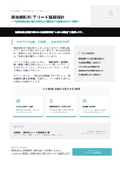
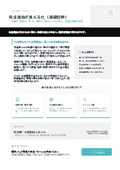
27. Wire design chosen based on technical comparison


Companies that do not lose in comparison charts are already winning before the comparison chart. We design the "criteria" for technical comparisons and create a pathway for selection.
Losses in B2B manufacturing occur not due to a lack of technical capability, but because the competitor holds the "arena for comparison." During the comparison stage, users narrow down their options not only based on specifications, price, and delivery time, but also by checking whether there will be "no failures," "operational feasibility," "stable supply," and "adequate guarantees." However, many sites fail to present criteria for comparison, ultimately leading to comparisons based on the competitor's standards and resulting in a price competition. Our service designs comparison criteria where your company can win (such as quality, structure, compatibility, risk reduction, etc.) and addresses common questions (objections) that arise during the comparison process, creating a situation where the judgment is not "this company is safe" but "this company is optimal." ▼ For concerns like these: - Price competition during comparisons leaves no profit. - Despite having technology, losing to competitors in a "safe" manner. - In competitive quotes, it ultimately turns into a discount battle. - Decision-makers say, "I don't really understand, so I'll go with the cheaper option." - Salespeople struggle to explain comparisons verbally each time (leading to dependency on individuals). *Please share the current URL and the "reasons for losing in competitive comparisons (assumptions are fine)." We will address the structural weaknesses in your comparisons.
basic information
■Provided Content (Details) Redesign of Comparison Axes (Definition of Winning Strategies) - Decision-making factors beyond specifications: quality assurance, inspection system, supply system, response to troubles, compliance conditions, implementation difficulty, operational burden - Clearly document as "selection criteria" to hold the basis for comparison Design of Counterargument Processing (Order of Anxiety Resolution) - Common concerns: delivery delays, quality issues, additional costs, scope of response, continuous supply, internal approval - Place FAQs, case studies, and materials along the pathway to resolve concerns during the comparison Design of Comparison Content - Selection checklist (how to choose without failure) - Comparison table (arranged based on our company's advantages) - Case studies (reproducibility: conditions, constraints, reasons for judgment) - Approval materials (implementation flow, risks, necessary conditions) CTA Design (Phased) - Comparison phase: document download/checklist download - Later consideration: specification consultation/estimate consultation - Just before decision: request for quotation (input conditions) ■Deliverables - Judgment axes for technical comparison (comparison criteria, selection conditions, winning strategies) - Comparison flowchart (entry → deep dive → comparison → reassurance → approval → consultation) - Comparison page structure proposal (headings, order, placement of rationale) - List of necessary content (FAQs/case studies/materials/checklists) - CTA and form policy (design of phased CTAs and collection items)
Price information
600,000 to 1,800,000 yen (depending on the depth of the comparison axis and the scope of the target) - One product category (comparison axis + flow + necessary content definition): 600,000 to 1,000,000 yen - Horizontal expansion across multiple categories (including templating): 1,000,000 to 1,800,000 yen * "Estimate required" notation is also acceptable.
Delivery Time
Applications/Examples of results
■Approach - Pre-sharing: URL/Product/Key competitors (as much as known) - Analysis: Identify points of loss in comparisons and gaps in decision-making materials - Design: Develop comparison axes, pathways, necessary content, and CTAs - Reporting meeting: Confirm implementation scope and priorities (first create a winning model in one category) ■Purpose - Improve win rates in comparative evaluations (break away from price competition) - Alleviate decision-makers' concerns (organize decision-making materials) - Standardize sales presentations (reduce dependency on individuals) - Advance approval processes (organize materials and evidence) ■Examples of Achievements (no company names required) - Precision machining × 80 employees × competitive bidding with discounts → Formed axes other than price by presenting selection criteria - Industrial equipment × 200 employees × lost in comparisons → Mitigated candidate drop-off with rebuttal processing FAQs and case studies - Chemical materials × 500 employees × stagnation in approvals → Advanced with approval documents and comparison checklists
catalog(20)
Download All Catalogs









Recommended products



















Distributors

A site that is just cheap ultimately increases costs and risks." We propose web development that maximizes business results while thoroughly addressing essential requirements. Are you creating a website like this? - It seems that the websites of competitors look better, but you don't know why. - Every update incurs additional costs, and before you know it, expenses have ballooned beyond expectations. - While the appearance is nice, it ignores laws and industry-specific rules, leading to complaint risks... - You want to attract customers and inquiries, but the production company only talks about design. - As a result of choosing a production that is simply cheap, you are overwhelmed with trouble handling and can't focus on your core business. Point 1. Avoid troubles with a design that has no "gaps or omissions." 2. Minimize operational costs with a design that assumes in-house updates. 3. Planning power that pursues business results. "Is the initial cost a bit high?" But in the long run, it's safe and cost-effective. We have prepared a plan to truly deliver results "correctly.