
30. Designing to generate consultations without stating a price.
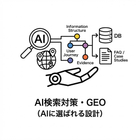
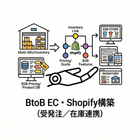
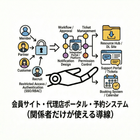

You can consult without providing a price. We will alleviate the anxiety of comparison and consideration, creating a structure that fosters a "want to consult first" state.
In B2B manufacturing, there are cases where providing a price leads to losing the deal. This is because, at a stage where conditions are not aligned, the price stands out on its own, and the comparison becomes fixed on "the lowest price." On the other hand, if no price is provided, potential clients may feel "it's unclear and scary" or "I might be pressured to buy," which prevents them from moving forward with consultations. This service presents "decision-making materials (scope, assumptions, selection criteria, approach)" instead of a price, reducing psychological burden through staged CTAs and designing a pathway that makes clients want to consult before discussing price. As a result, it allows for an increase in business negotiations where conditions are aligned while avoiding price competition. ▼ For concerns like these: - Providing a price leads to being drawn into price comparisons. - Not providing a price results in fewer inquiries. - There are many inquiries that only ask, "How much does it cost?" - Specifications are not finalized, and we don't reach the quotation stage. - There is strong anxiety about comparison and consideration for high-priced products (not wanting to make a mistake). *Please share the current URL and the "conditions under which the price is determined (variable factors)." We will identify the reasons why consultations are stalled.
basic information
■Provided Content (Details) Designing "Justifiable Reasons" Without Quoting Prices - Clarifying condition dependencies (specifications, quantity, delivery time, inspection, system) - Shifting from "not providing due to lack of transparency" to "confirming conditions for accuracy" Presenting alternative decision-making materials to price - Scope of response / non-response - Prerequisites (necessary information, constraints) - Conditions under which additional costs may arise (exceptions) - Approach (hearing → proposal → estimate → commencement) - How to provide estimates (ranges, example ranges, man-hour ranges, etc.) Consultation permission-type CTA (reducing psychological burden) - Clearly stating the purpose and scope of the consultation instead of "we won't sell" - Phrases like "please tell us the conditions first" and "we will assess the feasibility of a rough estimate" Stepwise flow - Consultation (light) → Rough estimate presentation (if conditions are met) → Estimate (with confirmed information) Linking FAQs/case studies/materials - Shifting focus from "is it expensive or cheap" to "will it succeed or fail"
Price information
300,000 to 900,000 yen (depending on the number of pages and the scope of FAQ/material design) - Focused on 1 page: 300,000 to 450,000 yen - 3 pages + FAQ/flow design: 450,000 to 900,000 yen * "Estimate required" notation is also acceptable * The price of this service itself is as above, and the "offered price" for customers is based on non-disclosure design.
Delivery Time
Applications/Examples of results
■Deliverables - Proposal for the structure of a non-public price page (headings, order, layout) - Copy ideas that generate consultations (justifications, decision-making materials, CTA) - Set of FAQs regarding pricing (e.g., factors determining price, how to provide estimates, additional costs) - Consultation flow (minimization of form fields, input examples, auto-reply suggestions) - Improvement roadmap (Quick Win/Mid-term/Implementation) ■Approach - Pre-sharing: Target URL/Product/Factors affecting price fluctuations (specifications, quantity, delivery time, etc.) - Analysis: Identify factors that stop consultations (lack of transparency, anxiety, flow) - Design: Develop decision-making materials, CTAs, FAQs, and phased flows - Reporting session: Confirm the scope of implementation and pricing presentation policy (range/conditional, etc.) ■Uses - Avoid price competition (shift comparison axis to "failure avoidance") - Increase the number of consultations (reduce psychological burden) - Organize conditions before estimates (reduce rework) - Convert high-priced products into negotiations (establish approval and reassurance materials) ■Examples of Achievements (format without company names) - Precision machining × 80 employees × only asked about price → Improved consultation rate with condition organization CTA - Industrial equipment × 200 employees × lost in comparison → Formed axes other than price by presenting decision-making materials - Chemical materials × 500 employees × specifications not determined → Promoted negotiations by introducing estimation steps
catalog(20)
Download All Catalogs
Recommended products



















Distributors

A site that is just cheap ultimately increases costs and risks." We propose web development that maximizes business results while thoroughly addressing essential requirements. Are you creating a website like this? - It seems that the websites of competitors look better, but you don't know why. - Every update incurs additional costs, and before you know it, expenses have ballooned beyond expectations. - While the appearance is nice, it ignores laws and industry-specific rules, leading to complaint risks... - You want to attract customers and inquiries, but the production company only talks about design. - As a result of choosing a production that is simply cheap, you are overwhelmed with trouble handling and can't focus on your core business. Point 1. Avoid troubles with a design that has no "gaps or omissions." 2. Minimize operational costs with a design that assumes in-house updates. 3. Planning power that pursues business results. "Is the initial cost a bit high?" But in the long run, it's safe and cost-effective. We have prepared a plan to truly deliver results "correctly.