
31. Transmission design of niche technology (verbalization)
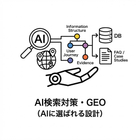
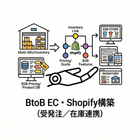
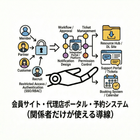

Although there is technology, it doesn't get communicated. That "gap" is verbalization. We transform niche technology into an explanatory structure that can be chosen through comparison.
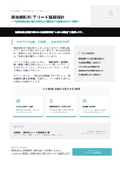
The main reason niche technology does not sell is not because the technology is difficult, but because it is not explained in the order that the audience can understand. B2B customers in manufacturing do not understand technical jargon from the start. Nevertheless, when the conversation begins with technical terms (specifications, processes, principles), they disengage before the "greatness" is conveyed. As a result, they do not even make it into the list of candidates for comparison, and before the price competition begins, they are treated as if they do not exist. In this service, we organize niche technology in the order of "whose problems can be solved, by what principles, and under what conditions," and translate it into "communicable language" without losing its expertise. We prepare explanations that resonate with designers, purchasers, and decision-makers, creating a structure that leads to inquiries, document downloads, and technical consultations. ▼ For those with these concerns: - Technical explanations are difficult, leading to disengagement before the message is conveyed. - Unable to briefly explain how we differ from competitors. - Salespeople cannot explain, relying on engineers and creating dependency. - Unclear on the applications or industries that resonate with the audience. - Not even considered before price competition begins. *Please share your technical materials (existing ones are fine) and "what the strength is in one sentence." We will identify the reasons for miscommunication structurally.
basic information
■Provided Content (Details) Basic Framework for Verbalization (Order of Communication) - Whose situation are we saving and what is the issue? (Use case/Problem) - What difficulties arise if left unaddressed? (Loss/Risk) - How can it be resolved? (Summarizing the key points of the technology) - Under what conditions does it work? (Scope/Constraints) - Why should it be trusted? (Evidence: Tests/Standards/Track Record/Process) Designing Differentiation (Comparative Analysis Strategies) - Organizing trade-offs with alternatives (What it excels at and what it lacks) - Presenting selection criteria (How to choose without failure) Designing Expression (Maintaining Expertise) - Distinguishing between where to retain technical terms and where to translate - Extracting "points to illustrate" (Principles/Processes/Comparisons) Department-Specific Engagement (Designers/Purchasing/Approval) - Designers: Compatibility conditions/Constraints/Verification - Purchasing: Supply/Quality/Cost-effectiveness - Approval: Risk reduction/Path to implementation ■Deliverables - One-sentence definition of the technology (Short description/30-second explanation/Detailed explanation) - Appeal axis (Winning strategy) and selection criteria (Comparison standards) - Use case map (Organizing relevant uses, industries, and issues) - Page structure proposal (Headings/Order/Layout) - Illustration proposal (What should be illustrated and where it will be used) - FAQ proposal (Common counterarguments and misconceptions to address)
Price information
400,000 to 1,200,000 yen (depending on the complexity of the technology and the scope of the subject) - Language formulation for one technology (definition + appeal axis + page structure): 400,000 to 700,000 yen - One technology + comparison/use organization + illustration proposal: 700,000 to 1,200,000 yen * "Estimate required" notation is also acceptable * Manuscript creation and chart production can be done separately or concurrently.
Delivery Time
Applications/Examples of results
■Approach - Pre-sharing: Technical documents (existing is fine) / Expected applications / Frequently asked questions - Hearing (90 minutes): Organize principles, application conditions, constraints, and rationale - Design: Verbalization (definition statements, appeal axes, comparison axes) + Develop page/diagram policy - Reporting session: Confirm implementation scope (pagination/documentation) and next steps ■Applications - Making technology "communicable" (increased candidate inclusion and consultation requests) - Standardization of sales explanations (elimination of dependence on individuals) - Improvement of win rates in comparative evaluations (clarification of differentiation axes) - Increase in document downloads and technical consultations (strengthening of pathways) ■Examples of Achievements (format without company names) - Precision machining × 80 employees × difficult to explain → Increased consultations through concise definitions and application organization - Industrial equipment × 200 employees × weak differentiation → Shifted to decision-making beyond price through comparison axis design - Chemical materials × 500 employees × not included as candidates → Improved technical document downloads by presenting selection criteria
catalog(20)
Download All Catalogs
















Recommended products




















Distributors

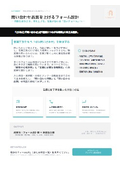
A site that is just cheap ultimately increases costs and risks." We propose web development that maximizes business results while thoroughly addressing essential requirements. Are you creating a website like this? - It seems that the websites of competitors look better, but you don't know why. - Every update incurs additional costs, and before you know it, expenses have ballooned beyond expectations. - While the appearance is nice, it ignores laws and industry-specific rules, leading to complaint risks... - You want to attract customers and inquiries, but the production company only talks about design. - As a result of choosing a production that is simply cheap, you are overwhelmed with trouble handling and can't focus on your core business. Point 1. Avoid troubles with a design that has no "gaps or omissions." 2. Minimize operational costs with a design that assumes in-house updates. 3. Planning power that pursues business results. "Is the initial cost a bit high?" But in the long run, it's safe and cost-effective. We have prepared a plan to truly deliver results "correctly.