
33. Product lineup organization (category design)
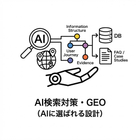
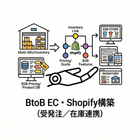
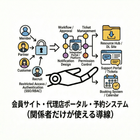

The more products there are, the less they sell. With the "category design" of the chosen manufacturing site, we guide you without confusion.
The more the product lineup increases, the fewer inquiries there are—this is not an uncommon story. The reason is simple: users cannot find "products relevant to them" and cannot even begin to compare options. This is especially true in B2B manufacturing, where the diversity of applications, specifications, and implementation environments can lead to confusion if product classifications are ambiguous, causing potential customers to get lost after arriving through search. In this service, we reorganize the product groups not according to "internal classification" but in line with how customers search (applications, challenges, selection criteria), creating an easy-to-navigate category design, browsing structure, and mass production rules. As a result, even with a large number of products, pathways for "finding," "comparing," and "consulting" are established. ▼ For concerns like these: - There are too many products, causing users to hesitate and not make inquiries. - Internal classifications (model numbers, departments) do not align with how customers search. - The list page is not functioning, leading to drop-offs after search traffic. - Competitors are easy to understand, but our offerings are difficult to convey. - The site structure collapses with each product addition (operations are not sustainable). *Please share the current product list (page URL or Excel is acceptable). We will organize it based on the "causes of not being able to search."
basic information
■Provided Content (Details) Category Design (Aligning with Customer Search Methods) - Usage Category (Where it will be used) - Problem Category (What it solves) - Selection Criteria Category (What to choose based on: heat resistance, precision, standards, etc.) Standardization of Naming and Descriptions - Rules for Category Names (Meaning remains the same for anyone) - Definition Statements for Each Category (Consistent in AI summaries and comparisons) Requirements Design for Lists and Filtering - Order of Items (Recommended / By Usage / By Criteria) - Filtering Items (Tag Design: Usage, Standards, Material, Size, etc.) - Display Items for Easy Comparison (Minimum Comparison Axes) Category → Product → In-depth Navigation - Design "What to Look at Next" on Category Pages (Linking to Examples, FAQs, Document Downloads) Operational Rules - Classification and Tagging Procedures for New Product Additions - Exception Handling (Handling Products that Span Multiple Categories) ■Deliverables - Product Category Structure Diagram (Hierarchy, Granularity, Scope) - Category Definition Statements (Description Templates for Each Category) - Tag Design (Attribute Items such as Usage / Problems / Criteria) - List Page Requirements (Display Items, Filtering, Sorting) - Linking Rules (How to Tag Products → Categories → Tags) - Navigation Diagram (Categories → Products → FAQs/Examples/Documents → Consultations)
Price information
600,000 yen to 2,000,000 yen (depending on the number of products, category complexity, and listing requirements) - Small scale (up to 30 products): 600,000 to 1,000,000 yen - Medium scale (up to 100 products): 1,000,000 to 1,600,000 yen - Large scale (100 products and above / based on database): 1,600,000 yen and above * "Estimate required" notation is also acceptable.
Delivery Time
Applications/Examples of results
■Approach - Pre-sharing: Current product list (URL/table acceptable) / representative applications and customer profiles - Analysis: Identify how customers search and the discrepancies in current classifications - Design: Develop category system, naming, tags, list requirements, and navigation - Reporting meeting: Confirm implementation scope (order of phased application) and operational rules ■Purpose - Build a state where products can be "found" (preventing users from getting lost after search traffic) - Advance comparison considerations (present judgment criteria through categories) - Increase inquiries (improve reach rate to relevant products) - Reduce operational burden (structure that remains intact even with additions) ■Examples of Achievements (company name not required format) - Precision machining × 80 employees × unable to find products → Improved reach rate through application categories - Industrial equipment × 200 employees × classifications based on internal circumstances → Added issue/condition axes to advance comparisons - Chemical materials × 500 employees × numerous product groups → Achieved list narrowing through tag design
catalog(20)
Download All Catalogs
Recommended products


















Distributors

A site that is just cheap ultimately increases costs and risks." We propose web development that maximizes business results while thoroughly addressing essential requirements. Are you creating a website like this? - It seems that the websites of competitors look better, but you don't know why. - Every update incurs additional costs, and before you know it, expenses have ballooned beyond expectations. - While the appearance is nice, it ignores laws and industry-specific rules, leading to complaint risks... - You want to attract customers and inquiries, but the production company only talks about design. - As a result of choosing a production that is simply cheap, you are overwhelmed with trouble handling and can't focus on your core business. Point 1. Avoid troubles with a design that has no "gaps or omissions." 2. Minimize operational costs with a design that assumes in-house updates. 3. Planning power that pursues business results. "Is the initial cost a bit high?" But in the long run, it's safe and cost-effective. We have prepared a plan to truly deliver results "correctly.