
105. Building In-house Knowledge AI (RAG)
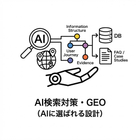
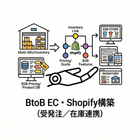
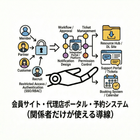

We will AI-enable the "people you know" within the company. We will build an internal knowledge AI (RAG) that can cross-reference documents, emails, and meeting minutes to provide immediate answers.
When internal knowledge becomes personalized, decision-making and responses slow down. Past proposals, estimation bases, specification judgments, trouble responses, transaction conditions, and FAQ response histories. When necessary information is in "people's heads" or "scattered files," the time spent searching increases, the quality of responses fluctuates, and handovers become disorganized. This service will build a knowledge AI (RAG) that can provide answers while searching and referencing internal documents. It is not just a simple chat; through the design of **"presenting the basis (source) and adhering to the scope of answers,"** it suppresses misinformation and speculative responses. We will create a state where sales, technical, and support teams can respond based on the same standards, thereby enhancing internal productivity and response speed. ■ Provided Content (3 points) 1. Knowledge inventory and design (target documents, classification, permissions, updates) 2. RAG construction (searching, summarizing, presenting basis, including UI/operations) 3. Guardrail maintenance (areas not to answer, audit logs, improvements) *First, please let us know the "location of the documents you want to use (Drive/SharePoint, etc.)" and the "usage purposes by department (sales/technical/CS)." We will design it as quickly as possible.*
basic information
■Concerns like these - The same questions are repeatedly asked within the company, exhausting the responders. - Unable to find past documents, leading to delays in proposals, estimates, and responses. - New employees are not getting up to speed, and the issue of dependency on individuals is not resolved. - The quality of responses varies by person in charge, causing fear of escalation and complaints. - Concerns about information leaks prevent the adoption of AI. ■Provided Content (Details) - 1) Knowledge Design (The success of RAG is determined by "preprocessing") - 2) RAG Response Design ("Evidence presentation" is essential) - 3) Use Cases by Application (Areas where it works well) - 4) Guardrails (Safe operation) - 5) Operational Design (Design that grows after implementation) ■Deliverables - Knowledge Inventory Sheet (Target, Confidentiality, Authority, Update Frequency) - Information Design (Classification/Tags/Synonyms/Naming Conventions/Version Control) - RAG Specifications (Search, Summary, Evidence Presentation, Behavior when unanswered) - UI Requirements (Search Screen, Response Display, Source Display, History) - Authority Design (Department/Project/Confidentiality Classification) - Operational Rules (Registration, Updates, Audits, Improvement Cycle) - KPI Design (Report Template)
Price information
■5 million to 25 million yen (varies based on document volume, authority, and integration) - Light (single department, small-scale documents, basic RAG): 5 to 9 million yen - Standard (multiple departments, authority, audit logs, operational design included): 9 to 16 million yen - Extended (large-scale, multiple storage locations, project-specific authority, integration/management screen included): 16 to 25 million yen *Estimate required
Delivery Time
Applications/Examples of results
■Purpose - Elimination of personalization (standardization of internal responses) - Acceleration of proposals, estimates, and replies (reducing search time) - Unification of response quality (providing evidence and templates) - Efficiency in training new employees (increasing self-resolution rates) - Implementation of AI with measures against information leaks (permissions and audits) ■Examples of Achievements - Proposal materials scattered → Reduced creation time through similar case searches - Technical responses personalized → Stabilized response quality by referencing QA history - Regulations are complex → Reduced inquiries through internal rule searches ■Approach 1. Current situation analysis: Document storage locations, department-specific issues, confidentiality classifications 2. Inventory: Selection and organization of target documents (organization of advanced versions/obsolete versions) 3. Design: Finalization of classification/permissions/guardrails/response templates 4. Implementation: Building RAG, UI, measurement, audit logs 5. Testing: Accuracy verification with representative questions (preventing speculation, controlling permissions) 6. Operation: Monthly improvements (logs → document additions → accuracy enhancement)
catalog(20)
Download All Catalogs



















Recommended products





















Distributors

A site that is just cheap ultimately increases costs and risks." We propose web development that maximizes business results while thoroughly addressing essential requirements. Are you creating a website like this? - It seems that the websites of competitors look better, but you don't know why. - Every update incurs additional costs, and before you know it, expenses have ballooned beyond expectations. - While the appearance is nice, it ignores laws and industry-specific rules, leading to complaint risks... - You want to attract customers and inquiries, but the production company only talks about design. - As a result of choosing a production that is simply cheap, you are overwhelmed with trouble handling and can't focus on your core business. Point 1. Avoid troubles with a design that has no "gaps or omissions." 2. Minimize operational costs with a design that assumes in-house updates. 3. Planning power that pursues business results. "Is the initial cost a bit high?" But in the long run, it's safe and cost-effective. We have prepared a plan to truly deliver results "correctly.