
114. AI Response Guardrail Design
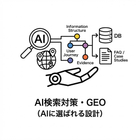
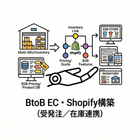
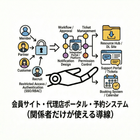

The success or failure of AI implementation depends more on "accident prevention" than on "accuracy." We will design the scope of acceptable responses, the manner of communication, and escalation processes to ensure that AI responses are suitable for business operations.
The biggest risk of AI is not providing smart answers, but rather "plausible incorrect answers." Definitive pricing, performance guarantees, misunderstandings of legal and regulatory matters, leaks of confidential information, and misrepresentation of internal rules. Once this happens, it can lead to complaints, loss of trust, and damages. In this service, we will organize the risks that may arise from AI chat, internal AI, automated inquiries, etc., and design rules for **"answering/not answering," "not making definitive statements," and "always confirming."** We will prepare response templates, provide evidence, verify with people based on trust levels, maintain audit logs, and establish improvement processes to ensure that AI is in a state that can "withstand business operations." ■ Services Offered (3 Points) 1. Risk Inventory (defining unacceptable responses) 2. Guardrail Design (scope, expression, evidence, escalation) 3. Operational Design (audit, improvement, responsibility delineation, KPI) *First, please tell us the "areas where you want AI to provide answers (estimation/technology/delivery/internal regulations, etc.)." We will design based on the prohibited areas in reverse.*
basic information
■Concerns like these - I want to implement AI chat, but I'm afraid of incorrect answers and backlash. - I'm worried that AI might make definitive statements about prices, delivery dates, and specifications. - I'm anxious about operations that involve referencing confidential documents. - There's a risk that incorrect rules could spread within the internal AI. - It's unclear who will take responsibility, making it difficult to implement. ■Provided Content (Details) - 1) Definition of prohibited areas (first, decide on "not answering") - 2) Design of the response scope - 3) Expression rules (accidents can be reduced by half through "wording") - 4) Presentation of evidence (core of RAG operations) - 5) Escalation design (conditions for human intervention) - 6) Authority and confidentiality (data governance) - 7) Operations (mechanism to maintain "safety" after implementation) ■Deliverables - Guardrail policy (answering/conditional/escalation/refusal) - Prohibited area list (with example sentences) - Expression rules (prohibition of definitive statements, premises, evidence, caution) - Evidence presentation rules (sources, version control, citation range) - Escalation specifications (conditions, responsible parties, notifications, SLA) - Authority design (by data layer, viewing/summary control) - Audit log design (retention period, viewing rights, reports) - KPI design (incorrect answer rate, escalation rate, zero complaints target)
Price information
■2 million to 12 million yen (varies by scope and audit) - Light (prohibited areas + expression rules + basic escalation): 2 to 3.5 million yen - Standard (evidence presentation, authority design, audit logs, up to testing): 3.5 to 7 million yen - Extended (multiple AIs/multilingual, cross-departmental operation, including ongoing improvements): 7 to 12 million yen *Estimate required
Delivery Time
Applications/Examples of results
■Purpose - Reducing the risk of AI incorrect answers and public backlash - Preventing definitive statements on price/delivery date/guarantees - Measures against confidential information leaks (permissions/audits) - Protecting customer experience through escalation - Standardizing AI operations (clarifying responsibility boundaries) ■Examples of Achievements - Before AI chat implementation → Designed zero-accident operations with guardrails - In-house AI → Prevented misinformation spread with rules for handling regulations/price information - Multilingual AI → Suppressed definitive expressions to stabilize quality ■Approach 1. Organize target AI: Applications (estimates/FAQs/internal regulations, etc.) and reference data 2. Risk inventory: Define prohibited areas and key important keywords 3. Guardrail design: Scope, expressions, basis, escalation 4. Testing: Verify accident patterns with representative questions (intentionally posing risky questions) 5. Start operations: Establish audit and improvement cycles 6. Monthly improvements: Update logs → rules/FAQs/materials
catalog(20)
Download All Catalogs



















Recommended products


















Distributors

A site that is just cheap ultimately increases costs and risks." We propose web development that maximizes business results while thoroughly addressing essential requirements. Are you creating a website like this? - It seems that the websites of competitors look better, but you don't know why. - Every update incurs additional costs, and before you know it, expenses have ballooned beyond expectations. - While the appearance is nice, it ignores laws and industry-specific rules, leading to complaint risks... - You want to attract customers and inquiries, but the production company only talks about design. - As a result of choosing a production that is simply cheap, you are overwhelmed with trouble handling and can't focus on your core business. Point 1. Avoid troubles with a design that has no "gaps or omissions." 2. Minimize operational costs with a design that assumes in-house updates. 3. Planning power that pursues business results. "Is the initial cost a bit high?" But in the long run, it's safe and cost-effective. We have prepared a plan to truly deliver results "correctly.