
116. Establishing AI Content Creation Rules
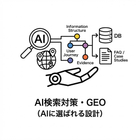
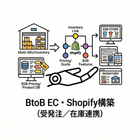
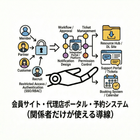

Mass production with AI will undermine the brand. We will establish rules for quality, labeling, basis, and prohibitions, and turn AI utilization into a "reproducible production system."
As companies become capable of creating content with AI, they are more likely to experience "quality incidents." Variations in phrasing, lack of terminology consistency, inclusion of unfounded numbers or assertions, and breaches of confidentiality can accumulate, leading to a decline in brand trust and inconsistencies in sales presentations. In this service, we will establish rules for **"what to say, in what format, based on what evidence, with what notation, and to what extent it is permissible to assert"** when creating articles, product pages, FAQs, proposals, emails, etc., using AI. Additionally, we will organize the review process, approval flow, logs, prohibited areas, and standard forms of prompts to ensure that AI utilization does not lead to "person-dependent production operations." ■ Provided Content (3 Points) 1. Establishment of Quality Standards (tone, structure, evidence, prohibitions, notation consistency) 2. Design of Production Flow (role distribution, review, approval, version control) 3. Development of Standard Templates (prompt templates, output formats, checklists) *First, please tell us the "type of content you want to create with AI (product page/blog/FAQ/email, etc.)" and the "brand tone you want to protect." We will design the rules accordingly.*
basic information
■Concerns like these - Writing with AI leads to inconsistent text and a lack of brand unity. - Fear of backlash or complaints due to definitive expressions or lack of evidence. - Frequent discrepancies in terminology, standards, and units. - Risk of mixing confidential information and customer data. - Ambiguity about who checks the content makes it unmanageable. ■Provided content (details) - 1) Establishment of quality standards (editing policy) - 2) Standardization of notation (very prone to collapse in AI operations) - 3) Fixing "formats" for each type of content - 4) Production flow (preventing accidents in the process) - 5) Standardization of prompts (stopping personalization) - 6) Checklist (in a form that can be managed on-site) ■Deliverables - AI content creation guidelines (quality standards, prohibitions, evidence, confidentiality) - Notation standardization rules (units, standards, glossary, synonym dictionary) - Templates by type (products/FAQs/case studies/blogs/emails, etc.) - Standard prompt templates (fixed input → output format) - Review flow (roles, approvals, version management, log storage) - Checklist (minimum requirements/pre-publication/regular audits) - KPI design (number of revisions, error rate, publication speed, contribution to CV)
Price information
■2 million to 10 million yen (varies based on scope and supervision system) - Light (guidelines + basic template + checklist): 2 to 3.5 million yen - Standard (notation dictionary, expanded type templates, operational flow development): 3.5 to 6.5 million yen - Expanded (multilingual, including technical/legal supervision, ongoing improvements): 6.5 to 10 million yen *Estimate required
Delivery Time
Applications/Examples of results
■Purpose - Ensuring the quality of AI content (preventing brand deterioration) - Reducing risks of errors, misunderstandings, and controversies (prohibitions/evidence) - Standardizing expressions and terminology (suppressing inconsistencies in AI operations) - Balancing production speed and reproducibility (standardizing templates/prompts) - Establishing auditable operations (log/version management) ■Examples of Achievements - Inconsistencies in text due to AI implementation → Ensured consistency by fixing tone/style - Mixing in unfounded assertions → Mitigated incidents with rules for presenting evidence - Increased variation in expressions → Maintained quality through dictionary management ■Approach 1. Target Organization: Determine the types of content to be created by AI and the scope of publication 2. Current Situation Assessment: Inventory existing tone/expression/confidentiality rules 3. Rule Formulation: Confirm quality standards, prohibitions, evidence, and expression unification 4. Template Creation: Develop formats and standard prompts for each type 5. Operational Design: Establish review, approval, version management, and log storage 6. Institutionalization: Improve through practical operations (monthly updates of dictionary/templates)
catalog(20)
Download All Catalogs


















Recommended products



















Distributors

A site that is just cheap ultimately increases costs and risks." We propose web development that maximizes business results while thoroughly addressing essential requirements. Are you creating a website like this? - It seems that the websites of competitors look better, but you don't know why. - Every update incurs additional costs, and before you know it, expenses have ballooned beyond expectations. - While the appearance is nice, it ignores laws and industry-specific rules, leading to complaint risks... - You want to attract customers and inquiries, but the production company only talks about design. - As a result of choosing a production that is simply cheap, you are overwhelmed with trouble handling and can't focus on your core business. Point 1. Avoid troubles with a design that has no "gaps or omissions." 2. Minimize operational costs with a design that assumes in-house updates. 3. Planning power that pursues business results. "Is the initial cost a bit high?" But in the long run, it's safe and cost-effective. We have prepared a plan to truly deliver results "correctly.