
120. Formulation of AI Utilization Policy


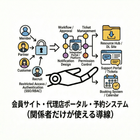

AI governance is more important than AI implementation. We will organize information, responsibilities, and risks, and establish operational policies that ensure safe operations within the company.
The more AI utilization progresses, the more the lack of "rules" itself becomes a risk for companies. Handling of confidential information, personal data, copyright, incorrect answers, external transmission, audits, and delineation of responsibility. If these are left ambiguous and left to the field, it will result in a situation where "the only option is to stop" when an accident occurs. In this service, we will formulate AI operation policies targeting AI chat, internal AI, RAG, content generation, sales automation, and more. This is not just an ethical guideline, but rather a concrete set of practical rules that clearly defines **"what is permitted, what is prohibited, who approves, how audits are conducted, and how improvements are made."** The policies will be designed at a level that can be adhered to by the field and will be applicable to operations. ■ Provided Content (3 points) 1. Target and Risk Organization (Inventory of AI usage scope and accident patterns) 2. Formulation of Operation Policies (Permissions/Prohibitions, Responsibility Delineation, Procedures) 3. Education, Audit, and Improvement Design (Establishment and Continuous Operation) *First, please tell us the uses of AI being utilized internally (text, search, chat, development). We will design rules categorized by usage.*
basic information
■Concerns like these - The use of AI within the company is expanding, and there is a lack of control. - There are concerns about handling confidential and personal information. - There is fear of customer service incidents due to AI's incorrect responses. - The handling of copyright, citations, and training data is ambiguous. - The division of responsibility in the event of an incident has not been established. ■Provided Content (Details) - 1) Definition of the scope of application (first, confirm the "target") - 2) Information classification and handling (most important) - 3) Prohibited and mandatory items (prevent incidents before they occur) - 4) Division of responsibility (determine the "responsible person" for AI) - 5) Logs and audits (document "what happened") - 6) Incident response (establish procedures for when incidents occur) - 7) Education and establishment (rules that cannot be followed are meaningless) - 8) Updates and improvements (AI changes, so "revision is assumed") ■Deliverables - AI operation policy document (scope of application, information classification, prohibited/mandatory items, division of responsibility) - Usage-specific guides (sales/customer service/technology/recruitment/marketing, etc.) - External communication rules (approval flow, checklist items) - Log and audit design (items, permissions, storage, audit procedures) - Incident response procedures (initial response, reporting, recurrence prevention) - Educational materials (cheat sheets, case studies, training slide drafts) - Revision rules - KPI design
Price information
■2 million to 12 million yen (varies by number of departments and scope) - Light (policy text + minimum prohibitions/requirements + responsibility boundaries): 2 to 3.5 million yen - Standard (usage-specific guidelines, audits/logs, incident procedures, etc.): 3.5 to 7 million yen - Expanded (multiple departments, external AI, education/support for establishment, ongoing improvements): 7 to 12 million yen *Estimate required
Delivery Time
Applications/Examples of results
■Purpose - Safe governance of AI usage (confidentiality/personal information/misanswer countermeasures) - Clarification of responsibility boundaries (continuous operation) - Prevention of external communication accidents (approval/review) - Auditable system (logs/evidence) - Education and establishment (granularity that can be adhered to on-site) ■Examples of Achievements - On-site unauthorized AI usage → Control through information classification and prohibitions - Fear of external AI → Safe operation with guardrails + audits + incident procedures - Rules becoming mere formalities → Improved compliance rates through cheat sheets and education ■Approach 1. Current situation assessment: Organize AI usage scenarios, target data, and whether there is external communication 2. Risk inventory: Confirm accident patterns and prohibited areas 3. Policy formulation: Document information classification, responsibility boundaries, and approval/audit processes 4. Exception design: Strengthened rules for automated responses and external communications 5. Education design: Create cheat sheets and example collections for on-site use 6. Start operation: Establish an audit and revision cycle
catalog(20)
Download All Catalogs



















Recommended products




















Distributors

A site that is just cheap ultimately increases costs and risks." We propose web development that maximizes business results while thoroughly addressing essential requirements. Are you creating a website like this? - It seems that the websites of competitors look better, but you don't know why. - Every update incurs additional costs, and before you know it, expenses have ballooned beyond expectations. - While the appearance is nice, it ignores laws and industry-specific rules, leading to complaint risks... - You want to attract customers and inquiries, but the production company only talks about design. - As a result of choosing a production that is simply cheap, you are overwhelmed with trouble handling and can't focus on your core business. Point 1. Avoid troubles with a design that has no "gaps or omissions." 2. Minimize operational costs with a design that assumes in-house updates. 3. Planning power that pursues business results. "Is the initial cost a bit high?" But in the long run, it's safe and cost-effective. We have prepared a plan to truly deliver results "correctly.