
128. Seminar Application and Management System
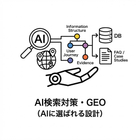
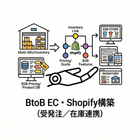
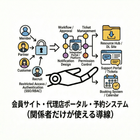

Transform seminars from "customer attraction events" to "business negotiation devices." We will build a cohesive process from application to reminder, participation, follow-up, and lead evaluation.
The seminar does not end with its holding; the results are determined by the follow-up after participation. Manual management of applications, lack of reminders leading to increased non-participation, inability to gauge participant engagement, difficulty in collecting surveys, and personalized follow-ups. If these issues are left unaddressed, the effort put into hosting will increase, but the number of business negotiations will not. Our service systematizes seminar applications and participant management while simultaneously integrating reminders, material distribution, surveys, participation logs, and follow-up pathways (consultation/estimates/material downloads). Designed for B2B, it maximizes results while reducing operational burdens by connecting to business negotiations. ■ Provided Content (3 Points) 1. Application and Management System Construction (Applications, Participant Lists, Notifications, Material Distribution) 2. Business Negotiation Pathway Design (Surveys, Segmentation, CTA Branching) 3. Operation and Integration Design (CRM/MA, Scoring, Reporting) Deliverable: Complete Seminar Application and Management System (Applications + Operations + Pathways) *First, please tell us the "format of the event (online/in-person/hybrid)" and the "actions you want participants to take after the seminar (consultation/material download/estimate)." We will design the pathways from there.*
basic information
■Deliverables Application page/form (item design, capacity, waiting list) Participant management screen (roster, status, attributes, deduplication) Automatic notifications (receipt/confirmation/reminder/change/cancellation) Material distribution/archive function (including permission settings) Survey design (temperature assessment, next action extraction) Follow-up pathways (next steps by segment) Reports (KPI, by channel, improvement metrics) Integration requirements (CRM/MA, calendar, Zoom, etc.: as needed) ■Approach 1. Goal setting: Confirm the goals after the seminar (consultation/estimate/material download) 2. Pathway design: Overall design from announcement to application to participation to follow-up 3. Form design: Balance between minimum required fields and attribute collection 4. Notification design: Confirmation/reminder/change/follow-up for non-participation 5. Survey design: Define temperature classification and sales triggers 6. Build → Test → Start operation: Monthly improvements based on KPI
Price information
■3.5 million yen to 28 million yen (varies by format, collaboration, and scale) - Light (application + list + notification + basic report): 3.5 to 7 million yen - Standard (survey, temperature classification, material distribution, follow-up pathways): 7 to 16 million yen - Expanded (multiple times/multiple sessions, CRM/MA integration, venue reception, permissions): 16 to 28 million yen *Recommended to indicate "estimate required"
Delivery Time
Applications/Examples of results
■Concerns Application management is difficult with Excel/manual processes High no-show rates due to lack of reminders Uncertainty about participant engagement leads to inadequate follow-up Surveys cannot be collected, hindering improvements for the next time Seminars do not lead to business discussions ■Uses Streamlining application/participation management (reducing manual work) Reducing no-shows (automated reminders) Facilitating business discussions (visualizing engagement → follow-up pathways) Distributing materials/archiving (collecting from those who cannot attend) Visualizing KPIs (enabling improvements for the next time) ■Examples of Achievements (company name not required format) Manual application management → Automating participant lists/notifications Low participation rates → Improved with reminders and calendar invites Not leading to business discussions → Optimized follow-up through survey engagement classification
catalog(19)
Download All Catalogs







Recommended products











Distributors

A site that is just cheap ultimately increases costs and risks." We propose web development that maximizes business results while thoroughly addressing essential requirements. Are you creating a website like this? - It seems that the websites of competitors look better, but you don't know why. - Every update incurs additional costs, and before you know it, expenses have ballooned beyond expectations. - While the appearance is nice, it ignores laws and industry-specific rules, leading to complaint risks... - You want to attract customers and inquiries, but the production company only talks about design. - As a result of choosing a production that is simply cheap, you are overwhelmed with trouble handling and can't focus on your core business. Point 1. Avoid troubles with a design that has no "gaps or omissions." 2. Minimize operational costs with a design that assumes in-house updates. 3. Planning power that pursues business results. "Is the initial cost a bit high?" But in the long run, it's safe and cost-effective. We have prepared a plan to truly deliver results "correctly.