
130. Login/Permission Design (RBAC)

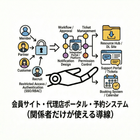

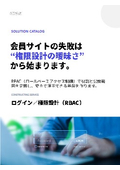
The failure of the membership site begins with the "ambiguity of authority design." We will define roles and access levels using RBAC to create a safe and operational foundation.
The most common issue in the operation of member sites and portals is the "ambiguity of permissions." This can lead to situations where documents are mistakenly published, customer-specific views cannot be created, authority management breaks down due to personnel changes, and accounts of former employees remain active. These issues cannot be resolved through additional features; it is essential to design with RBAC (Role-Based Access Control) from the outset. In this service, we will design the login method and permission control using RBAC, clearly documenting who can access what through tables and rules. Furthermore, we will solidify operational requirements such as approval, review, deadlines, and audit logs, allowing for implementation as a **"securely scalable member base."** ■ Provided Content (3 Points) 1. Login method design (ID/password, SSO, invitation, review) 2. RBAC permission design (roles, permissions, display differentiation rules) 3. Operation and audit design (approval, inventory, logs, exceptions) Deliverable: Complete set of login/permission (RBAC) design documents *First, please tell us the "user types (customer/agent/internal)" and the "objects you want to differentiate (documents/prices/functions/data)." We will start from role design.*
basic information
■Deliverables User system diagram (external/internal, corporate level/individual level) Role list (role definitions) Permission list (actions × target resources) Role × permission matrix (RBAC table) Display differentiation conditions (contract/product/region/term/individual granting) Login/application/approval flow (state transition) Operational rules (inventory, withdrawal, exceptions, audit logs) Implementation requirements (MFA, session, lock, audit, testing perspectives) ■Approach 1. Organize user types: Who will use it (customers/agents/internal) 2. Organize display differentiation targets: Enumerate materials/prices/functions/data 3. Role design: Define roles with the minimum number (avoid excessive increase) 4. Permission design: Define operations and document them in the RBAC table 5. Condition design: Solidify display differentiation requirements such as contract/product/region/term 6. Operational design: Define approval, inventory, and audit logs 7. Move to implementation: Hand over to development with testing perspectives included
Price information
■2 million to 12 million yen (varies based on scope and conditions) ・Light (basic design of roles/permissions + RBAC table): 2 to 3.5 million yen ・Standard (display differentiation conditions, approval flow, audit/inventory): 3.5 to 7 million yen ・Extended (SSO/MFA requirements, multiple tenants, alert design, implementation support): 7 to 12 million yen *Recommended to indicate "estimate required"
Delivery Time
Applications/Examples of results
■Concerns Want to differentiate visibility among customers/agents/internal staff Want to manage pricing documents and exclusive materials securely Want to implement a membership system that requires approval Fear of losing authority due to resignations/transfers Desire for a design that won't break with future feature additions ■Uses Safe operation of member sites/portals (preventing accidental disclosures) Differentiation of visibility for customers/agents/internal staff (role-based) Authority management during resignations/transfers/contract terminations (inventory) Auditable operations (logs and approval history) A foundation that can withstand future expansions (won't break with feature additions) ■Examples of Achievements (company name not required format) Accidental disclosure of exclusive materials → Prevented by RBAC + approval flow Complex differentiation → Organized into an operationally feasible form through conditional design Authority became personalized → Controlled through inventory and logs
catalog(19)
Download All Catalogs

















Recommended products

















Distributors

A site that is just cheap ultimately increases costs and risks." We propose web development that maximizes business results while thoroughly addressing essential requirements. Are you creating a website like this? - It seems that the websites of competitors look better, but you don't know why. - Every update incurs additional costs, and before you know it, expenses have ballooned beyond expectations. - While the appearance is nice, it ignores laws and industry-specific rules, leading to complaint risks... - You want to attract customers and inquiries, but the production company only talks about design. - As a result of choosing a production that is simply cheap, you are overwhelmed with trouble handling and can't focus on your core business. Point 1. Avoid troubles with a design that has no "gaps or omissions." 2. Minimize operational costs with a design that assumes in-house updates. 3. Planning power that pursues business results. "Is the initial cost a bit high?" But in the long run, it's safe and cost-effective. We have prepared a plan to truly deliver results "correctly.