
news list
1~30 item / All 39 items
-
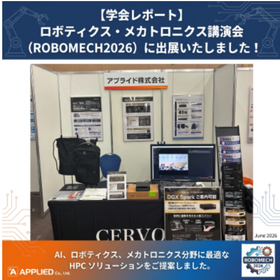
[Conference Report] We exhibited at the "Robotics and Mechatronics Conference (ROBOMEC 2026)"!
We exhibited at the "Robotics and Mechatronics Conference" held at the Hakata International Exhibition Hall & Conference Center from June 30 to July 1, 2026. Thank you very much to everyone who took the time to visit our booth despite your busy schedules! Today, we will provide a report on the atmosphere of the booth and the exhibits.
-
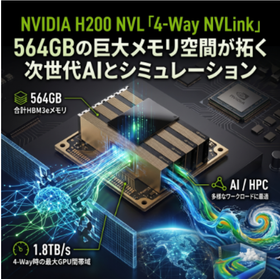
[NVIDIA H200 NVL "4-Way NVLink" True Value: The Next Generation of AI and Simulation Unleashed by a Massive 564GB Memory Space]
In the research and development (R&D) department of the manufacturing industry, the demand for computational resources has reached unprecedented levels. In addition to traditional fluid analysis (CFD), structural analysis, and materials informatics, there has been a surge in the need to build "secure local LLMs (RAG)" trained on internal technical standards and confidential data. However, attempting to execute these advanced processes on-premises requires SXM-based ultra-high-end servers, leading to practical barriers such as "data center power and cooling facilities (like water cooling) not keeping up" and "installation costs being too high." Currently, the "NVIDIA H200 NVL," which is limited to a TDP of up to 600W (air-cooled/PCIe-based) and is easier to implement in existing server room environments, is attracting significant attention from R&D departments. This article will explain the overwhelming advantages gained by bundling four units together using "4-Way NVLink," rather than viewing the H200 NVL merely as an expansion card, as well as the "unexpected pitfalls" that field engineers are likely to encounter during implementation.
-
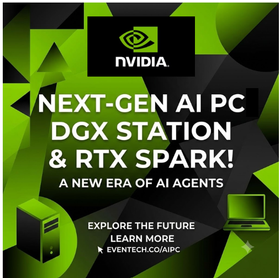
[Blog] Announcing the dawn of a great revolution after 40 years! NVIDIA has unveiled its latest AI machines "RTX Spark" and "DGX Station for Windows."
The latest AI machines "RTX Spark" and "DGX Station for Windows" were announced at NVIDIA GTC Taipei (at COMPUTEX) held in June 2026. These are not just "fast new computers." While previous computers were "tools operated by humans," this marks the beginning of a major revolution in 40 years, transforming them into "places where AI agents work around the clock." CEO Jensen Huang introduces them in the context of redefining PCs in collaboration with Microsoft after 40 years, unveiling three new Windows machines: "Desktop," "Notebook," and "Workstation." I have summarized their features and what makes them remarkable in this blog.
-

[Blog] Personal Supercomputer: MSI's "Edge Xpert" is Changing the Future of AI Development
Modern AI development, particularly the inference and fine-tuning of large-scale language models (LLMs), has become a significant challenge in securing development environments. Until now, handling models in the hundreds of billions of parameters has required substantial ongoing expenditures on cloud services or massive infrastructure investments equivalent to data center levels. However, MSI's "EdgeXpert" transforms this conventional wisdom by presenting an extremely powerful and practical option that places a supercomputer directly at the developer's "desk side." Built on the NVIDIA DGX Spark platform, EdgeXpert is not just an extension of a high-performance PC. It condenses top-tier computational power into a compact chassis, establishing its identity as a "next-generation AI desktop supercomputer." This device enables cutting-edge AI research while protecting highly confidential data in a local environment, making it a significant presence capable of reshaping the landscape of AI development.
-
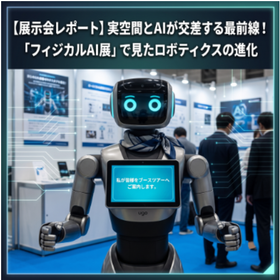
[Exhibition Report] The Cutting Edge Where Physical Space and AI Intersect! The Evolution of Robotics Seen at the "Physical AI Exhibition"
On July 2, 2026, I visited the "Monozukuri World Physical AI Exhibition" being held at Tokyo Big Sight. The evolution of generative AI and reinforcement learning is breaking out of the digital world and exploring how to intelligently operate robots in the real world (physical). This exhibition was a very vibrant space that truly hinted at the next generation of manufacturing and the automation of R&D (research and development). I will report on the latest trends that particularly caught my eye on-site!
-

[Blog] <Tried Making> The First Step Towards "Physical AI" Pioneered by Local LLM × RAG - Experience Building Your Own Dedicated AI Partner -
Now, AI is trying to leap from "the screen" into "the real world." Local LLMs, which excel in security and high-speed processing, have now become a powerful practical engine that goes beyond mere dialogue tools, playing a central role in corporate DX and products. Many of you may have seen examples like "life-sized AI avatars for customer service" being introduced in convenience stores. What happens when local LLMs are further integrated into hardware such as communication robots? AI will evolve into "Physical AI," capable of recognizing the real world and physically interacting with it. The key to this paradigm shift lies in cutting-edge technology known as the "VLA (Vision-Language-Action) model." In this context, we have created an experimental prototype to actually experience the "sense of AI connecting with the real world." We would like to introduce you to its operation and potential!
-
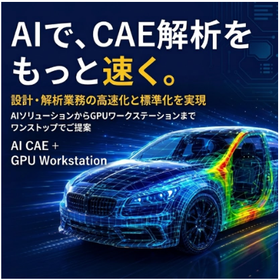
[Blog] <AI × CAE> Paradigm Shift in Design Development: The Future of Next-Generation Simulation Brought by Surrogate Models
What is the key to dramatically improving development speed in R&D? The R&D (Research and Development) in manufacturing and mobility development is currently undergoing a significant transformation. With the increasing performance and complexity of products, the amount of data and the computation time required for simulations have exploded. In traditional CAE, even with the use of high-performance HPC, it was necessary to spend enormous computational resources and lead time to obtain high-precision analysis results, taking "days to weeks for a single computation," which has become a major bottleneck in the design cycle. In this "AX (AI Transformation) era," the key to dramatically accelerating the speed of research and development is the "Surrogate Model AI." This article will explain the technological breakthroughs that AI-driven simulations bring to real design and the specific approaches for their implementation.
-

[Blog] <Technical Explanation> The Cutting Edge of CAE Analysis and Optimization Methods for Achieving Carbon Neutrality
Many people may find it hard to grasp the concept of carbon neutrality (reducing environmental impact) in a nutshell. "The goal is to achieve net-zero greenhouse gas emissions overall by 2050." The government announced this goal in October 2020. Those engaged in the research and development sectors of the manufacturing industry are facing various challenges daily in pursuit of this goal. In the field, CAE (Computer Aided Engineering) is currently evolving from a mere "tool for efficiency" to an "essential sustainable strategy." Why is simulation technology the key to saving the planet? This time, I would like to explore the deep relationship between "carbon neutrality and the power of CAE."
-
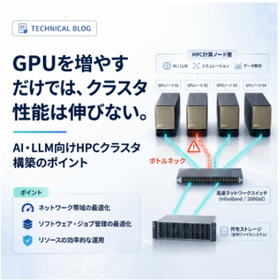
[Blog] <Thorough Explanation> Just Increasing GPU Servers Won't Make It Faster?
Key Points to Consider When Building an HPC Cluster for AI and LLMs In the development of generative AI and large language models (LLMs), there is an increasing number of cases where a single GPU workstation or GPU server cannot provide the necessary processing power due to the growth in model size and the amount of training data. As a solution, an HPC cluster that connects multiple GPU servers becomes an option. However, simply adding multiple GPU servers does not guarantee an increase in processing performance proportional to the number of units. If there are issues with the inter-node network, storage, software environment, or resource management, the GPUs may not be able to fully utilize their inherent performance. This article will explain the common bottlenecks that arise in HPC clusters for AI and LLM development, along with key points to check when considering the configuration, incorporating insights from actual consultations.
-

[Blog] <Thorough Explanation> The Full Picture of "IoT OS" Supporting the Remarkable Evolution of Industrial Edge Computing: Essential Criteria for the DX Era
The selection of an operating system for industrial systems varies based on the system's purpose (control, monitoring, communication, etc.), operational duration, and development costs. For strict real-time control in milliseconds, an RTOS is suitable; for leveraging Windows assets and long-term stable operation over ten years, Windows IoT Enterprise LTSC is ideal; and for high customizability and cost efficiency, Linux should be chosen. It is important to select according to the system's objectives and priorities. After selecting the optimal OS, it is essential to choose the right hardware (industrial PC) that can maximize the OS's capabilities and ensure stable operation 24/7, even in harsh industrial environments.
-
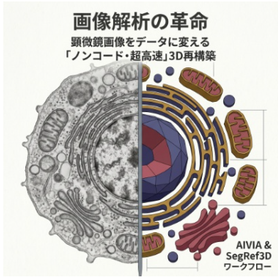
[Blog] <The Revolution of Image Analysis> How AI is Changing Microscopic Images! The World of "No-Code, Ultra-Fast" 3D Reconstruction
In the research of cell biology and neuroscience, an inseparable aspect is the "analysis of microscopic images." "Faced with a vast number of continuous slice images, I am tracing each one by hand..." "I have given up on advanced AI analysis because I lack programming knowledge..." Are you struggling with such concerns? Now, in the field of bioimaging, the evolution of software equipped with AI (artificial intelligence) technology is making these arduous manual tasks, which could be called "artisan skills," a thing of the past. This time, we will introduce the powerful workflow of "AIVIA," which achieves high-precision AI analysis without the need for programming, and "SegRef3D," which dramatically accelerates 3D reconstruction with the latest AI from Meta (SAM2).
-
[Blog] [Thorough Explanation] The Full Picture of NVIDIA's Physical AI Platform
In the manufacturing industry and advanced research fields, the use of real machines for trial and error is already reaching its limits. NVIDIA's "Physical AI Platform" aims to completely eliminate the heavy constraints of "time, cost, and risk," elevating development speed to an entirely new dimension. This approach, known as "Sim2Real," allows for safe and instantaneous learning in virtual spaces, conducting tens of thousands to hundreds of millions of iterations, and seamlessly implementing the results into the real world. This is not just a concept; it is a powerful ecosystem that has already been put into practical use. In this article, we will elucidate the three phases that make up this platform and the roles of specific libraries that hold the key to its implementation.
-

[Blog] [Up to 5 million yen subsidy] Ministry of Education "SPReAD" call for applications has started! Proposal for a complete set of equipment to launch AI research at the fastest pace.
Transforming the very foundation of scientific research in Japan—this is the significant expectation and attention surrounding the Ministry of Education, Culture, Sports, Science and Technology's innovative grant program, "AI for Science Seed Challenge Research Creation Project (SPReAD)." The first public call, which generated a great response, concluded on April 17, 2026, and today, June 2, the long-awaited second public call has begun! This is an excellent opportunity for researchers and teams leading the next generation of science and technology to utilize AI and challenge uncharted territories, allowing them to bring their groundbreaking ideas to fruition. The deadline for the second round of applications is noon on July 3 (Friday). With a limited period of about one month, early information gathering and preparation will be key to successful adoption. In recent years, the remarkable advancement of AI technology has significantly changed research processes across all academic fields. In this context, we will provide a clear explanation of the SPReAD program's outline and offer detailed proposals on how to maximize the adopted budget (up to 5 million yen) with a "complete set of equipment and environment construction package that allows for immediate AI research to start from zero knowledge."
-
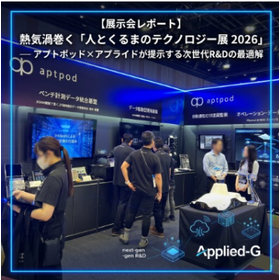
[Exhibition Report] The Enthusiastic "Automotive Technology Exhibition 2026" - The Optimal Solution for Next-Generation R&D Presented by Aptpod × Applied
This time, I participated in the "Automotive Technology Exhibition 2026 YOKOHAMA," held on May 28, 2026, at Pacifico Yokohama. This exhibition is organized by the Japan Society of Automotive Engineers and is one of the largest specialized exhibitions in the automotive technology field in Japan, bringing together automobile manufacturers, parts manufacturers, material manufacturers, software vendors, research and development institutions, and more, symbolizing Japan's mobility industry.
-
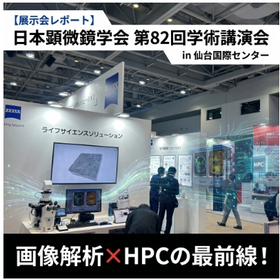
[Exhibition Report] The Cutting Edge of Image Analysis × HPC! "The 82nd Annual Meeting of the Japanese Society of Microscopy" at Sendai International Center
This time, we bring you a report from the exhibition hall of the "82nd Annual Meeting of the Japanese Society of Microscopy," held at the Sendai International Center on May 26, 2026. This conference is a highly specialized venue where the latest insights on various microscopy technologies, including electron microscopy, and their applied research gather. I participated on the second day and experienced the "enthusiasm on the ground" that supports cutting-edge research in Japan!
-
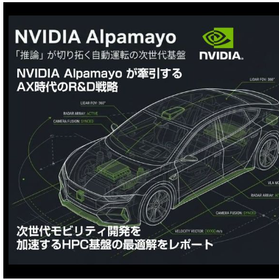
[Blog] <Next-Generation Mobility> R&D Strategy of the AX Era Led by NVIDIA Alpamayo
The development of autonomous driving systems is transitioning from traditional rule-based and modular approaches to an end-to-end "AX (AI Transformation)" environment where AI comprehensively understands situations and makes decisions. NVIDIA's offerings, "Alpamayo," "AlpaSim," and "NuRec," represent the latest ecosystem aimed at the societal implementation of level 4 autonomous driving, balancing safety and explainability. NVIDIA's autonomous driving AI platform "Alpamayo" moves away from reliance on traditional pattern recognition in autonomous driving by incorporating a mechanism where AI "infers (thinks and judges)" like a human, dramatically enhancing safety and reliability. The R&D departments of enterprises will report on the HPC requirements necessary to maximize the use of these technologies, integrating physics-based simulations (CAE) with AI models.
-

[Blog] <Latest 2026> Paradigm Shift in Professional Workstations! The Complete Overview and Astonishing Evolution of Intel Xeon 600 Series
Intel has launched the new Xeon 600 series as the successor to the Xeon W series CPU for workstations. Hello everyone! In this article, we will provide a thorough explanation of Intel's next-generation workstation CPU, the Xeon 600 series, which was unveiled in March 2026. We will introduce the features and significant benefits of this product, which has undergone a dramatic evolution worthy of being called a "paradigm shift" in the professional workstation market.
-
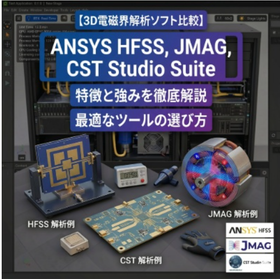
[Blog] <Thorough Comparison> A Comparison and Explanation of Three 3D Electromagnetic Field Analysis Software: "ANSYS HFSS," "JMAG," and "CST Studio Suite"
In the manufacturing industry and advanced research (R&D), as the performance and miniaturization of products progress, the importance of accurately predicting the behavior of electromagnetic fields through "3D electromagnetic field analysis" has never been higher. However, even when we refer to electromagnetic field analysis, the optimal tools differ depending on the frequency range and the purpose of the analysis. This article focuses on three representative 3D electromagnetic field analysis software products that lead the industry: "JMAG," "Ansys HFSS," and "CST Studio Suite." It will provide a detailed explanation of each software's strengths, optimal applications, and how to choose a high-performance computing (HPC) environment that maximizes their capabilities.
-
[Blog] <Thorough Comparison> How to Choose Fluid Analysis Software? Differences Between ANSYS Discovery, Autodesk CFD, and ANSYS Fluent, and the Optimal HPC Environment
In order to enhance the speed and quality of product development, the introduction of CAE (Computer-Aided Engineering) and fluid analysis (CFD) tools has become essential. However, when considering implementation, many may face questions such as, "Which software is suitable for our company's objectives?" and "Can designers handle it?" In this article, we will pick up three representative analysis software: "ANSYS Discovery," "Autodesk CFD," and "ANSYS Fluent," and clearly explain their differences from the perspectives of purpose, performance, mesh generation, and cost.
-

[Blog] Innovating Remote Operations in Research and Development and Manufacturing! What You Can Do with Hardware-Based Remote Control "IP-KVM" and Its Implementation Benefits
In cutting-edge research and development (R&D) and manufacturing environments, simulations and verification tasks utilizing HPC (high-performance computing) and AI servers are becoming increasingly sophisticated every day. As developments such as SDV (software-defined vehicle) and physical AI advance, many responsible individuals may be facing the challenge of "how to safely and efficiently operate high-load computing equipment and independent verification environments remotely." While it is said that "all answers lie in the field (labs and server rooms)," having to visit the site every time for minor configuration changes or reboots results in a significant loss of resources. Therefore, this time, we will clearly introduce the functions and benefits of the "IP-KVM switch," which dramatically improves remote access environments while securely protecting the important equipment in the field.
-
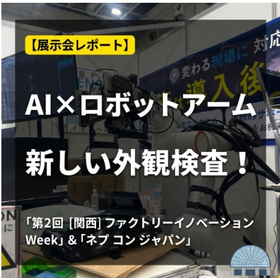
[Exhibition Report] New Appearance Inspection Showcased by AI x Robot Arm! "2nd [Kansai] Factory Innovation Week" & "Nepcon Japan"
This time, we will deliver a local report on the "2nd [Kansai] Factory Innovation Week," held from May 13 (Wednesday) to 15 (Friday), 2026, at Intex Osaka, along with the concurrently held "2nd [Kansai] Nepcon Japan"! As one of the largest manufacturing exhibitions in Kansai, the venue was filled with the enthusiasm of engineers and business leaders seeking the latest technologies. This time, we will particularly focus on the highlights of the exhibition, centering around the latest solutions utilizing "robot arms + cameras," which caught the eye at the venue!
-

[Blog] SCS Evaluation System: A New Common Foundation for Supply Chain Security
Ministry of Economy, Trade and Industry Policy Commentary Column Published on March 27, 2026 / Refer to the Ministry of Economy, Trade and Industry and the Cabinet Secretariat National Cybersecurity Office In recent years, there has been a sharp increase in cyberattacks targeting businesses through their partners. Even if large companies implement comprehensive measures, if their subcontracted small and medium-sized enterprises are targeted, the entire supply chain will suffer damage. To directly address this issue, the Ministry of Economy, Trade and Industry and the Cabinet Secretariat National Cybersecurity Office have jointly designed the "SCS (Supply Chain Security) Assessment System." This article provides a detailed explanation of the SCS Assessment System.
-
[Blog] The End of Extended Support for Windows Server 2016 is Approaching! "Next-Generation On-Premises Refresh" Supporting IT Infrastructure for the Manufacturing Industry
Are you aware that the extended support for "Windows Server 2016" will completely end on January 12, 2027? A server migration project requires about two years of preparation, including current situation assessment, design, construction, testing, and production migration. If we calculate the remaining time until the end of extended support, we need to start planning immediately. After the end of extended support, the provision of security updates and fixes for critical bugs will cease completely, so "running out of time" is not an option. In this article, we will explain the benefits of on-premises server migration due to the end of support and a blueprint for ensuring a successful migration, aimed at IT department heads and personnel in the manufacturing industry.
-

[Blog] Accelerate Research with High-Capacity Storage! How to Choose the Best NAS for Storing and Sharing Growing Research Data
High-Capacity Storage Service! How to Choose the Right NAS for Storing and Sharing Expanding Research Data In the field of research and development, data is an essential asset that can be described as "life." However, are you feeling stressed by issues such as "the NAS is already full" or "data transfer is slow, and the waiting time is a waste" in your daily operations? In this article, we will explore why high-performance, high-capacity NAS is needed in modern research and development centers, while clearly explaining "three points to choose the right NAS without failure" and "the optimal RAID configuration."
-

[Blog] What is a Replication Server? Explaining the Mechanism, Benefits, and Differences from Backup
What is replication? The basics of its mechanism Replication is a technology that duplicates and synchronizes data from one server or database (primary/master) to another server (replica/slave/standby) in real-time or at short intervals. The basic mechanism is carried out in the following steps. In this article, we will explain in detail the mechanism of replication servers, their benefits, and how they differ from backups.
-
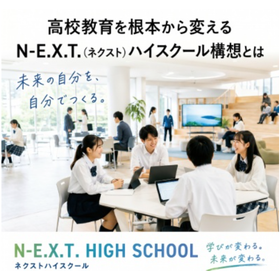
[Blog] What is the N-E.X.T. (Next) High School Concept that fundamentally changes high school education?
Finally, "high school education" has been fundamentally updated...! Looking ahead to Japan in 2040, the Ministry of Education, Culture, Sports, Science and Technology has proposed a high school reform plan with a budget of approximately 300 billion yen. ~ Ministry of Education, Culture, Sports, Science and Technology "N-E.X.T. High School Concept" ~ Fostering the next generation of talent responsible for social implementation in 2040. The supplementary budget proposal for fiscal year 2025, recently announced by the Ministry of Education, includes an extremely large budget of about 295.5 billion yen for this "N-E.X.T. High School Concept," which has garnered intense attention not only from the education sector but also from the industry. In November 2025, as part of a comprehensive economic policy aimed at achieving a "strong economy," the government began the largest high school education reform since the post-war period. This is the "N-E.X.T. High School Concept."
-
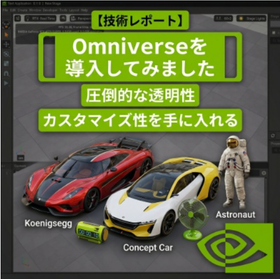
[Technical Report] We Tried Implementing Omniverse - Gaining Overwhelming Transparency and Customizability
From "Installation" to "Build": Following the Dramatic Evolution! NVIDIA Omniverse, the leader in the industrial metaverse. Did you know that this tool, which has been known as a "high-performance 3D platform," has fundamentally changed its appearance since the major update in October 2025? The first thing that engineers visiting the site to "try the latest Omniverse" will be surprised by is the disappearance of the once-standard process of "installing apps from the Launcher." In this article, we will provide a detailed explanation of the complete transformation of Omniverse into its new form and the actual building flow.
-
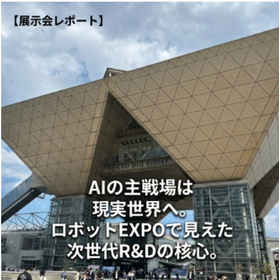
[Exhibition Report] The main battleground for AI is in the real world. The core of next-generation R&D revealed at the Robot EXPO.
~1st Humanoid Robot EXPO Spring: On-Site Report~ From April 15 to 17 last week, the "1st Humanoid Robot EXPO Spring" was held at Tokyo Big Sight. As Applied, we visited this momentous inaugural exhibition. The moment I stepped into the venue, I felt a "tangible future" that sets itself apart from previous exhibitions. My honest impression was... "Oh, this is no longer just a story about the future." It was a shock that felt like it hit me from the scene right in front of me, not just a theoretical realization!
-
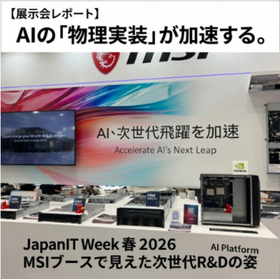
[Exhibition Report] The "Physical Implementation" of AI is Accelerating. The Next Generation of R&D Seen at the MSI Booth at Japan IT Week Spring 2026.
From April 8 (Wednesday) to April 10 (Friday), 2026, the **"Japan IT Week Spring IT, DX, and AI Comprehensive Exhibition"** was held at Tokyo Big Sight. The booth of MSI, for which we serve as the domestic distributor, was bustling with customers seeking the latest AI solutions, creating an atmosphere filled with excitement. Our team from the Tokyo sales office also participated on the final day, April 10 (Friday), and what we witnessed went beyond the stage of "how to use AI" to a more specific and passionate expectation of "how to implement AI in our own field (physical space) and create value." This time, we will provide a detailed report on the next-generation computing infrastructure presented by MSI, centered around the flagship product **"Xpert Station WS300 on DGX Station,"** which symbolizes this event, and the future possibilities we support.
-
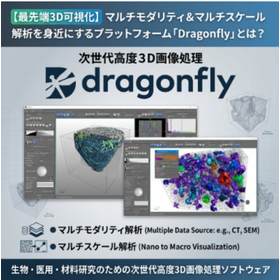
【Blog】【Cutting-edge 3D Visualization】What is the platform "Dragonfly" that brings multi-modality and multi-scale analysis closer to you?
In modern research and development, as well as in the medical field, it has become essential to combine "diverse types of data (multimodality)" and seamlessly observe the "hierarchies from micro to macro (multiscale)." However, integrating complex data for high-precision analysis often requires advanced programming skills and specialized knowledge... The solution to such challenges is the 3D visualization platform "Dragonfly," developed by the Canadian company Comet Technologies. This time, we will introduce its overwhelming features and appeal!