
NVIDIA PhysicsNeMo compatible GPU workstation


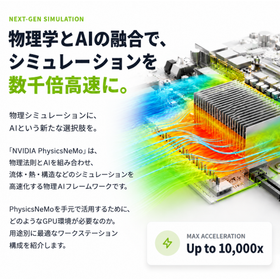
A GPU environment for PhysicsNeMo that integrates physical laws and AI to accelerate design verification.
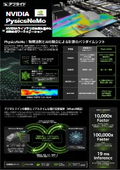
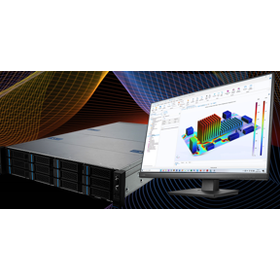
NVIDIA PhysicsNeMo is a physics AI framework that combines physical laws and AI to accelerate simulations of fluids, heat, structures, and more. This product is a GPU workstation that allows for comfortable execution of learning, inference, and what-if validation of PhysicsNeMo in a local environment. It offers a balanced model equipped with an AMD Ryzen 9 and RTX PRO 4500 Blackwell, as well as a large-scale analysis model featuring a Threadripper and RTX PRO 6000 Blackwell Max-Q. It adopts Ubuntu 24.04 LTS and supports development environments utilizing PyTorch, Docker, Google Colab, and Magnum IO. It allows for quick verification of the results of design variable changes, supporting the efficiency of design exploration and digital twin development.
basic information
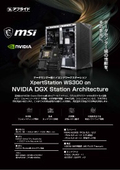
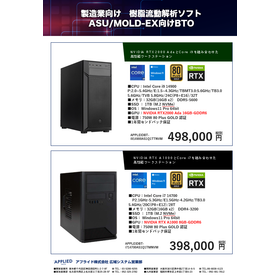
**Ryzen 9 Model** CPU: AMD Ryzen 9 9950X3D (16 cores / 32 threads) Memory: 128GB DDR5-5600 SSD: 2TB M.2 NVMe GPU: NVIDIA RTX PRO 4500 Blackwell 32GB OS: Ubuntu 24.04 LTS Power Supply: 850W 80PLUS GOLD 1-year send-back warranty **Threadripper Model** CPU: AMD Ryzen Threadripper 9970X (32 cores / 64 threads) Memory: 256GB DDR5-5600 ECC RDIMM SSD: 4TB M.2 NVMe GPU: NVIDIA RTX PRO 6000 Blackwell Max-Q 96GB OS: Ubuntu 24.04 LTS Power Supply: 1200W 80PLUS PLATINUM 3-year send-back warranty Customization is available to match your usage and analysis scale.
Price range
Delivery Time
Applications/Examples of results
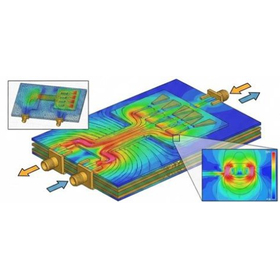
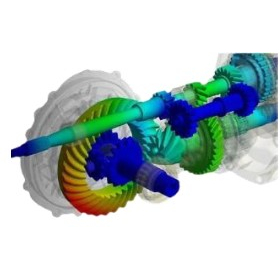
It can be utilized for fluid analysis, thermal analysis, structural analysis, aerodynamic design, cooling design for electronic devices, design optimization for vehicles and aircraft, digital twins, robotics, and simulation of manufacturing processes. For numerous design proposals that require significant computation time in conventional CFD and CAE, PhysicsNeMo allows for the construction of surrogate models, enabling quick estimation of results after changing conditions. For example, it is suitable for comparing temperature distributions while changing heat sink shapes or flow conditions, exploring aerodynamic characteristics due to changes in body shape, and estimating physical quantities such as pressure, velocity, and temperature at near-real-time speeds. It can support everything from proof of concept (PoC) to actual operation in research and development departments, universities and research institutions, and design and analysis departments in manufacturing.
catalog(4)
Download All Catalogs
News about this product(5)
-
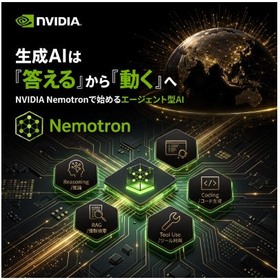
[Blog] Generative AI is moving from "answering" to "acting." Starting with agent-type AI using NVIDIA Nemotron.
With the spread of generative AI, including ChatGPT, AI has begun to be utilized in various scenarios such as text generation, summarization, translation, and programming assistance. On the other hand, in corporate and research and development settings, there is an increasing expectation for more advanced AI applications, not just to answer questions, but to: - Automatically search for necessary information from internal technical documents - Compare multiple pieces of information to determine the next course of action - Operate external tools and business systems - Progress through a series of tasks including research, analysis, code generation, and report creation This system, which infers based on objectives and utilizes necessary information and tools to advance tasks, is referred to as "Agentic AI." Supporting this Agentic AI is NVIDIA's open model family, known as NVIDIA Nemotron. In this article, we will introduce what NVIDIA Nemotron is, how it differs from traditional generative AI, and what applications can be considered in manufacturing and research and development.
-
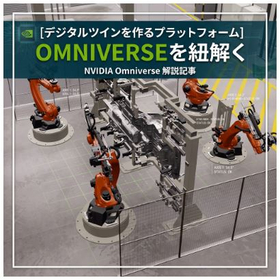
[Blog] Unraveling Omniverse: A Platform for Creating Digital Twins
One of the current demands for AI is "physical AI," and I believe there are increasing opportunities to hear related terms such as "Omniverse" and "Isaac Sim." This time, I would like to unravel the current role and position of "Omniverse."
-
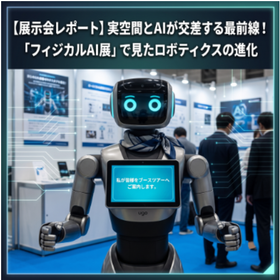
[Exhibition Report] The Cutting Edge Where Physical Space and AI Intersect! The Evolution of Robotics Seen at the "Physical AI Exhibition"
On July 2, 2026, I visited the "Monozukuri World Physical AI Exhibition" being held at Tokyo Big Sight. The evolution of generative AI and reinforcement learning is breaking out of the digital world and exploring how to intelligently operate robots in the real world (physical). This exhibition was a very vibrant space that truly hinted at the next generation of manufacturing and the automation of R&D (research and development). I will report on the latest trends that particularly caught my eye on-site!
-
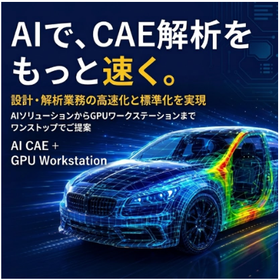
[Blog] <AI × CAE> Paradigm Shift in Design Development: The Future of Next-Generation Simulation Brought by Surrogate Models
What is the key to dramatically improving development speed in R&D? The R&D (Research and Development) in manufacturing and mobility development is currently undergoing a significant transformation. With the increasing performance and complexity of products, the amount of data and the computation time required for simulations have exploded. In traditional CAE, even with the use of high-performance HPC, it was necessary to spend enormous computational resources and lead time to obtain high-precision analysis results, taking "days to weeks for a single computation," which has become a major bottleneck in the design cycle. In this "AX (AI Transformation) era," the key to dramatically accelerating the speed of research and development is the "Surrogate Model AI." This article will explain the technological breakthroughs that AI-driven simulations bring to real design and the specific approaches for their implementation.
-
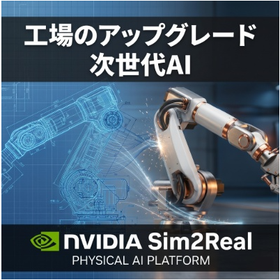
[Blog] [Thorough Explanation] The Full Picture of NVIDIA's Physical AI Platform
In the manufacturing industry and advanced research fields, the use of real machines for trial and error is already reaching its limits. NVIDIA's "Physical AI Platform" aims to completely eliminate the heavy constraints of "time, cost, and risk," elevating development speed to an entirely new dimension. This approach, known as "Sim2Real," allows for safe and instantaneous learning in virtual spaces, conducting tens of thousands to hundreds of millions of iterations, and seamlessly implementing the results into the real world. This is not just a concept; it is a powerful ecosystem that has already been put into practical use. In this article, we will elucidate the three phases that make up this platform and the roles of specific libraries that hold the key to its implementation.
Recommended products











Distributors

Applied Corporation is a computer manufacturing company based in Hakata-ku, Fukuoka City, Fukuoka Prefecture, with 65 locations nationwide. We provide the latest business proposals, from cutting-edge computers to the implementation of DX and solutions, for corporate clients across the country.