
High-density, high-strength sintered machine parts | Cost reduction through Ni substitution and partial densification
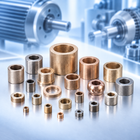
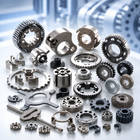
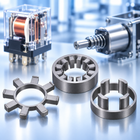

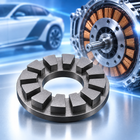

High-density, high-strength sintered machine parts that address cost reduction of Ni materials and improve wear resistance and longevity.
In machine parts that require high strength, there are challenges such as "wanting to increase strength while keeping material costs down" and "wanting to review part costs while ensuring wear resistance and load-bearing capacity." In conventional Ni (nickel) alloy materials, even if the required strength is met, material costs can be an issue. DIA-MET's Fe-Cu-C series high-density, high-strength sintered materials enhance strength through increased density and can be used as an alternative to Ni alloy high-strength materials. We propose their application in machine parts such as sprockets for VVT. ■ Features of high-density materials ▼ Utilization of inertial force due to increased mass ▼ Improved wear resistance and rigidity ■ Features of high-strength materials ▼ Enhanced load-bearing capacity ▼ Improved resistance to impact and fatigue, leading to longer lifespan ■ DIA-MET's manufacturing method ▼ High density can be achieved only in necessary areas ▼ Compared to conventional Ni alloy materials, it can achieve 1.6 times higher strength and a 30% reduction in cost ▼ Materials can be proposed according to required specifications By increasing the density in necessary areas, it is possible to consider a balance between required characteristics and costs. Documents summarizing the characteristics of Fe-Cu-C series high-density, high-strength materials compared to conventional Ni alloy materials, as well as more detailed benefits from their introduction and utilization in machine parts, can be downloaded below.
basic information
- General sintered parts manufacturers: Provide sintered mechanical parts using materials such as Fe-Cu-C systems and Ni-alloyed systems, tailored to specifications such as strength, wear resistance, and dimensional accuracy. - Ni-alloyed high-strength materials: While it is easier to ensure high strength, the use of Ni tends to increase material costs. - High-density sintered materials: Improvements in density can lead to enhancements in strength, wear resistance, and rigidity; however, increasing the density of the entire part may result in higher costs. - Diamet: By increasing the density of Fe-Cu-C high-strength materials, it is possible to achieve 1.6 times the strength compared to conventional Ni-alloyed high-strength materials, along with a 30% reduction in costs. Additionally, it is characterized by the ability to selectively increase density only in necessary areas, balancing required properties and costs.
Price range
Delivery Time
Applications/Examples of results
Sprocket for VVT and others
catalog(1)
Download All Catalogs
Recommended products
Distributors

Our company provides powder metallurgy and sintered products, primarily focused on automotive parts. Since our founding in 1944, we have experienced various changes over the years, but we have consistently valued our commitment to "maximizing our response to customer requests with sintered products made using powder metallurgy." We are also actively challenging ourselves in new fields, focusing on the development and manufacturing of products that are central to improving automotive fuel efficiency technology and natural energy generation. Currently, we are expanding our business scope by leveraging our sintering expertise to take on new challenges in the power electoronics fileld. Please feel free to contact us.