
news list
latest news

【Free Online Seminar on 5/29】Learn from Case Studies! Real Troubles in M&A - 5 Lessons the Legal Department Should Learn -
In 2024, the number of M&A transactions reached a record high. At the same time, "unexpected troubles" are certainly on the rise. In this seminar, attorneys Shunsuke Inoue and Risa Haruyama from Hibiy…
31~46 item / All 46 items
-

AI Utilization from a Business Perspective: Detecting Signs of Employee Turnover
For companies, the departure of talented employees represents a significant loss. If the risks of such important personnel leaving can be detected early and the causes addressed, it is possible to prevent turnover before it happens. However, it is not easy for humans alone to identify subtle changes in individual employees' mindsets or signs of potential resignation. This is where FRONTEO's AI (artificial intelligence) comes into play. The AI analyzes patterns and trends that are difficult for the human eye to catch, using text data accumulated by the HR department, such as performance management comments, awareness surveys, and questionnaires, to early detect anxieties, stress, and signs of resignation that are often overlooked in daily communication. This allows managers to take timely and appropriate actions, significantly reducing the risk of turnover. By utilizing AI, companies can protect their valuable talent and promote stability and growth throughout the organization.
-

AI Utilization from a Business Perspective: Improving Recruitment Accuracy
As the competition for talent intensifies, the ability to identify outstanding individuals who can thrive within the company has become an increasingly important challenge. Reducing the time spent on reviewing entry sheets and conducting fair evaluations that are not influenced by the impressions or preferences of individual recruiters are significant issues in the hiring process. As a solution to this challenge, FRONTEO's AI (artificial intelligence) can be of great assistance. The AI learns from past hiring data and HR data, allowing for the rapid selection of candidates based on objective and consistent evaluation criteria. This enables recruiters to reduce the time spent on reviewing entry sheets and allocate more time to face-to-face interviews and communication. As a result, the accuracy of the selection process improves, ensuring that the best talent for the company is identified. By utilizing AI, the hiring process not only becomes more efficient but also enhances quality, significantly contributing to the growth of the company.
-

AI Utilization from a Business Perspective: Quality and Inspection Fraud
When a data breach occurs, a company's social credibility declines, significantly impacting performance due to halted transactions and customer attrition. To address such risks, message auditing is effective. FRONTEO's AI learns the methods and thinking of investigators, auditing large volumes of emails to detect leaks of confidential information and signs of internal misconduct. By detecting the "nurturing" phase, which is a precursor to misconduct, it is possible to prevent internal fraud before it occurs. By utilizing such AI, companies can establish an effective compliance system and mitigate risks.
-

AI already implemented in megabank groups that contributes to the early detection of fraud.
With the diversification of communication tools and the rapid expansion of remote work, the importance and difficulty of conducting "employee communication audits" as part of measures to prevent fraud and information leaks, as well as to strengthen compliance, are increasing amid the growing prevalence of online communication. This time, we would like to introduce the email and chat audit AI "KIBIT Eye," which analyzes text within various communication tools and expresses fraud risk in scores, thereby enhancing and streamlining monitoring operations.
-

The Impact of AI on the Manufacturing Industry
The production sites in manufacturing and factories still rely heavily on human labor for many processes. However, the challenges faced by the manufacturing industry, such as labor shortages, the inheritance of skills, and accident prevention, are actually areas where AI can be very effective. In the manufacturing industry, where a wealth of skills and knowledge has been accumulated by skilled artisans, AI has the potential to serve as a tool for passing on those skills into the future, as well as a means to prevent accidents based on past disaster data. Here, we will introduce scenes where AI can be useful in such environments.
-

AI Utilization from a Business Perspective: Skill Inheritance
When employees with important skills and know-how leave or transfer within a company, there is a problem of losing that knowledge. Properly managing and sharing the knowledge and information accumulated within the company with successors is a significant challenge for any organization. FRONTEO's AI (artificial intelligence) addresses this issue by extracting the tacit knowledge of experienced workers and converting it into explicit knowledge in a database. By leveraging the power of AI to classify, select, and prioritize large amounts of data, it becomes possible to systematically advance knowledge sharing and skill transfer within the organization.
-

AI Utilization from a Business Perspective: Construction Industry
In the construction industry, which tends to rely on experience and intuition, the personalization of skills is progressing easily, and the shortage of human resources is particularly serious. As a result, the workforce on-site is becoming more diverse, including turnover of workers and the hiring of foreign laborers. In order to maintain quality while meeting strict deadlines, each site is engaged in daily trial and error. Therefore, we will introduce scenes where AI can be utilized to shorten lead times on construction sites and improve the overall knowledge and skills of the organization.
-

AI Utilization from a Business Perspective: Risk Prediction
In companies with many employees, such as those in manufacturing and construction, the need to clearly communicate the hazards on the worksite is increasing as the diversity of team members progresses. FRONTEO's AI "KIBIT" allows for easy sharing of the company's know-how, including past labor accident cases and countermeasures, at any worksite during KY activities. This is also effective for pre-training (KYT). Sharing and training through actual cases contribute to improving safety awareness throughout the entire company.
-
[Press Release] Contract Signed for Optimization and Analysis of Toxicity Information Utilizing Daiichi Sankyo and Drug Discovery AI Factory
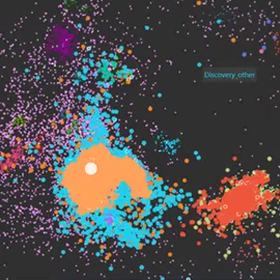
FRONTEO Inc. (Headquarters: Minato-ku, Tokyo, President and CEO: Masahiro Morimoto, hereinafter referred to as FRONTEO) announces that it has entered into a contract with Daiichi Sankyo Company, Limited (Headquarters: Chuo-ku, Tokyo, President and COO: Hiroyuki Okuzawa, hereinafter referred to as Daiichi Sankyo) regarding the analysis of a toxicity testing database and the text information of toxicity testing reports utilizing the Drug Discovery AI Factory (hereinafter referred to as DDAIF). Under this contract, FRONTEO will support the introduction of a system that allows for easy confirmation of toxicity interpretations on Daiichi Sankyo's existing toxicity testing database and the construction of an exploratory AI system that aids in the discovery of new insights and ideas through the analysis of toxicity testing reports.
-

Grasping the basics of AI (Artificial Intelligence)
With the advent of ChatGPT, AI has become a focus not only for developers but also for the general public. Are you or your company utilizing ChatGPT in your operations? By the way, the expression "ChatGPT is AI" is actually not accurate. ChatGPT is the name of an AI service, and the underlying mechanism is a language processing technology called "GPT." So, what exactly is "AI (artificial intelligence)"? Can you explain it? The term "AI" is now widely used like a common noun, but in reality, there is no clear and unified definition. For business professionals, a foundational knowledge of AI is now essential. On this occasion, I would like to introduce an article to deepen your understanding of AI.
-

What are more effective search methods than "keyword search"?
The "natural language processing AI," which analyzes and utilizes language through AI (artificial intelligence), is widely applied in various tools, including keyword searches in search engines and ChatGPT. For example, in keyword searches on Google and Yahoo!, AI technology allows for accurate search results even with minor typing errors or variations in notation. Additionally, with the popular ChatGPT, when a question is input, the AI generates a response in natural language. While keyword searches are common in searching, there is also growing attention on an advanced search method called "concept search," which goes beyond that and encourages new discoveries.
-
[Ministry of Justice 130-person survey report released] Has your company had any scandals recently?
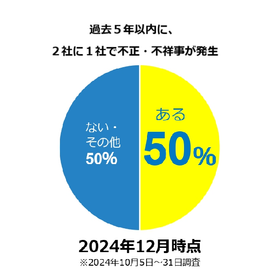
FRONTEO Inc. conducted a survey on corporate crisis response titled "Your Company's Compliance System and Utilization of Law Firms" and published the results on its website. Under the supervision of attorney Katsu from Nagashima Ohno & Tsunematsu Law Firm, this valuable report meticulously gathers the genuine voices of over 130 legal staff, primarily from the legal departments of major companies. It covers essential themes that back-office staff cannot afford to overlook, including the presence and content of scandals within the past five years and the setting of compliance measures.
-

How to make the most of ChatGPT and how to interact with it.
The chat-based service "ChatGPT," which is gaining attention among AI (artificial intelligence), is a type of generative AI. Generative AI is a useful tool that can learn from vast amounts of data, such as text, images, and audio, and create new content based on that learning. The emergence of generative AI has greatly expanded the potential for new ideas and discoveries. On the other hand, with the evolution of technology, ethical issues and concerns about privacy have also arisen. Therefore, it is considered important for companies and individuals to utilize it while maintaining an appropriate balance.
-

What is the relationship between teacher data and machine learning?
In machine learning, a method of AI, an essential factor for improving accuracy is the "quality of training data." For humans, having two or three sample training data points seems sufficient for making a reasonable judgment. However, for AI, it is challenging to derive accurate answers from such limited data. Why is that? In this article, we will explain the mechanism of machine learning and the reasons behind this in detail.
-

What is AI that reproduces "human tacit knowledge"?
FRONTEO's in-house developed AI "KIBIT" is derived from learning human subtleties. It is a unique AI that discovers the nuances of human expression written in words through a mathematical approach. With strengths in natural language processing and network analysis, "KIBIT" reproduces "human tacit knowledge" and provides experts with new insights and discoveries. Here, we present an introduction video that includes feedback from our users.
-

Learn about the approach of "Green Micro AI."
The much-discussed ChatGPT and other generative AIs are attracting attention. However, generative AIs consume a large amount of electricity, posing the challenge of "environmental impact." On the other hand, FRONTEO's AI "KIBIT" is an AI with extremely low power consumption and sustainable characteristics. KIBIT is a groundbreaking solution that balances corporate AI utilization with ESG compliance, adopting a "Green Micro AI" approach that features low power consumption and minimal environmental impact (=Green) along with a simple algorithm (=Micro).