
What causes paint to peel when it gets cold in the morning and evening? Condensation on parts.
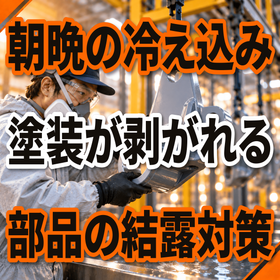
As October begins and the morning and evening temperatures start to drop, condensation occurs on the cooled parts, leading to peeling and rust. This explains the seasonal transition point.
As autumn arrives, peeling and rust that did not appear in summer have begun to show. Isn't there a higher rate of defects in parts painted first thing in the morning? 【What is happening now】 In October, the temperature difference between morning and evening and daytime becomes significant. When cold parts from the night are brought into a warm, humid painting area, condensation occurs on the surface. 【First, please look here】 □ Only the parts painted first thing in the morning are peeling → Condensation is occurring on the cold parts from the night □ Only the parts left outdoors or in the warehouse are rusting → Parts after pre-treatment are cooling and absorbing moisture 【Countermeasures you can take starting today】 1. Bring the parts into the painting area early and acclimate them to room temperature 2. Paint the parts when their temperature is at least 3 degrees higher than the dew point 3. Shorten the time from pre-treatment to painting 【Free materials】 You can download a document summarizing the range of services for baked coatings from Eiwa Kogei for free from the related catalog on this page.
basic information
Theme: Condensation of parts due to temperature differences in autumn. Management items: Part temperature and dew point, time of delivery to the painting area, time from pre-treatment to painting.
Price range
Delivery Time
Applications/Examples of results
Powder coating of metal parts from autumn to winter, painting of parts stored outdoors or in warehouses. Establishing seasonal transition standards for the quality control department and training materials for new employees.
Related Videos
catalog(1)
Download All Catalogs
Distributors

We are not just a "subcontracted painting factory." Established in 1958, our company has a foundation of painting technology and also specializes in chemical treatment, stripping, and cleaning, functioning as the "external surface treatment department" in your organizational chart. Based on our philosophy of "preparation is eight-tenths of the work," we emphasize participation from the "upstream process" before the drawings are finalized. We conduct test painting on a wide range of metals and difficult materials, and we produce the entire process from assembly, packaging, to delivery, thereby reducing your management workload. Additionally, by being able to perform zinc phosphate treatment in-house, we achieve stable painting quality. Furthermore, our micro-heating stripping technology, which does not use chemicals, maintains the electrical state of the "jigs (hangers)" that influence painting quality. Our approach of "pre-treatment determines painting quality" ensures the stability of the paint film during mass production. Rather than simply "applying specified standards," we work backwards to achieve optimal painting specifications and prevent scratches during transportation, sparing no effort in thorough discussions from the outset. This diligent preparation is the shortest path to preventing rework and minimizing total costs. From the development stage, please utilize the expertise of our specialists as part of your production line.