
Inline Selective Soldering Series


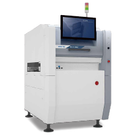


All stages operate simultaneously! To prevent temperature drop, we will wait in front of the preheating zone!
We would like to introduce our "Inline Selective" product. By using barcode and two-dimensional code management, or automatic stage change through substrate layout image recognition, along with the same frame jig for transportation, mixed production of a wide variety of small lots is possible. We offer a lineup that includes the one-frame types "EQS-350SDDD" and "EQSS-350SD+M," as well as the modular type "SELBO II." 【Features】 ■ Mixed production for small lots and a wide variety ■ All stages operate simultaneously ■ Tact balance can be set ■ To prevent temperature drop, it waits before the preheating zone *For more details, please refer to the PDF document or feel free to contact us.
basic information
【Lineup】 ■EQS-350SDDD ・One-frame type (Compatible board dimensions: 350Wmm × 330Lmm) ■EQSS-350SD+M ・One-frame type (Compatible board dimensions: 330Wmm × 250Lmm) ■SELBO II ・Module type (Compatible board dimensions: 350Wmm × 400Lmm) *For more details, please refer to the PDF document or feel free to contact us.
Price range
Delivery Time
Applications/Examples of results
For more details, please refer to the PDF document or feel free to contact us.
catalog(1)
Download All Catalogs
Recommended products




Distributors

In the 1980s, surface mount components that responded to the miniaturization of electronic products emerged, and we designed and sold "adhesive curing devices" to coincide with the sale of adhesives for temporarily fixing chip components. We also established a double wave flow soldering method and designed and sold "flow soldering devices compatible with mixed chip components," using Koki flux, which maintains high soldering quality. In the 1990s, with the spread of the concept of environmental conservation, there was a demand for mounting technologies in the manufacturing processes of electronic products that do not adversely affect the environment. To respond to this background, we engaged in the development of solder flow methods applicable to no-clean flux for electronic substrates and the design and sale of "alternative fluorocarbon cleaning devices" compatible with non-fluorocarbon cleaning. In recent years, to meet the demand for "lead-free soldering methods" since 1998, we have been striving to develop technologies for lead-free "flow soldering devices," "reflow devices," and "partial/local dip devices" that can ensure soldering quality on par with conventional "tin/lead solder mounting."