


Product Categories
-

Column
-

Lab Automation: Streamlining the LC-MS Workflow
-

DLS & ELS (Dynamic Light Scattering and Electrophoretic Light Scattering)
-

MALS detector
-

FFF (Field Flow Fractionation)
-

Sample preparation, vial/plate
-

Standard & reagents for analysis
-

Informatics
-

Chromatograph
-

Mass spectrometer
-

Fractional distillation
Featured products


Products/Services(91items)
-
![[Free Material] Laboratory Data Infrastructure to Prepare Before Utilizing AI and MI](https://image.mono.ipros.com/public/product/image/233410/IPROS7592650401331296297.png?w=280&h=280)
[Free Material] Laboratory Data Infrastructure to Prepare Before Utilizing AI and MI
-
![[Free Material] The First Step to Turning Lab Data into Competitive Advantage](https://image.mono.ipros.com/public/product/image/233410/IPROS4780142650791381870.png?w=280&h=280)
[Free Material] The First Step to Turning Lab Data into Competitive Advantage
-
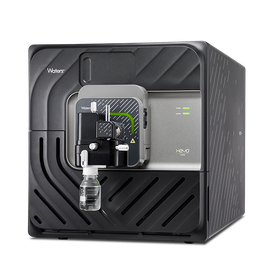
Charge Detection Mass Spectrometer Xevo CDMS
-
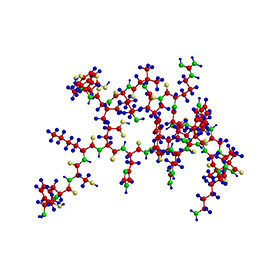
High-precision, rapid, and robust characterization of peptides and proteins.
-
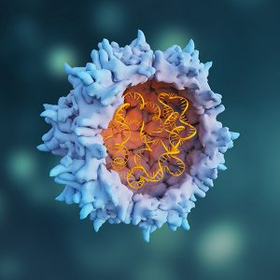
AAV, exosome quality control and manufacturing process optimization tool
news list
-
Latest Trends in PFAS and Residual Pesticide Analysis in Food | Explanation of 700 Component Simultaneous Analysis Examples and Solutions for Improving Analysis Efficiency 12/8 [Live Webinar]
Amidst the growing demand for food safety and the strengthening of regulations, the need for analysis of food contaminants, including PFAS and pesticide residues, is expanding. As the diversity and lower concentrations of target components increase, there is a rising demand for analytical solutions that possess high sensitivity and robustness, capable of addressing complex food matrices, as well as efficient data analysis workflows. In this webinar, we will introduce the latest domestic and international trends surrounding food PFAS and pesticide residue analysis, and explain case studies of rapid simultaneous analysis of PFAS in food and 700 pesticide residues. Furthermore, we will present analytical solutions using high-sensitivity tandem quadrupole mass spectrometry and the latest software that streamlines data analysis and review. We aim to provide information that will help food manufacturers, contract analysis organizations, and research institutions involved in food safety analysis to improve analytical quality while enhancing operational efficiency. We look forward to your participation.
-
![BioPharma Webinar - Latest Information on Quality Assessment of Next-Generation Modalities - 10/22 & 29 [Live Webinar]](https://image.mono.ipros.com/public/news/image/1/233410/IPROS9923105567888044389.jpg?w=280&h=280)
BioPharma Webinar - Latest Information on Quality Assessment of Next-Generation Modalities - 10/22 & 29 [Live Webinar]
The development of next-generation modalities, including nucleic acid medicines, AAV, and mRNA medicines, is rapidly expanding globally. In Japan, the government has set goals to expand the market size of the biopharmaceutical and regenerative medicine-related industries, leading to increased expectations and investments towards the practical application of next-generation modalities. On the other hand, guidelines for the characterization and quality evaluation of these next-generation modalities are still not clearly established domestically, and development companies may be gathering information on the latest scientific knowledge and analytical approaches. In this webinar, we will introduce the latest analytical solutions for the characterization and quality evaluation of next-generation modalities from two approaches: mass spectrometry and light scattering detection. The content will provide insights into development and quality management based on market trends, so we encourage you to take this opportunity to participate. Event Themes: • October 22 (Thursday) 15:00–15:30 Quality evaluation of mRNA medicines interpreted through mass spectrometry • October 29 (Thursday) 15:00–15:30 The forefront of aggregate and particle profiling and subvisible particle evaluation captured by light scattering detection
-
!["One Rank Higher LC Application Seminar" to Help Improve Analysis Accuracy - A Total of 6 Sessions Held [Live Webinar]](https://image.mono.ipros.com/public/news/image/1/233410/IPROS5372385494971750469.jpg?w=280&h=280)
"One Rank Higher LC Application Seminar" to Help Improve Analysis Accuracy - A Total of 6 Sessions Held [Live Webinar]
[Viewer Benefits Available] Explaining Tips for LC in a Short Seminar Do you have concerns such as "I'm unsure about column selection," "I'm struggling to optimize analysis conditions," or "I have challenges analyzing compounds with weak retention" in LC analysis? Waters will hold a seminar titled "Must-Listen! Advanced LC Application Seminar" where you can learn practical LC analysis know-how in just 30 minutes. In this seminar, we will cover useful topics in a total of six sessions, including tips for choosing detectors, how to utilize reverse phase columns, scaling up to preparative LC, approaches for analyzing hydrophilic and highly polar compounds, case studies of low-adsorption HPLC, and improving purity through solid-phase extraction. Each session is scheduled to start at 15:00. Event Themes: • October 6 (Tuesday) - Session 1: Tips for Choosing Detectors • October 13 (Tuesday) - Session 2: Tips for Choosing Columns • October 21 (Wednesday) - Session 3: Tips for Preparative LC • October 27 (Tuesday) - Session 4: Approaches for Analyzing Hydrophilic and Highly Polar Compounds • November 5 (Tuesday) - Session 5: Case Studies of Low-Adsorption HPLC • November 10 (Tuesday) - Session 6: Tips for Solid-Phase Extraction
-
![Frontline of Lab DX - From Data Integration to AI/ML Utilization. Roadmap for Next-Generation Lab Operations (Total of 2 Sessions) - 8/25, 10/20 [Live Webinar]](https://image.mono.ipros.com/public/news/image/1/233410/IPROS10539568067525103235.jpg?w=280&h=280)
Frontline of Lab DX - From Data Integration to AI/ML Utilization. Roadmap for Next-Generation Lab Operations (Total of 2 Sessions) - 8/25, 10/20 [Live Webinar]
In recent years, laboratories have faced challenges such as data fragmentation, manual analysis, and difficulties in utilizing real-time data, due to the increase in data volume and the sophistication of regulatory compliance. On the other hand, the evolution of technologies like cloud computing and AI/ML has led to the emergence of new operational models that enable faster and higher-quality decision-making through data integration, visualization, and advanced analysis. However, there are still many cases where organizations lack a concrete image of how to incorporate these technologies into the laboratory environment and apply them to actual operations. This series consists of two sessions, which will clarify the background that necessitates lab digital transformation (DX), outline the direction for data integration and AI utilization, and introduce methods for implementation through Waters' cloud platform. Additionally, we will explain practical use cases and specific deployment methods for actual operations. ■ Event Dates August 25, 2026 (Tuesday) - The Frontline of Lab DX: Overcoming Data Fragmentation for Next-Generation Laboratories October 20, 2026 (Tuesday) - Lab DX Implementation Guide: A Practical Roadmap from Data Integration to AI Utilization
-
Support staff will explain! GPC/SEC Intensive Course (4 sessions in total) [Held from October to December] Live Webinar
We will hold a webinar series delivering knowledge and know-how about GPC/SEC over four sessions. GPC/SEC is highly specialized and requires specific skills to use correctly. In this series, we will carefully explain common questions and challenges faced by GPC/SEC users, covering everything from basic principles to equipment and column management, calibration, molecular weight calculation, and troubleshooting, with the aim of enhancing your ability to handle these issues independently after viewing. We will also introduce support systems to facilitate analysis operations, as well as examples of the latest technologies combined with ultra-fast GPC systems and mass spectrometers (MS). Session 1: Basics of GPC/SEC Date: October 7 (Tuesday) Session 2: Calibration Curves for GPC/SEC Date: October 21 (Tuesday) Session 3: Molecular Weight Calculation for GPC/SEC Date: November 4 (Tuesday) Session 4: Troubleshooting for GPC/SEC Date: December 2 (Tuesday) All sessions: 15:00 - 16:00

The global standard for separation analysis originates from Waters.
Waters Corporation, headquartered in Milford, Massachusetts, USA, has played a pioneering role as a specialized manufacturer of liquid chromatography since its establishment in 1958. Actively engaged in the development of new products and technologies, it has grown into an international group company that supplies not only high-performance liquid chromatography but also mass spectrometers (MS) and thermal analysis instruments. Waters Japan started operations in 1973 (Showa 48) as the Japanese base of Waters Corporation. Inheriting the corporate ethos of the U.S. headquarters, we have made "Customer Success" our mission and continue to provide innovative technologies and lab solutions.