
[Technical Column] Complex Modeling through Protein-Protein Docking


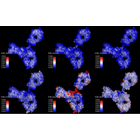


Protein-protein docking can also be easily analyzed with simple operations!
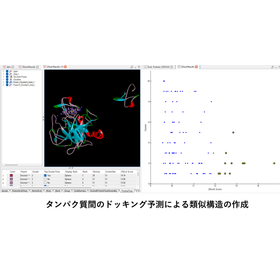
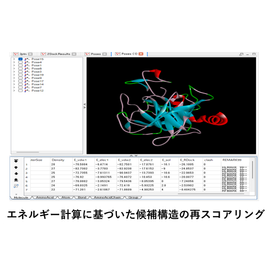
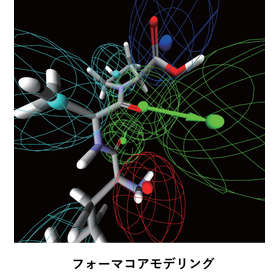
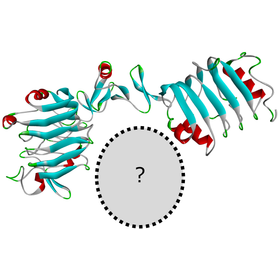
BIOVIA DiscoveryStudio allows for the analysis of protein-protein docking, which is considered more complex than general docking simulations, with simple operations. The analysis is performed through the following two steps: 1. Conduct a simple protein-protein docking to generate and score multiple candidate structures. 2. Re-score the generated candidate structures based on energy calculations to refine the selection. The image analyzes the docking of a complex between bovine pancreatic β-trypsin (protein receptor) and the inhibitor CMTI-I derived from pumpkin seeds (protein ligand) using this procedure. For detailed steps and technical explanations, please visit our case study page below! https://www.wavefront.co.jp/tech-blog/posts/docking-proteins.html
basic information
**Features** ■ Support for a wide range of drug discovery modalities - In addition to the currently mainstream small molecule drugs (small molecule ligands), there are numerous specialized tools for biopharmaceuticals (mAbs, ADCs, bispecific antibodies, multispecific antibodies, fusion proteins, mRNA vaccines) that are actively researched and developed. ■ Support for a wide range of drug design methods - Capable of 3D designing lead molecules for various scenarios with different conditions, such as the presence or absence of target structures and the number of known active substances (supports combinations of structure-based design, ligand-based design, fragment-based design, and de novo design methods). ■ Support for a wide range of drug discovery phases - A useful set of tools and workflows is provided simultaneously for various situations, including target validation, large-scale virtual screening, lead identification, mechanism of action elucidation, ADME-Tox prediction, stability prediction, and lead optimization. *For more details, please refer to the related links or feel free to contact us.*
Price range
Delivery Time
Applications/Examples of results
【Applications (Partial)】 - Homology modeling of three-dimensional structures - Reconstruction of loops and side chains, structural optimization - "Conformation search" - Fragment-based molecular construction, etc. *For more details, please refer to the related links or feel free to contact us.
catalog(1)
Download All Catalogs
Recommended products
Distributors

Our company develops and sells a "Maintenance Management System" for managing and operating various plants, factories, and other facilities and assets. Currently, this system is undergoing significant evolution into one that incorporates IoT technologies, such as sensor information and input from tablet devices, as well as AI technologies like machine learning, featuring functions for failure prediction and automatic scheduling. Additionally, as part of the recent trend towards digital transformation (DX), there is a growing movement to digitize and automate manufacturing processes and research and development sites in factories to enhance operational efficiency. In line with this trend, our company provides a solution aimed at improving efficiency in research and development environments, known as the Laboratory Information Management System (LIMS), which includes features such as workflow management, data tracking, data management, data analysis, and integration of electronic lab notebooks.